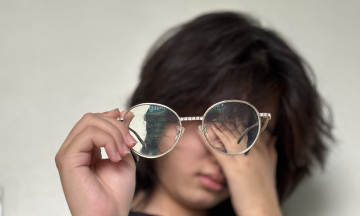
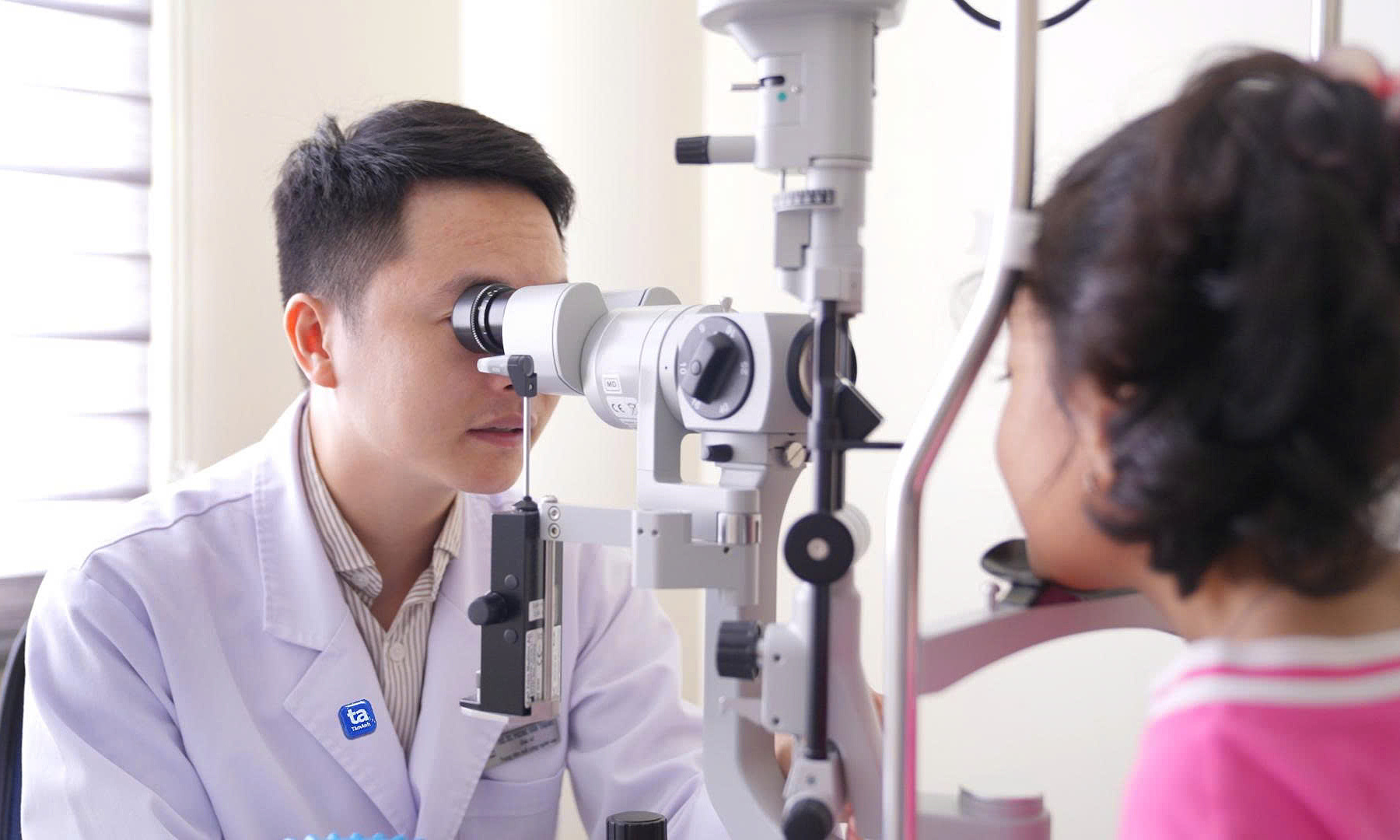
According to Doctor Luong Thi Anh Thu from the High-Tech Eye Center, Tam Anh Cau Giay General Clinic, the prevalence of myopia in children is increasing. This rise is linked to increased screen time for both learning and entertainment. Limited living spaces and early use of electronic devices also contribute to continuous eye accommodation, elevating the risk of refractive errors.
Myopia occurs when images focus in front of the retina, causing children to have poor distant vision. If not detected early and corrected with appropriate glasses, this condition can progress rapidly, potentially leading to strabismus or amblyopia. Doctor Thu highlights several warning signs of myopia in children below.
Difficulty seeing distant objects, frequently sitting close to screens
Myopic children often tend to sit close to the television, lean in when reading books, or hold phones very close to see more clearly. This habit causes significant eye accommodation, which can accelerate the progression of myopia.
Children also experience difficulty seeing distant objects, such as reading text on a whiteboard, road signs, or screens. Some children frequently move closer or ask for clarification when they cannot see clearly. Because symptoms appear gradually, parents might mistake them for a lack of concentration.
Squinting when looking
Children often squint or partially close their eyes when looking at a whiteboard or television to improve image clarity. This action reduces the amount of light entering the eye and enhances focusing ability for clearer vision, but it does not address the underlying cause. Repeated squinting is a sign of a refractive error, especially myopia.
Eye strain during prolonged study or near vision activities
When eyes constantly accommodate to see clearly, they easily become fatigued. Children may complain of eye strain, dry eyes, or reduced concentration when reading, writing, or using electronic devices. If this persists, children tend to avoid near-vision activities or quickly lose interest in studying.
Frequent headaches
Headaches are a common symptom but often overlooked because they can be mistaken for general fatigue. Myopic children often experience headaches after prolonged study or distant viewing, due to excessive eye accommodation. The pain is typically in the forehead or around the eye sockets.
Frequent blinking
Children may blink more often than usual when trying to adjust their vision. Continuous blinking can be related to dry eyes, eye fatigue, or accommodative dysfunction. This also indirectly indicates that the eyes are overworking to maintain clear images.
Doctor Thu advises parents to observe any unusual vision-related behaviors in their children's daily lives, especially during their school years. Regular eye examinations help detect refractive errors early and allow for timely correction with suitable glasses. Parents should guide children to adopt healthy study and lifestyle habits, such as maintaining a reading distance of 30-35 cm, limiting screen time, and increasing outdoor activities to protect their vision.
Thu Giang
| Readers can submit ophthalmology questions here for doctors to answer. |