Duc had chickenpox at three years old. Master Doctor Nguyen Thi Ngoc Nga, from the Pediatrics Department at Tam Anh General Hospital Hanoi, stated that several factors increase the risk of virus reactivation, including weakened immunity, prolonged stress, chronic diseases, or the use of immunosuppressants. Children who had chickenpox too early or were exposed to the virus during the fetal stage are also in a high-risk group.
Duc received outpatient treatment with antiviral medication, combined with pain relievers, antihistamines to reduce itching, and local care for the affected skin area. After 5 days of treatment, the lesions began to dry and scab, and the itching and burning sensation significantly improved.
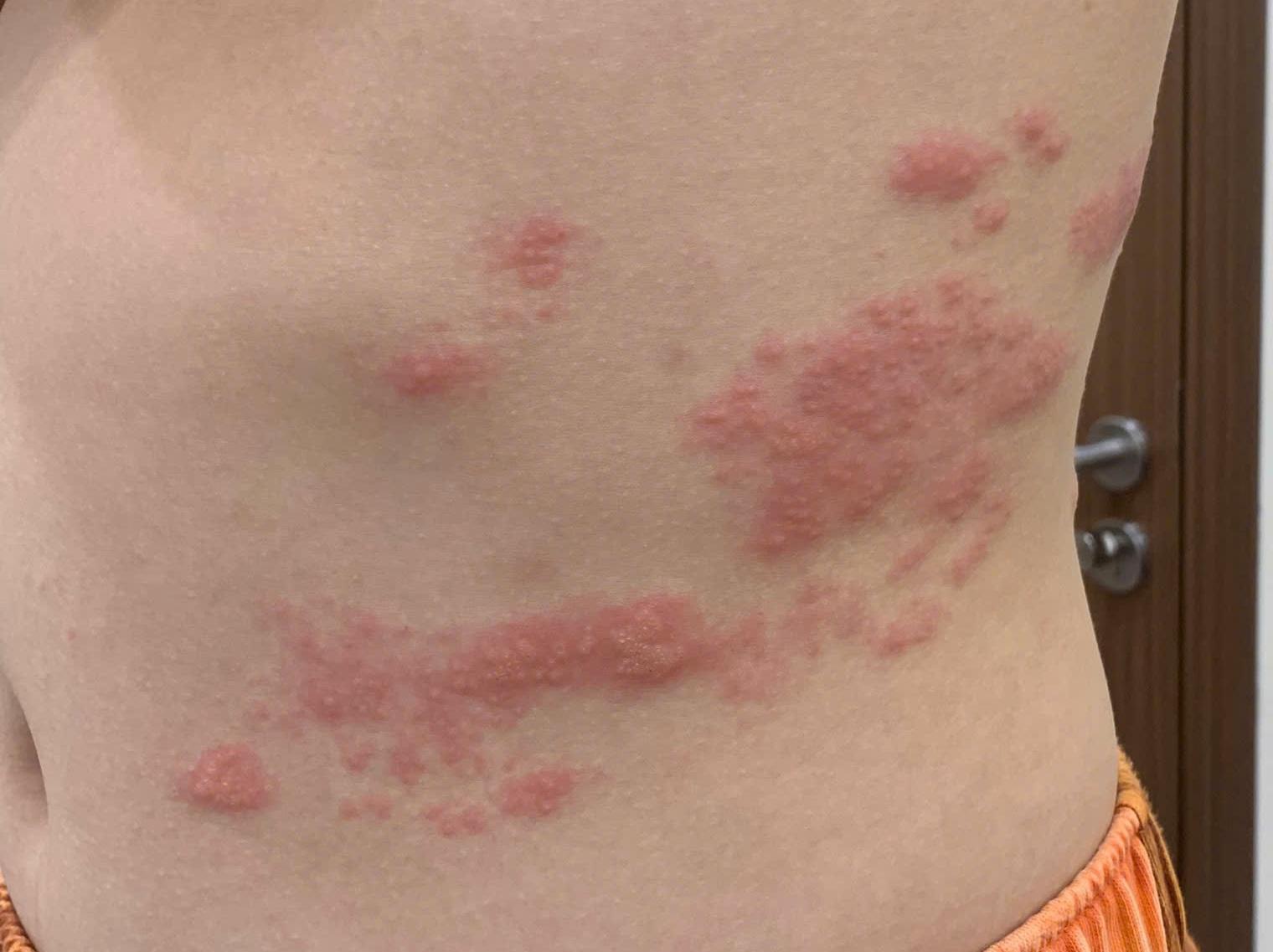 |
The skin area on Duc's left flank was damaged by shingles. Photo: Hai Au
According to Dr. Nga, the incidence of shingles in the community is approximately 3-5 cases per 1,000 people each year, primarily affecting older adults due to age-related immune decline. In children, the rate is 4-7 times lower.
Shingles is caused by the varicella zoster virus (VZV), the same agent responsible for chickenpox, which reactivates after years of lying dormant in nerve ganglia. After recovering from chickenpox, the virus does not disappear completely but enters a "dormant" state. When immunity is weakened, stress is prolonged, or an underlying medical condition exists, the virus can reactivate, travel along nerve pathways, and cause characteristic skin lesions.
Shingles typically begins with a burning, tingling, or hypersensitive sensation in a specific skin area before the appearance of a red rash. Blisters then emerge in clusters or strips along the path of the nerves. Unlike chickenpox, which spreads widely across the body, shingles lesions are usually localized to one side. In children, the disease is generally milder than in adults but can still cause pain, itching, and impact sleep, daily activities, and psychological well-being.
Although most cases are benign, shingles in children still carries a risk of complications if not treated promptly. The doctor recommends that children receive the chickenpox vaccine and ensure adequate nutrition, sleep, exercise, and personal hygiene. Children should also avoid contact with individuals experiencing active chickenpox or shingles in the blistering stage.
Trinh Mai
*Patient's name has been changed