Doctor Phung Van Thanh, from the High-Tech Eye Unit at Tam Anh Cau Giay General Clinic, stated that most cases of blurred vision after conjunctivitis (red eye) are temporary reactions during recovery. However, if the condition persists, accompanied by glare, a foreign body sensation, or light sensitivity even after the redness subsides, patients should be cautious as the cornea may be damaged, reducing visual quality.
Corneal infiltrates
This is the most common cause, frequently seen in cases of viral conjunctivitis. The body's immune response can create small lesions on the cornea, causing its surface to lose smoothness and obstruct the path of light to the retina. As a result, patients experience blurred vision, prolonged glare, and light sensitivity, even after the red eye symptoms have resolved.
Post-inflammatory dry eyes
Inflammation can damage the tear glands and disrupt the tear film protecting the ocular surface. When tears evaporate quickly, the cornea easily dries, reducing its transparency and causing temporary blurred vision. Patients often notice some improvement in their vision after blinking or resting their eyes.
Improper use of eye drops
While corticosteroid-containing eye drops can help reduce inflammation and quickly resolve redness, their overuse can lead to complications such as corneal ulcers, glaucoma, or cataracts, causing blurred vision and increasing the risk of blindness. Patients must consult a doctor before using any eye drops.
Corneal scarring
In severe cases of conjunctivitis, particularly those caused by highly virulent viruses or bacterial superinfections, damage can spread deep into the inner layers of the cornea, potentially leading to inflammation and ulcers. As these lesions heal, they leave scars that reduce corneal transparency. If a scar is located in the central region, vision will be significantly affected and difficult to fully recover.
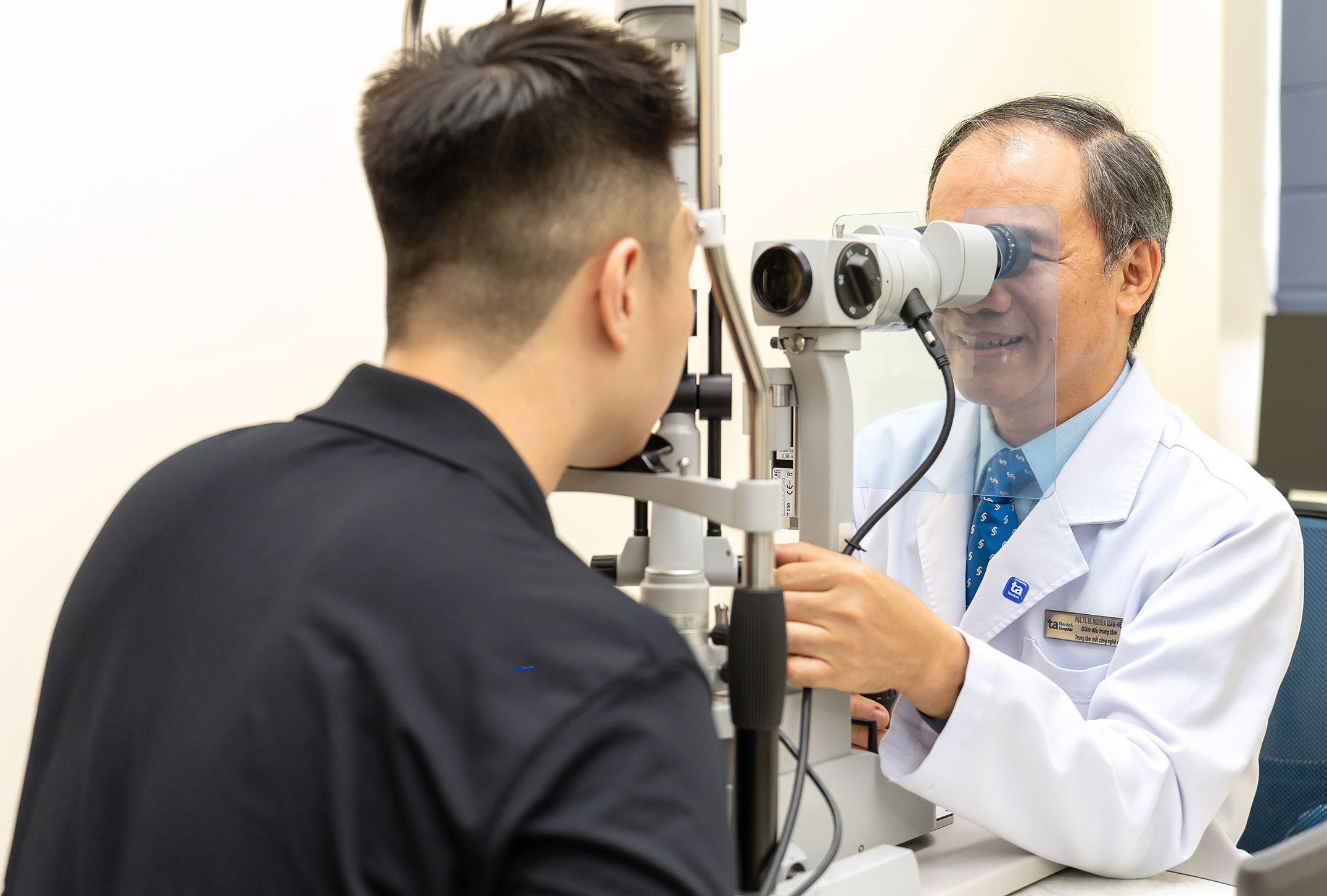 |
A doctor from the High-Tech Eye Unit examines a man. Photo: Tam Anh Cau Giay General Clinic. |
Doctor Thanh noted that some intraocular diseases, such as uveitis, can initially present with symptoms similar to conjunctivitis but are often accompanied by pain and rapid vision loss. Without early detection, these conditions can lead to macular edema, increased intraocular pressure, or retinal damage.
The recovery time for blurred vision after conjunctivitis depends on its underlying cause. In mild cases, such as dry eyes or superficial damage, vision may improve within a few days to a few weeks. For corneal damage, the recovery process can extend from several weeks to several months.
To limit vision loss after conjunctivitis, the doctor recommends that patients keep their eyes clean, moisturize with appropriate artificial tears, avoid rubbing their eyes, and temporarily stop wearing contact lenses until fully recovered. Patients should also wear protective eyewear outdoors, limit prolonged screen time, and maintain a diet rich in vitamins A, C, E, and omega-3.
If blurred vision persists or abnormal signs appear, such as pain, photophobia, progressive vision loss, or changes in visual field, patients should visit an ophthalmology department for timely examination and treatment.
Trinh Mai
| Readers can submit questions about eye diseases here for doctors to answer. |