Eng English
China 中国人

Eng English
China 中国人
  • News
  • World
  • Business
  • Entertainment
  • Sports
  • Law
  • Education
  • Health
  • Lifestyle
  • Travel
  • Science
  • Digital
  • Automobiles
  • Trở lại Thể thao
  • Health
Monday, 9/2/2026 | 07:01 GMT+7

3 ways to prepare rice to prevent blood sugar spikes

A diabetes patient shares three methods to reduce post-meal blood sugar increases: soaking rice, parboiling and draining, and prioritizing brown rice.

A man with type 1 diabetes has shared expert advice on rice selection and cooking methods to effectively manage blood sugar levels.

For those living with diabetes and striving to prevent post-meal blood sugar spikes, Justin, who also has type 1 diabetes, offers practical guidance drawn from his personal experience and medical knowledge. He employs these methods daily to maintain his health and demonstrate how to avoid unnecessary "peaks" in blood sugar from everyday rice consumption.

According to a report from Be Well SHBP, recent studies indicate that consuming white rice can significantly elevate blood sugar, especially with frequent or large portions. One study even revealed an 11% increased diabetes risk for each daily serving of white rice. For those who enjoy stir-fries with rice, switching to brown rice is advisable.

In a short YouTube video, Justin posed the question: "Did you know that the type of rice and how you cook it can differently impact your blood sugar levels?" He consulted "three South Asian friends" to detail steps for minimizing blood sugar increases from rice:

Soaking rice before cooking

Deeksha, a friend from India, revealed that soaking rice for at least one to two hours before cooking, then thoroughly rinsing it about five times, effectively helps combat post-meal blood sugar spikes.

This method lowers the glycemic index (GI) of rice, which measures how quickly food raises blood sugar. Soaking allows some surface starch to dissolve into the water. Discarding the soaking water removes a portion of these easily digestible carbohydrates.

Additionally, soaking rice aids in better digestion. This process partially breaks down complex carbohydrates, making them easier to digest and potentially slowing the rate at which glucose enters the bloodstream. This slower absorption helps prevent sudden blood sugar surges, which is particularly beneficial for individuals with diabetes. A study published in the International Journal of Food Sciences and Nutrition (2011) confirmed that soaking and preparation techniques influence starch digestibility and the GI of rice.
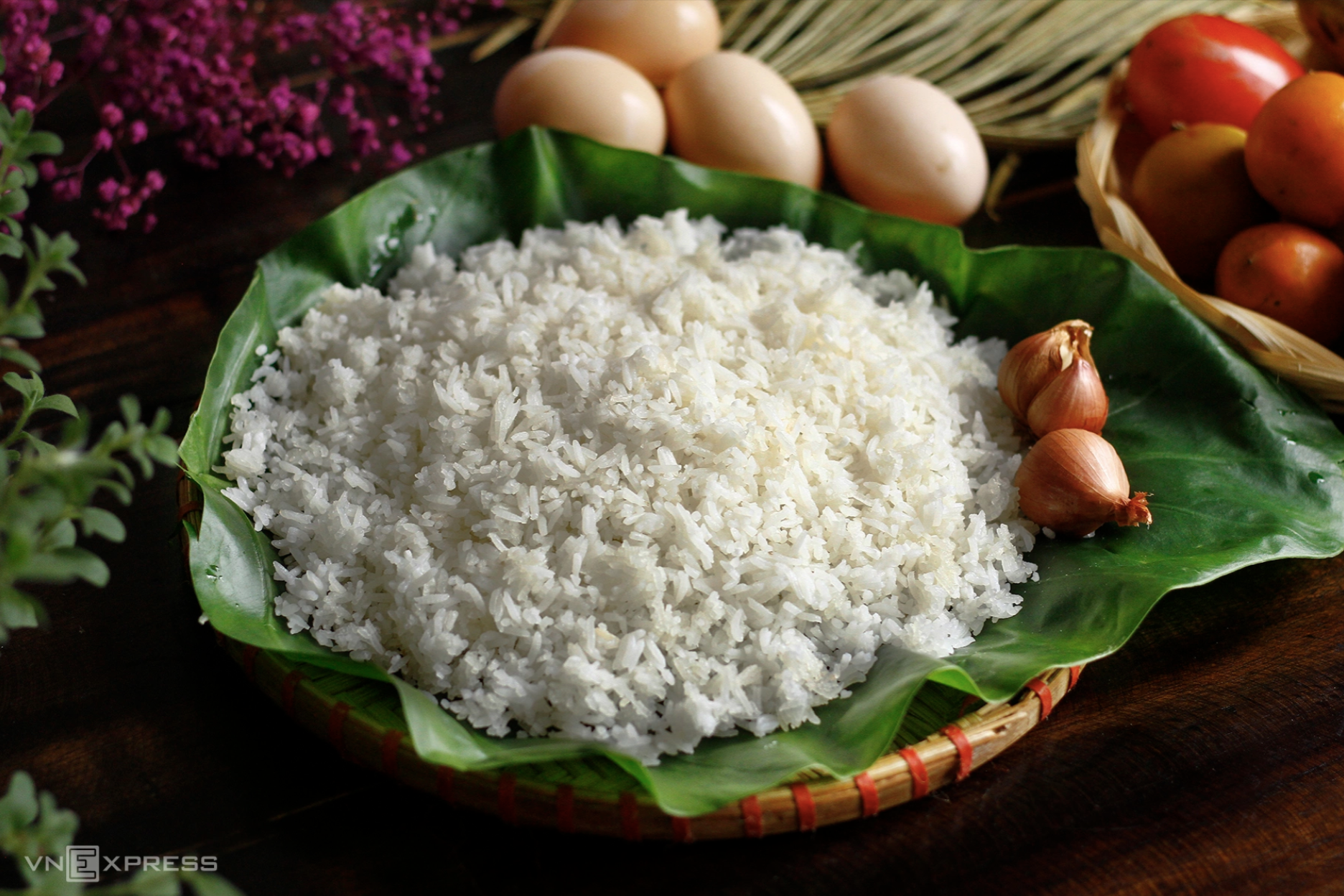
Soaking rice before cooking helps lower its glycemic index (GI). *Photo: Bui Thuy*.

Parboiling rice (draining the water)

Anum, from Pakistan, explained that eating parboiled rice helps control blood sugar levels effectively, even with larger portions, because draining the water removes excess starch.

When rice is boiled in a large volume of water and then drained, a significant amount of surface starch and soluble carbohydrates are washed away. Removing this water eliminates rapidly digestible carbohydrates, thereby reducing the rice's GI.

The Harvard TH Chan School of Public Health also notes that rice preparation methods, including parboiling and draining, can reduce the GI, minimizing the potential for post-meal blood sugar spikes.

Prioritizing brown rice

Hubban, also from Pakistan, shared that brown rice is essentially white rice with an additional outer layer, which is insoluble fiber. This fiber helps keep blood sugar levels lower and prevents sudden increases.

However, he noted that if one has a "sensitive digestive system," insoluble fiber might cause discomfort, so caution is advised. Nevertheless, it remains a worthwhile option to prevent sugar rushes.

Brown rice is generally considered a superior choice over white rice for individuals with diabetes due to its high fiber content, lower GI, and rich nutritional profile. As a whole grain, brown rice retains its bran and germ, which are removed during white rice processing. These components contain essential nutrients, including fiber, vitamins, minerals, and beneficial plant compounds.

By My Y (Source: Express)

By VnExpress: https://vnexpress.net/3-cach-che-bien-com-giup-ngan-duong-huyet-tang-vot-5015182.html
Tags: blood sugar levels blood glucose

News in the same category

How to avoid weight gain after Tet

How to avoid weight gain after Tet

Proactively building a healthy digestive foundation and supplementing with appropriate fiber helps the body adapt to the high-energy diet during Tet, limiting the risk of weight gain.

Can liver cancer be treated with immunotherapy drugs?

Can liver cancer be treated with immunotherapy drugs?

My father has stage three liver cancer; can it be treated with immunotherapy drugs? (Hung Ha, 38 years old)

Young cancer patient viewed bitter medicine as 'dessert'

Young cancer patient viewed bitter medicine as 'dessert'

Hao Hao, 10, passed away after a six-year battle with leukemia, maintaining an optimistic spirit by likening his treatment journey to a "monster-fighting" game.

Woman's breasts continue to grow despite 32 kg weight loss due to rare condition

Woman's breasts continue to grow despite 32 kg weight loss due to rare condition

Tianna Moon, 30, lost nearly 32 kg through medication and gastric sleeve surgery, but her breasts continued to grow uncontrollably due to gigantomastia, forcing her to consider surgical intervention.

What happens to the liver when you drink coffee regularly?

What happens to the liver when you drink coffee regularly?

Drinking 3-4 cups of coffee daily can slow the progression of cirrhosis in people with fatty liver disease and prevent liver diseases, including cancer.

Eating ornamental kumquats: are they chemically contaminated?

Eating ornamental kumquats: are they chemically contaminated?

Ornamental kumquats are often large, plump, and visually appealing. Is consuming them harmful to health, potentially leading to chemical accumulation or cancer? (Hung, 22, Hanoi).

Should one eat carp offered to the kitchen god?

Should one eat carp offered to the kitchen god?

If not released, can I keep and prepare the carp as food? (Truong, 33, Tuyen Quang)

Can medical masks be reused?

Can medical masks be reused?

I use medical masks to prevent respiratory illnesses, but I take them off and put them back on without replacing them. Is this safe? (Tu Uyen, 35, Da Nang)

Four ornamental plants that purify toxins and attract prosperity for the new year

Four ornamental plants that purify toxins and attract prosperity for the new year

Kumquat, chrysanthemum, money tree, and ochna integerrima not only brighten homes and attract wealth but also purify the air by removing toxins.

Why does prolonged sitting often lead to herniated discs?

Why does prolonged sitting often lead to herniated discs?

Due to the nature of my work, I often sit for long periods and lift heavy objects, and my doctor warned me about the risk of a herniated disc. Why is this the case, and how can I prevent it? (Thanh Tuan, Binh Duong)

Eng English
China 中国人
  • News
  • World
  • Business
  • Entertainment
  • Sports
  • Law
  • Education
  • Health
  • Lifestyle
  • Travel
  • Science
  • Digital
  • Automobiles
FPT Tower, 10 Pham Van Bach Street, Dich Vong Ward,
Cau Giay District, Hanoi, Vietnam
Email: contacts@vnportal.net
Tel: 028 7300 9999 - Ext 8556
Advertise with us: 090 293 9644
Register
© Copyright 2026 vnnow.net. All rights reserved.
Terms of use Privacy policy Cookies