Recently, Doctor Hung Yung-hsiang, a nephrologist at Tri-Service General Hospital in Taiwan, shared the process of diagnosing a malignant illness in a female manager.
The patient presented to the clinic overweight, with lower limb edema, fatigue, and a persistent cough. Previously, she had sought medical attention at several facilities, but doctors consistently diagnosed her with gastroesophageal reflux disease, as her chest X-rays appeared normal.
Upon reviewing her medical history, Doctor Hung discovered that the manager's brother had been diagnosed with lung adenocarcinoma at a young age. He immediately ordered a low-dose computed tomography (LDCT) scan. This specialized imaging technique clearly revealed a 1,5 cm lesion in the patient's right lung.
Doctor Hung identified several risk factors for cancer development in the patient. Prolonged work stress and insomnia had significantly eroded the manager's health. She also consumed sweets and processed foods daily to cope with psychological pressure. The medical team promptly performed surgery to remove the tumor.
To prevent the recurrence of malignant cells after surgery, Doctor Hung instructed her to drastically alter her lifestyle. The patient was required to switch to natural foods, eliminate sweets, and stop staying up late. She has strictly adhered to these medical recommendations for the past two years, maintaining a stable condition with no signs of tumor recurrence.
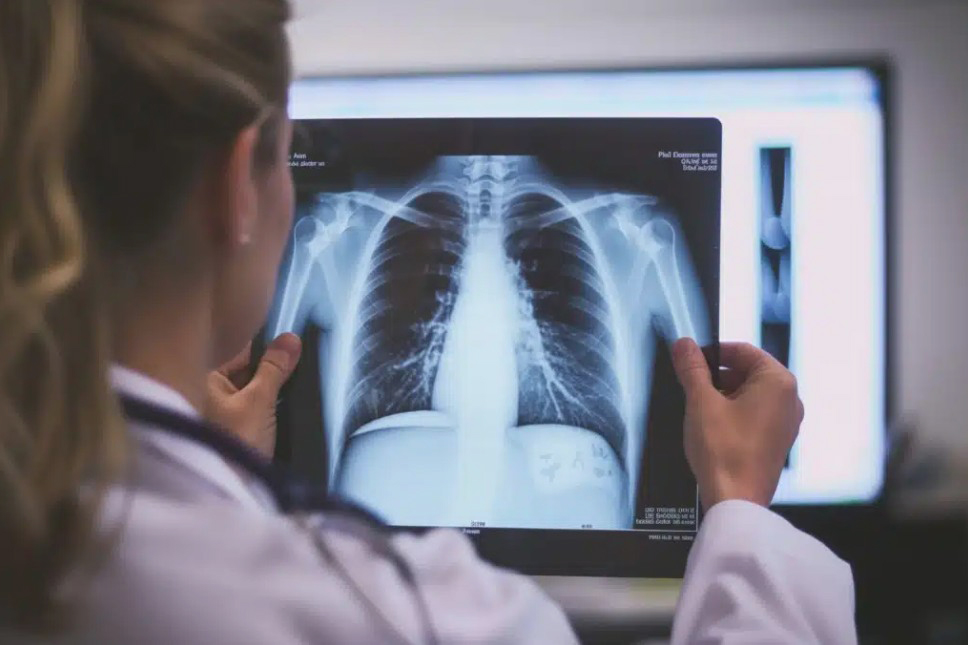 |
Illustration: Jackson Hospital
Lung cancer is primarily divided into two main types: small cell lung cancer, which accounts for 15%, and non-small cell lung cancer, which makes up 85%. Non-small cell lung cancer is one of the most common cancers in Asia.
Early-stage non-small cell lung cancer has a high cure rate; 92% of patients with tumors under one cm survive five years. However, most patients are often admitted when the disease has progressed to advanced stages (stage III, IV).
Early diagnosis and treatment of lung cancer remain a significant challenge for medical professionals. High-risk groups, such as individuals over 50 years old, long-term smokers, those working in environments exposed to toxic chemicals or radioactive substances, or individuals with a strong family history of cancer, should undergo regular health check-ups for prevention.
Currently, targeted therapy is one of the newer internal medicine treatment methods for lung cancer patients. This approach can be used alone or in combination with chemotherapy, radiation therapy, and surgery to extend survival time and reduce side effects for patients.
Binh Minh (According to SETN)