On December 27, during the "Chuc Ban Khoe Manh" (Wishing You Good Health) medical program on SETN television in Taiwan (China), Dr. Hong Yongxiang, a nephrologist with over 20 years of clinical experience at Tri-Service General Hospital, issued this warning regarding green vegetable consumption for kidney patients.
Dark leafy greens are often lauded as "superfoods" due to their high content of fiber, vitamin C, and plant compounds, which offer antioxidant properties and support bowel movements for healthy individuals. Research from the Harvard T.H. Chan School of Public Health indicates that a diet rich in green vegetables and fruits can lower blood pressure and reduce the risk of cardiovascular disease and gene mutations leading to cancer. The higher the average daily intake of vegetables and fruits, the lower the risk of cardiovascular disease. Compared to those consuming the fewest vegetables and fruits (less than 1.5 servings per day), individuals who consumed an average of 8 servings or more had a 30% lower likelihood of experiencing a heart attack or stroke.
However, Dr. Hong Yongxiang cautions that for individuals living with chronic kidney disease, particularly those with a glomerular filtration rate (GFR) below 45, green vegetables pose significant risks. While potassium in green vegetables is essential for maintaining a stable heart rhythm and supporting muscle function, it becomes a potential danger for those with impaired kidney function. Their limited kidney function reduces the ability to excrete potassium ions efficiently.
According to the National Kidney Foundation (NKF), when kidneys can no longer filter and excrete excess potassium through urine, blood potassium levels will surge, a condition known as hyperkalemia. This is highly dangerous as it can lead to cardiac issues such as arrhythmias and even cardiac arrest.
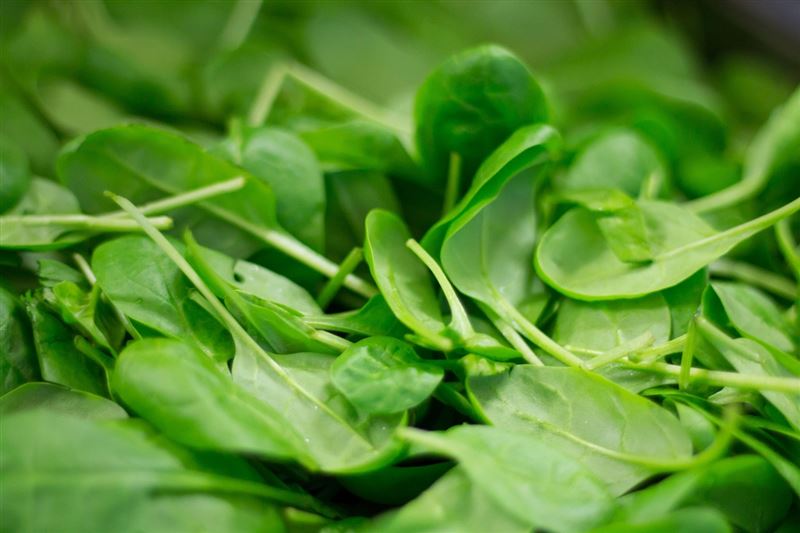 |
Spinach, Malabar spinach, or water spinach are familiar vegetables with high potassium content. Illustration: Pixabay |
The doctor advises kidney patients to limit protein, phosphorus, and potassium intake. Specifically, daily potassium consumption should be controlled at approximately 1,000 mg. Patients should prioritize vegetables with low potassium content, ideally below 100 mg of potassium per 100 g of vegetables.
Dr. Hong identified 5 common vegetables frequently found in daily meals: Malabar spinach, amaranth, straw mushrooms, spinach, and water spinach, as leading the list in potassium content per 100 g of weight. Specifically, Malabar spinach contains 540 mg of potassium, amaranth 530 mg, straw mushrooms 500 mg, spinach 460 mg, and water spinach 440 mg. Therefore, kidney patients should not consume excessive amounts of these vegetables.
To ensure necessary fiber intake while reducing the burden on the kidneys, the expert suggests blanching vegetables in boiling water before cooking to dissolve some potassium ions. However, the NKF also advises that this method does not completely eliminate potassium, so patients still need to limit the quantity of blanched vegetables in each meal.
Binh Minh (According to SETN)