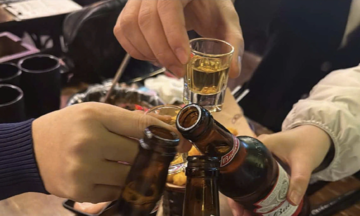
On 1/1, Dr. Nguyen Trung Nguyen, director of the Poison Control Center at Bach Mai Hospital, stated that six patients were admitted to the center in late December. They suffered from respiratory distress and severe metabolic acidosis, with two experiencing optic nerve damage. These individuals were among a group of seven who consumed 5 liters of alcohol at a party. One person from this group died before receiving emergency care.
Patient test results showed blood methanol levels ranging from 44,6 to 256,9 mg/dL. The alcohol they consumed contained 30,3% methanol, while ethanol accounted for only 1,84%.
"This is fake alcohol mixed with industrial methanol, not rice wine or traditional liquor. Home-brewed alcohol, if it contains methanol, would only have trace amounts and could not cause severe poisoning", Dr. Nguyen stated.
All six patients have since recovered and been discharged.
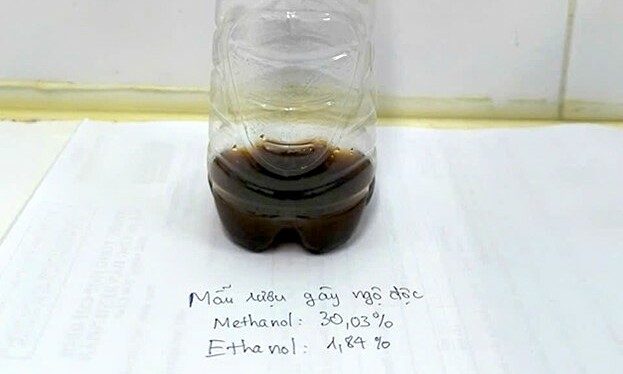 |
The alcohol sample that caused the poisoning. *Photo: Nguyen Ha* |
The poisoning incident stemmed from a home dinner party attended by 11 people, but only seven of them consumed the herbal-infused alcohol. The following morning, these seven individuals experienced symptoms such as blurred vision, dizziness, and shortness of breath, while those who did not drink showed no unusual signs.
Methanol is a highly toxic, colorless substance whose taste and smell are difficult to distinguish from ethanol. Initially, individuals who consume it may experience intoxication similar to regular alcohol. However, 8-48 hours later, methanol metabolizes into formic acid, leading to severe metabolic acidosis, brain damage, optic nerve damage, rapid, deep breathing, and potentially death if not treated promptly.
According to the Bach Mai Poison Control Center, the mortality rate from methanol poisoning is high, approximately 30% even with specialized treatment, and can rise to 50% in remote areas lacking timely medical facilities. The symptoms of blindness and coma caused by methanol are often mistaken for stroke, leading to delays in diagnosis and treatment.
Doctors warn that fake alcohol and counterfeit antiseptic alcohol containing methanol continue to circulate within the community. Methanol, an industrial chemical, is imported and produced in large quantities. However, lax management allows it to be easily mixed into fake alcohol, leading to severe consequences for public health and the healthcare system.
Numerous cases of methanol poisoning and deaths from fake alcohol have occurred, yet few producers or traders face severe penalties. This represents a significant loophole in chemical management and market safety, according to Dr. Nguyen. If this issue is not addressed, the risk of fake alcohol poisoning will continue to rise, particularly during holidays and festivals.
"The hospital has reported the poisoning incident to the Ministry of Health and informed the local Department of Health and police to trace the source of the toxic alcohol and prevent its wider spread in the community", Dr. Nguyen said.
Le Nga