 |
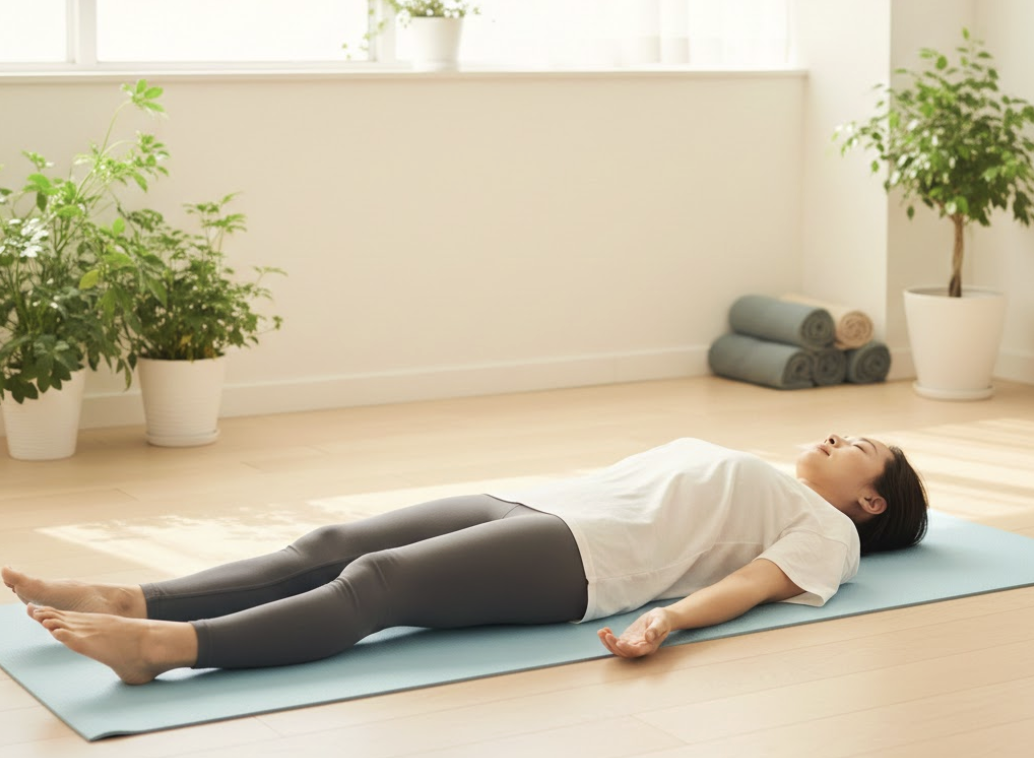
Corpse pose
Lying still and breathing deeply can reduce stress hormones, which helps limit inflammation and metabolic disorders associated with elevated uric acid levels.
To perform: Lie flat on your back, legs extended, arms wide, and eyes closed. Breathe deeply and relax.
 |
Knees-to-chest pose
The action of bringing knees towards the abdomen creates rhythmic compression, benefiting gut health. This aids digestion, reduces bloating, and helps kidneys more effectively eliminate waste products.
To perform: Lie on your back, draw your knees towards your chest. Hold the pose and breathe deeply.
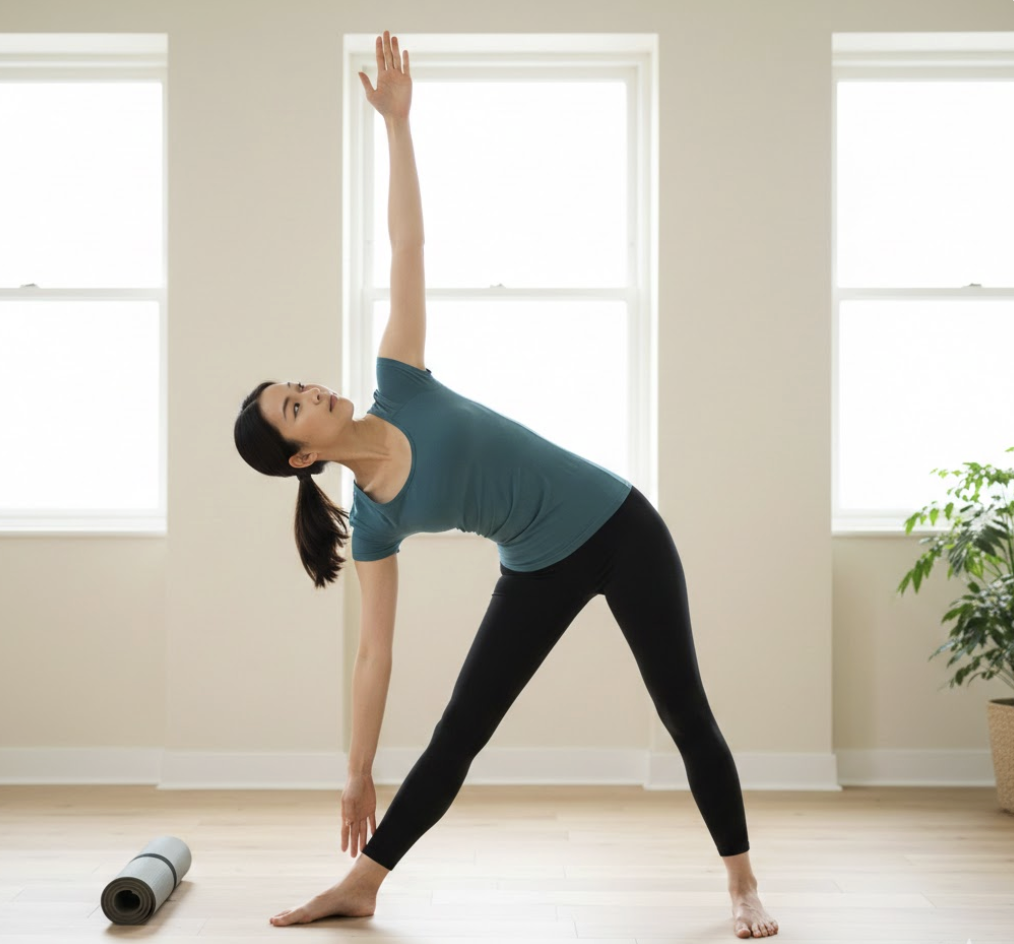 |
Triangle pose
This pose stretches the sides of the body and gently massages internal abdominal organs. It boosts blood circulation around the abdomen and kidneys, supporting purine breakdown and toxin elimination.
To perform: Stand with feet wide and legs straight. Turn your right foot 90 degrees, and your left foot slightly inward. Lean to your right side, touching your right hand to your shin or ankle, while extending your left arm overhead. Open your chest and gaze towards your left hand. Hold the pose, then switch sides.
 |
Walking
Walking is a safe, low-impact exercise for individuals with high uric acid levels and gout symptoms. It enhances blood circulation and joint flexibility. Regular walking stimulates kidney function, enabling the body to remove excess uric acid through urine.
To perform: Individuals with high uric acid can walk briskly for at least 30 minutes daily, or adjust the duration to suit their health condition.
 |
Swimming
The combination of swimming and aquatic exercises provides an optimal solution for reducing uric acid levels while gently relaxing joints affected by gout. Regular swimming improves both kidney function and metabolic rate, which are crucial factors in lowering uric acid.
To perform: Swim three to four times a week, for 30 to 45 minutes each session, to better manage uric acid levels.
By Bao Bao (According to Times of India)
Photo: AI