According to doctor Hoang Quyet Tien from the Medical Information Center, Tam Anh General Hospital, Ho Chi Minh City, regular exercise at an appropriate intensity is essential for health and helps alleviate musculoskeletal pain during cold weather. However, improper exercise can increase the risk of stiff joints and even injuries in the cold.
Inappropriate Attire
Wearing thin clothing or cotton materials that retain sweat can lead to rapid body heat loss. Doctor Tien notes that when muscle temperature drops by 1 degree Celsius, muscle force and tendon elasticity can decrease by 2-5%, increasing the risk of stiffness and soft tissue damage around the joints. Shoes with hard, slippery, or non-insulating soles affect force distribution during exercise, thereby increasing strain on the knees and ankles. It is advisable to choose warm clothing with suitable materials and construction to help stabilize joint fluid and maintain joint range of motion.
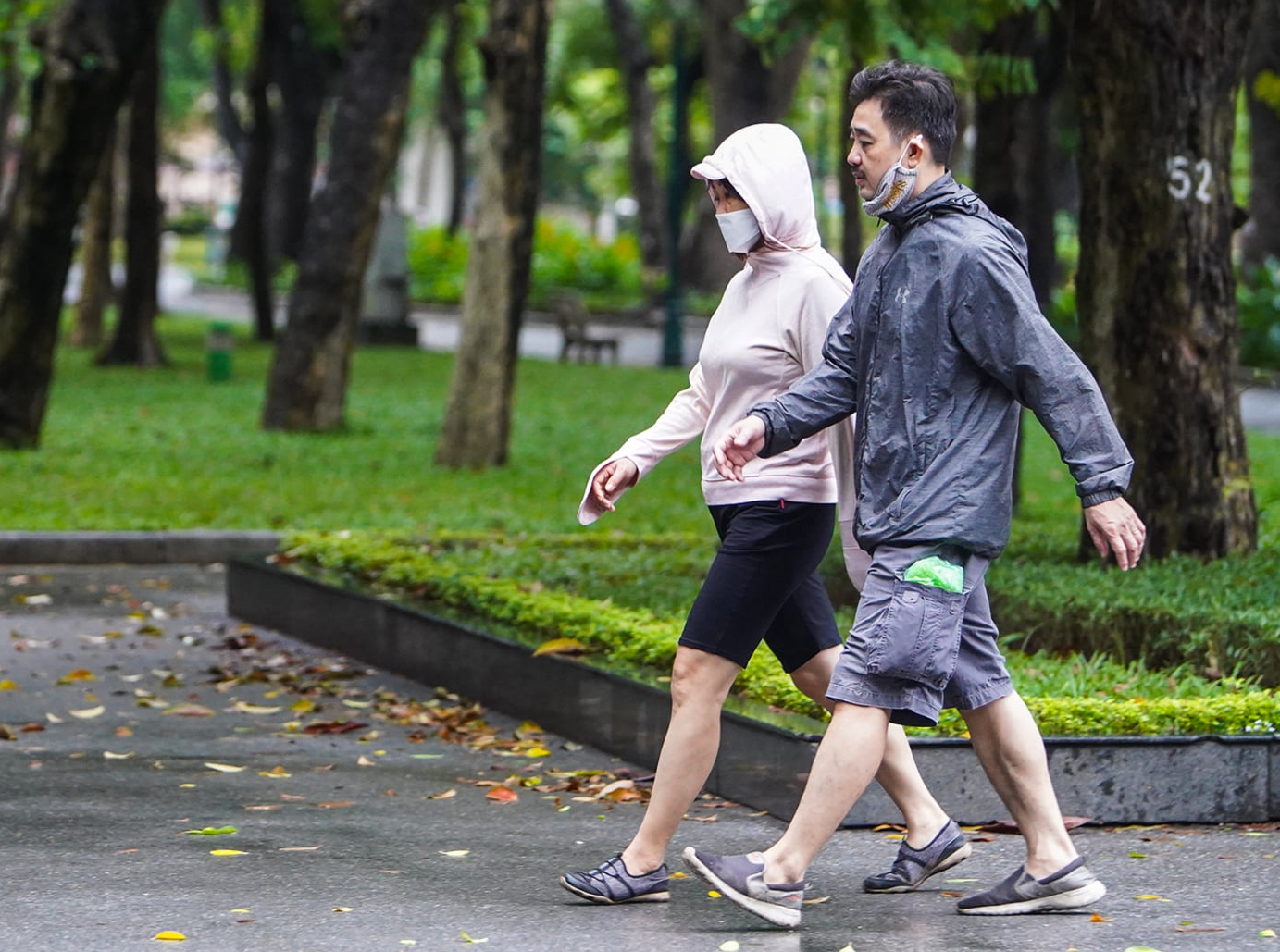 |
People exercising in a park in Hanoi. Illustration: Giang Huy
Insufficient Warm-up
In cold weather, the muscle-tendon-joint system requires more time to increase muscle temperature and blood circulation. A proper warm-up of at least 10-15 minutes can raise muscle temperature by 2-3 degrees Celsius, improving muscle performance by approximately 10% for each 1 degree Celsius increase. A superficial or omitted warm-up during the cold season can lead to sudden stress on joints when joint fluid is still viscous and the range of motion is low, easily resulting in joint pain and injuries.
Unsuitable Exercise Forms
Exercising outdoors in cold winds, low humidity, or extremely low temperatures forces the body to expend more energy to stay warm, while muscle-tendon-joint performance decreases. Furthermore, cold weather often leads people to reduce physical activity. When they resume exercising, they might choose strenuous workouts or increase duration. At this point, the muscle-tendon-joint system cannot adapt quickly, easily leading to joint overload and pain, especially in the knees and hips.
On cold, rainy days, prioritize indoor and moderate exercises such as yoga, aerobics, or video-guided workouts. If exercising outdoors in cold weather, choose the 7-9 AM timeframe when sunlight is present and temperatures are stable.
Overusing Pain Relief Patches
Pain relief patches only alleviate surface pain and do not address inflammation or internal joint damage. Prolonged overuse of quick-acting pain relief patches can mask symptoms, allowing musculoskeletal conditions to worsen.
Insufficient Hydration
Cold weather reduces the sensation of thirst, but joints still require adequate water for proper function. When the body is dehydrated, joint fluid becomes thicker, increasing friction between bone ends and leading to more joint pain.
Doctor Tien recommends monitoring joint reactions after each exercise session during the cold season. If pain persists for over 24 hours, reduce exercise intensity and consult a musculoskeletal specialist. Additionally, supplementing with natural essences specifically for joint care, such as undenatured type II collagen, hydrolyzed collagen peptide, eggshell membrane, turmeric root extract, and chondroitin sulfate, can help promote joint cartilage recovery and regeneration.
Dinh Dieu
| Readers can ask questions about musculoskeletal diseases here for doctors to answer. |