"Runner's knee" syndrome, or patellofemoral pain syndrome, describes any condition causing pain around the patella (kneecap). This bone, located at the front of the knee joint, is somewhat round and triangular in shape. It protects the knee joint, supports flexion and extension movements, and helps the quadriceps muscles function more effectively.
This syndrome commonly affects individuals participating in sports that require extensive knee bending and straightening, such as running, cycling, and skiing. It is more prevalent in women than men, frequently occurring in adolescents, young adults, and overweight individuals.
The American Academy of Orthopaedic Surgeons notes the following measures to prevent "runner's knee" syndrome.
Maintain a healthy weight: Ensure overall health and good physical condition. Overweight individuals should consult a doctor to develop a weight loss plan. The knees bear up to 80% of body weight and, despite being among the largest and strongest joints, they are also the most active during movement. The force exerted on the knee joint is often three to four times the body's weight. Therefore, shedding excess weight helps reduce pressure on the knees, thereby managing pain.
Stretch: Warm up for five minutes, then perform stretching exercises before running or engaging in any activity that puts pressure on the knees. A doctor can guide specific exercises to enhance knee flexibility and prevent irritation.
Increase training intensity gradually: Avoid sudden increases in training intensity. Instead, gradually escalate it according to the knee joint's condition and adaptation. If an injury occurs while running or symptoms such as sharp pain during a run, pain that makes walking difficult, joint swelling, or persistent pain after stopping a run appear, the individual should immediately cease all activity to allow the leg to rest.
Choose appropriate running shoes: Purchase shoes with good shock absorption that fit well and are comfortable to support the feet and knee joints. Do not run in shoes with excessively worn soles. Wear orthotics if you have flat feet.
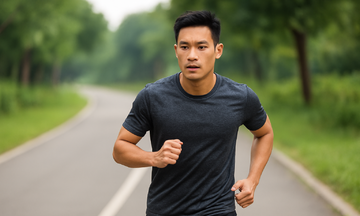
Run with correct posture: Engage your core muscles to avoid leaning too far forward or backward, and keep your knees slightly bent while running. Prioritize running on soft surfaces and avoid hard ones. Walk or run in a zigzag pattern when going downhill.
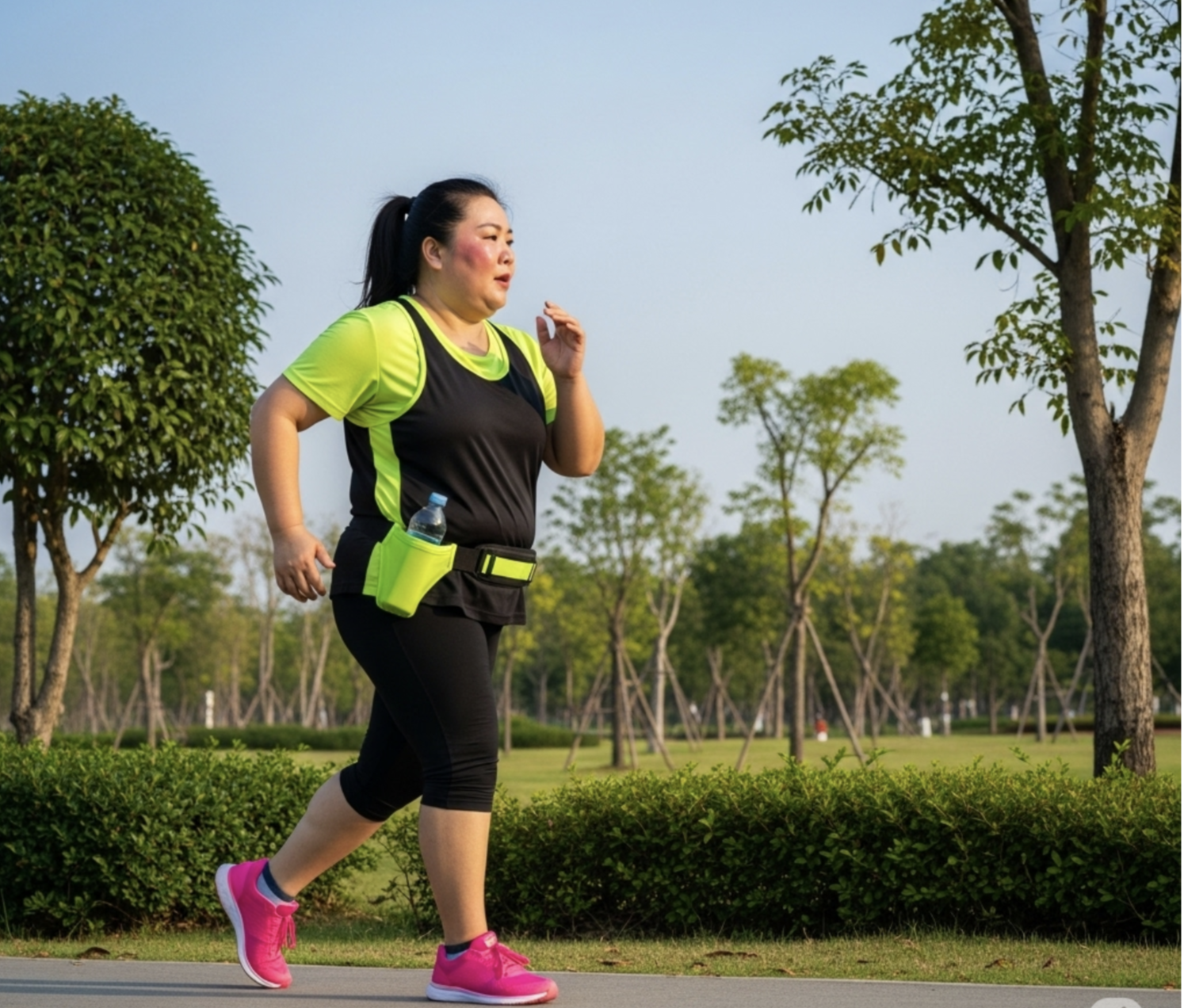 |
Overweight individuals are more prone to knee joint pain when running. AI-generated illustration |
Individuals with "runner's knee" syndrome often experience a dull, aching pain around or behind the kneecap, especially where it meets the lower part of the thigh bone. Pain typically occurs when walking, going up or down stairs, squatting, kneeling, sitting down or standing up, or sitting with bent knees for extended periods. Other symptoms include swelling and a popping or grinding sound in the knee.
Most cases can be treated successfully without surgery. Patients can apply the RICE method, which includes:
Rest: Avoid repetitive pressure on the knee.
Ice: To reduce pain and swelling, apply an ice pack to the knee for up to 30 minutes at a time.
Compression: Wrap the knee with an elastic bandage to limit swelling, but do not wrap it too tightly to avoid causing swelling below the knee.
Elevation: Place a pillow under the knee when sitting or lying down to prevent further swelling. For severe swelling, elevate the foot higher than the knee and the knee higher than the heart.
For additional pain relief, some over-the-counter nonsteroidal anti-inflammatory drugs (NSAIDs) can be used. Consult a doctor before using these medications, especially if you have existing medical conditions or are taking other prescription drugs.
Stop running until the injury has fully healed. After the pain and swelling subside, a doctor may guide the patient through specific exercises or physical therapy to restore knee strength and range of motion. Consider gentler forms of exercise, such as swimming, to avoid worsening the injury while maintaining musculoskeletal flexibility.
Patients may need to tape their knee or wear a brace for added support and pain reduction. In some cases, shoe inserts may be necessary to correct foot alignment. Surgical intervention is indicated when the patellar cartilage is damaged or the kneecap needs realignment.
Anh Ngoc (According to Healthline)
| Readers can submit questions about musculoskeletal health here for a doctor's response |