Professor Doctor Huynh Van Minh, President of the Vietnamese Hypertension Association and President of the Vietnam National Heart Association, stated at the Expanded Vietnam Hypertension Conference on 23/11 that this situation poses a significant challenge for public health.
A synthesis of survey results from the period 2017-2023, involving over 67,000 Vietnamese adults, revealed that more than 30% suffer from hypertension. Among these, nearly half of the hypertensive patients (49,8%) were newly diagnosed, 11,3% had never received treatment, and more than half of those undergoing treatment still had uncontrolled blood pressure.
Hypertension is the primary risk factor contributing to global mortality. Each second, more than one billion people worldwide face the risk of heart attack, stroke, and death due to uncontrolled high blood pressure. In 2024, an estimated 1,4 billion individuals aged 30-79 were affected, but less than one-fifth had their condition adequately controlled. This disease not only imposes a health burden but also causes severe financial impact on individuals, families, and healthcare systems, particularly in low and middle-income countries.
According to Professor Minh, the prevalence of hypertension in Vietnam is rising, with an earlier onset age and leading to numerous complications. The detection rate in the community remains low due to a lack of regular health check-ups, with many cases only being identified after complications have already appeared.
"The main reason for the low detection rate is that hypertension often presents without symptoms, leading people to be complacent, and widespread screening has not been implemented", he said.
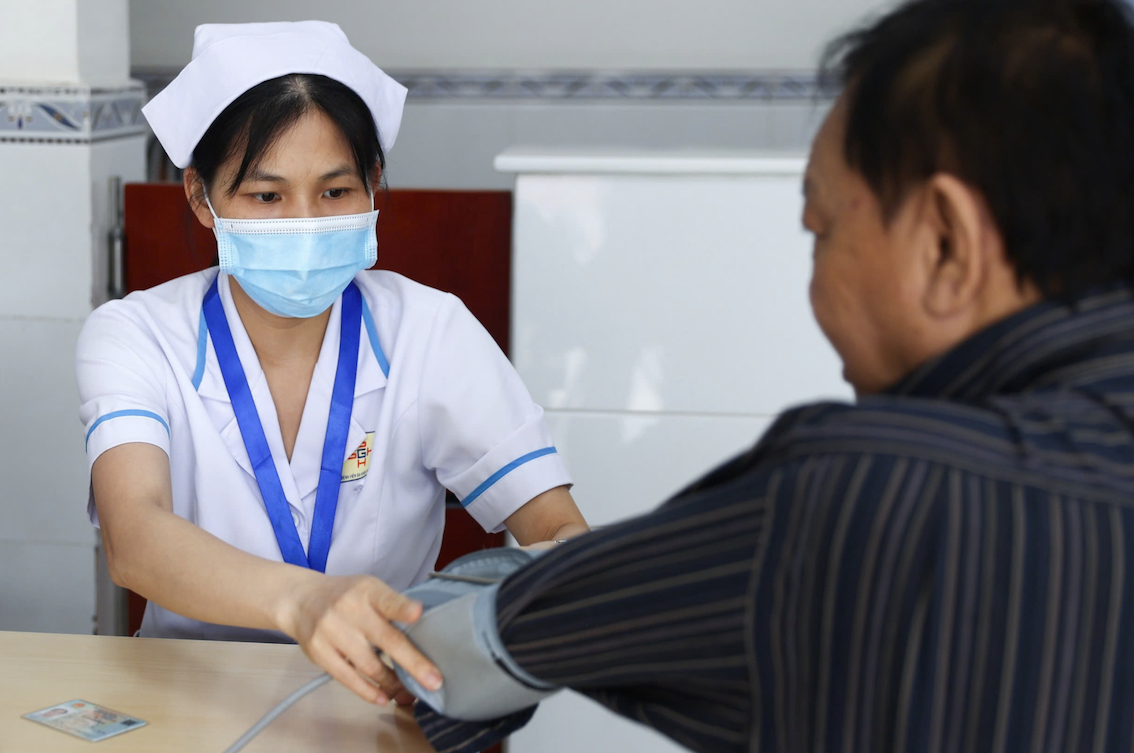 |
Healthcare workers measure blood pressure for residents. *Photo: Quynh Tran* |
Limitations at the grassroots level also pose a problem, as many facilities lack standard measuring devices, basic tests to assess complications, and consistent treatment guidelines among personnel. Medication use is not optimized, with monotherapy remaining common and combination therapies not yet widely implemented. Furthermore, hypertension often co-occurs with comorbid conditions such as chronic kidney disease, diabetes, and dyslipidemia, increasing the risk of severe cardiovascular complications like stroke, heart failure, and end-stage renal disease.
Another challenge is that the chronic disease management system is not fully integrated; medical records are not synchronized, home monitoring is not standardized, and early warning systems are lacking. High costs for medication and follow-up visits, especially in rural areas, make long-term disease control difficult. Treatment is not optimized, with non-individualized regimens, low medication adherence, fear of side effects, and even self-discontinuation of drugs. Additionally, risk factors such as obesity, diabetes, physical inactivity, high salt intake, smoking, and alcohol consumption further complicate blood pressure control.
To control hypertension, the World Health Organization (WHO) with its WHO HEARTS initiative encourages healthy lifestyles, guideline-based treatment, and easy access to medications and technology. In Vietnam, programs focus on patient education and counseling, simplifying treatment, regular blood pressure monitoring, applying telemedicine, and promoting lifestyle changes such as healthy eating, increased physical activity, quitting smoking, and limiting alcohol consumption.
Doctor Ly Van Chieu, Director of the Cardiology Center at Cho Ray Hospital, stated that community awareness of hypertension has improved significantly. Thanks to communication efforts and technology, people are gradually understanding that hypertension is a "silent killer" that can pose danger at any time. Smartwatches and artificial intelligence applications help monitor blood pressure and remind patients to take medication on time, but treatment decisions are still guided by doctors. Doctor Chieu emphasized that treatment adherence is the most crucial factor for disease control.
Doctor Nguyen Ngo Quang, Director of the Department of Science, Technology and Training, Ministry of Health, highly praised the role of the Vietnamese Hypertension Association and the Vietnam National Heart Association in standardizing treatment regimens, promoting scientific research, training doctors, and applying digital technology in chronic disease management. These are key factors helping Vietnam reduce cardiovascular events, improve care quality, and lessen the disease burden, especially given the rising hypertension rates among young people, urban workers, and those in urbanizing rural areas.
Experts recommend that everyone, especially those over 40, should have their blood pressure checked at least once a year. Individuals with co-existing conditions such as diabetes or kidney disease need regular monitoring according to healthcare facility guidelines. Grassroots health stations and family doctors can manage hypertension patients, including lifestyle interventions and medication; referrals to higher levels of care are only necessary when the disease is uncontrolled or high-risk complications require specialized intervention.
Le Phuong