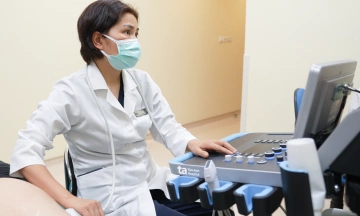
Associate Professor, Doctor Nguyen Thi Thu Hien, Head of the Refractive Department at Tam Anh High-Tech Eye Center, Tam Anh General Hospital Hanoi, explained that Ngoc's condition involved strabismus that was not constant but appeared intermittently. When the child was alert and focused, both eyes could maintain alignment, making it challenging for family members to detect. Conversely, when tired, sleepy, unfocused, or looking into the distance, her binocular vision decreased, causing her eye to easily deviate outward.
Measurements of the strabismus using a specialized prism showed an eye deviation of 30 prism diopters base-in (equivalent to 15 degrees of strabismus). The oculomotor examination revealed that the child had V-pattern strabismus, a type of ocular motility disorder where the eye tends to deviate more outward when looking up compared to looking down. This abnormality is caused by overactivity of the inferior oblique muscle.
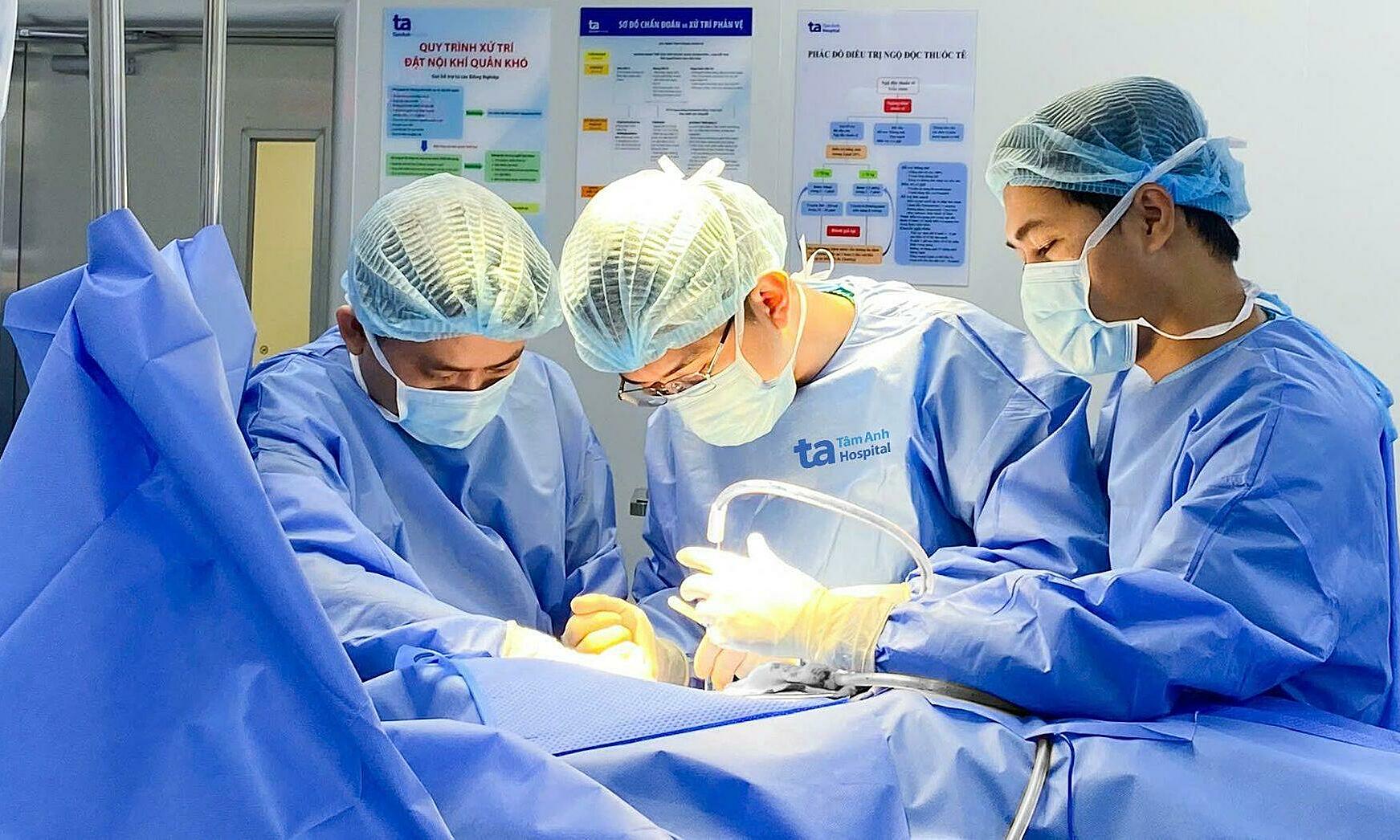
Following a consultation, the medical team decided to perform strabismus surgery on both of the child's eyes. Associate Professor Hien noted that this case was complex, requiring not only surgical correction for exotropia but also intervention to treat the overactive inferior oblique muscle. This demanded highly precise calculations for the degree of eye muscle adjustment.
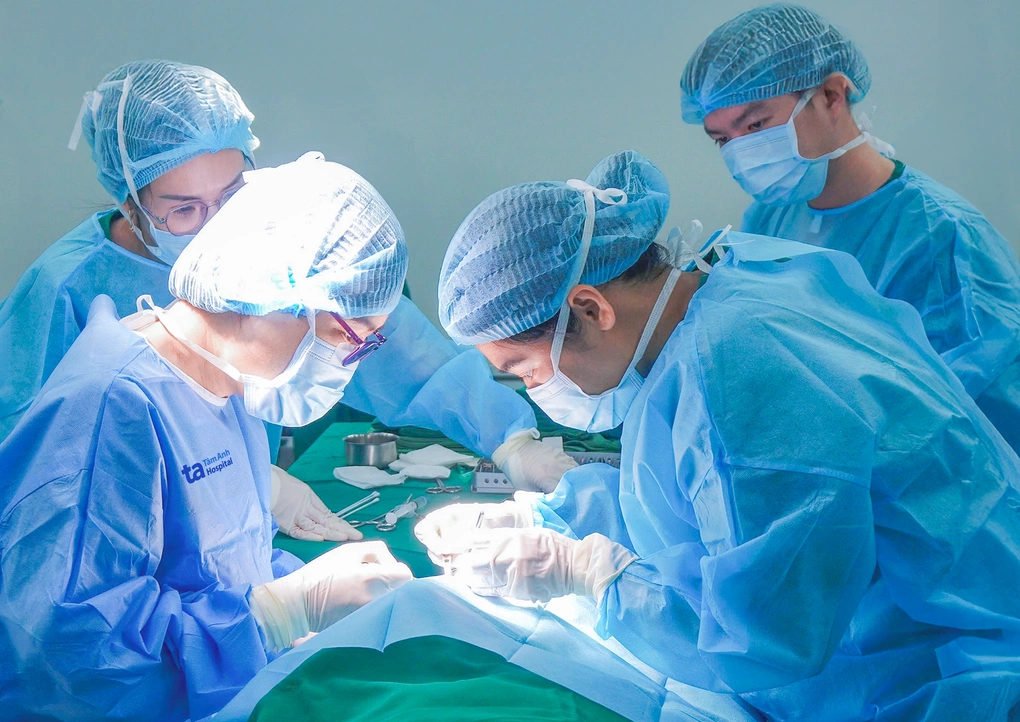 |
The doctors are performing strabismus surgery on the young patient. *Photo: Tam Anh General Hospital*
After completing pre-operative tests and anesthesia evaluation, the child underwent surgery under laryngeal mask anesthesia. The doctors simultaneously recessed the lateral rectus and inferior oblique muscles in both eyes to correct the exotropia and the overactive inferior oblique muscle, thereby addressing the V-pattern strabismus. The surgery lasted approximately 35 minutes, and the patient recovered quickly, being discharged on the same day.
Intermittent exotropia does not always manifest continuously, making it easily overlooked. If a child frequently shows signs of outward eye deviation, especially when tired, looking far away, or unfocused, a specialized eye examination is necessary. This helps confirm the diagnosis of strabismus, measure the degree of deviation, evaluate binocular visual function, and establish regular monitoring. Early detection and timely treatment increase the chances of preserving binocular vision, reduce the risk of impaired fusion, and improve post-surgical outcomes.
Hoang Duong
*Patient's name has been changed
| Readers can submit questions about ophthalmological conditions here for a doctor's response. |