Four years prior, the boy underwent surgery for a head tumor (craniopharyngioma), followed by radiotherapy for residual tumor tissue to prevent recurrence. For about a year, he frequently experienced headaches, dizziness, and occasional transient numbness or weakness in his limbs. Recently, his condition worsened, leading to seizures, left-sided weakness, and prolonged paralysis preventing movement.
On 3/4, Master of Science, Doctor Nguyen Ngoc Pi Doanh, from the Neurosurgery Department at Children's Hospital 2, stated that an MRI scan revealed the boy had a cerebral infarction and severe narrowing of both internal carotid arteries. A DSA scan confirmed he had Moyamoya disease affecting both hemispheres, prompting doctors to decide on surgery to prevent recurrent strokes.
Moyamoya is a brain vascular disease that causes progressive narrowing of the internal carotid arteries and the formation of abnormal blood vessels, leading to cerebral ischemia. Common symptoms include: headaches, dizziness, seizures, transient ischemic attacks, and most severely, stroke or cerebral hemorrhage.
The cause of the disease is currently unknown; it may be linked to gene abnormalities (approximately 10% hereditary) or occur after radiotherapy, infections like meningitis, Covid-19, or vasculitis. The most concerning characteristic of this disease is the repeated occurrence of strokes if not treated promptly. With each stroke, the brain sustains further damage and progressively weakens.
To save the child's nervous system, surgery is considered the optimal treatment method. The surgery aims to "bypass" blood vessels, meaning a healthy blood vessel is borrowed and connected to create a new pathway to supply blood to the brain, compensating for the obstructed original path. In children, indirect revascularization techniques are often preferred due to their suitability for small blood vessels and long-term effectiveness.
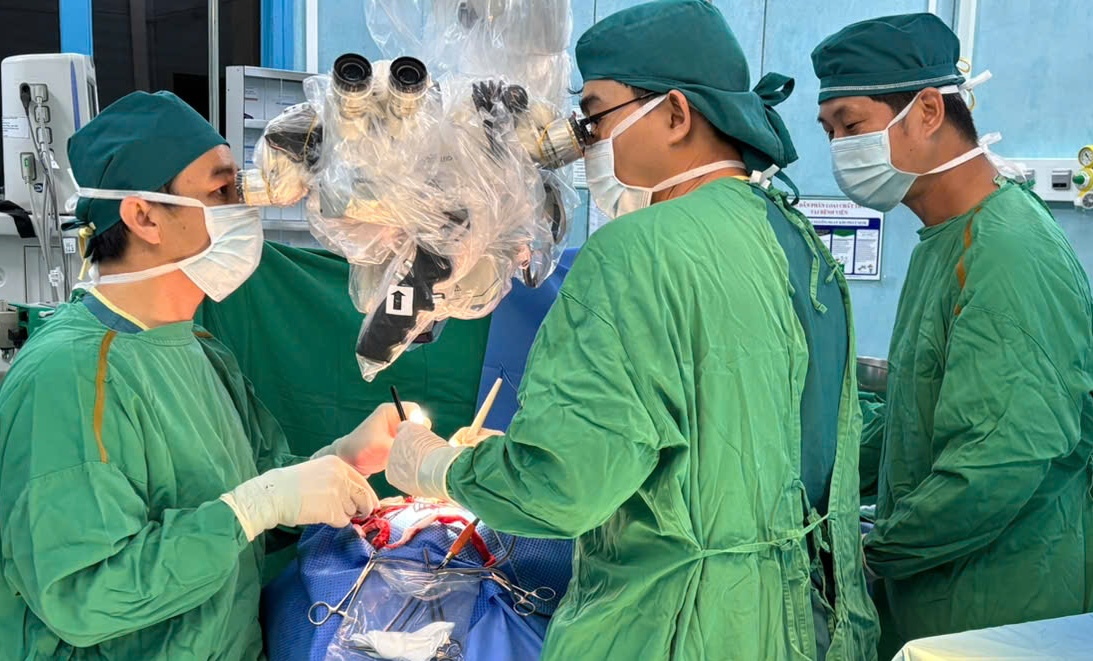 |
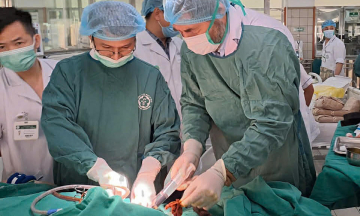
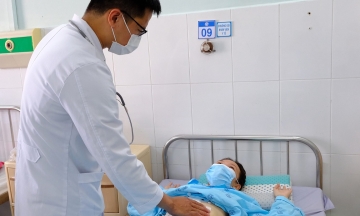
Doctors performing surgery on the patient. Photo: Hospital provided |
According to doctors, the timing of the surgery determines the recovery outcome. Early intervention, before significant brain damage occurs, leads to a better prognosis; conversely, severe damage makes recovery difficult.
To date, Children's Hospital 2 has treated over 120 children with this disease, performing more than 200 surgeries. Most pediatric patients recover well; a few still have mild sequelae due to delayed admission.
Doctor Pi Doanh advises parents that if a child exhibits unusual signs such as prolonged headaches, dizziness, or sudden transient limb weakness, they should seek early neurological consultation to avoid missing the "golden window" for treatment.
Le Phuong