On 3/4, Doctor Nguyen Le Phu, a specialist in General Surgery at Thu Duc General Hospital, stated that the patient's test results were surprising, revealing a hepatitis B virus infection. Additionally, her alpha-fetoprotein (AFP) levels, a liver cancer marker, were significantly elevated. A contrast-enhanced abdominal CT scan identified lesions consistent with a liver tumor.
Following a multidisciplinary consultation, doctors recommended a left hepatectomy to remove the tumor. The surgical team, led by Doctor Mai Hoa, Deputy Director of the hospital, performed the two-hour operation. They utilized modern equipment such as a harmonic ultrasonic scalpel and a specialized vessel sealing device. After surgery, the patient recovered well, had no fever, could eat, and was able to walk within days.
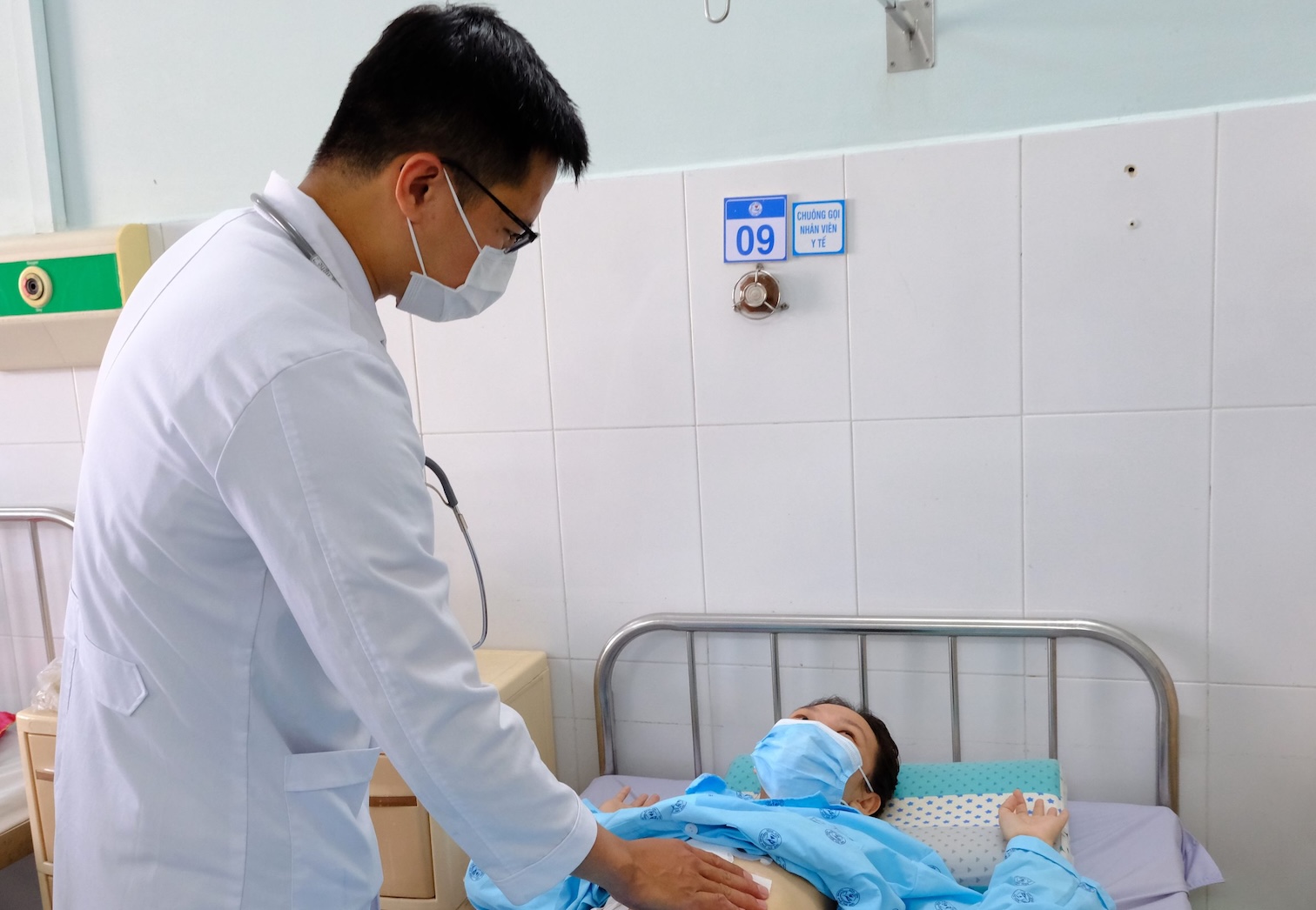 |
Doctors examine the patient after surgery. Photo: Provided by the hospital |
Pathology results confirmed the patient has advanced hepatocellular carcinoma (HCC) with vascular invasion, but fortunately, no lymph node or distant metastasis. She is scheduled for a follow-up appointment on 14/4 to begin treatment at the Oncology Department, combined with hepatitis B treatment.
According to Doctor Phu, liver cancer is increasingly affecting younger individuals. People infected with hepatitis B or C virus, with or without cirrhosis, are at a very high risk. In its early stages, the disease often presents with few or vague symptoms, which young people easily overlook. Without early diagnosis and surgery, the tumor will grow, spread to healthy liver tissue, and metastasize, making treatment complex, costly, and difficult to cure completely.
Doctors recommend regular health check-ups two times each year. Specifically, high-risk groups carrying hepatitis B or C virus or with cirrhosis must undergo liver ultrasounds and blood tests every 3-6 months. Listening to one's body and not dismissing even the smallest symptoms are key to early detection and self-protection against this silently progressing disease.
Le Phuong