On 24/9, Tang Chi Thuong, Director of the TP HCM Department of Health, announced this initiative is a key solution within the hospital-health station connection program for the 2026-2030 period. The selected doctors possess practical experience and are suited to the specific needs of each station.
Rotating doctors will directly provide examinations and treatment, manage non-communicable diseases, handle initial emergencies, and guide and enhance the capacity of local medical staff. They will also serve as a crucial link, connecting health stations with hospitals for consultations, referrals, training, and support in cases beyond the stations' immediate capabilities.
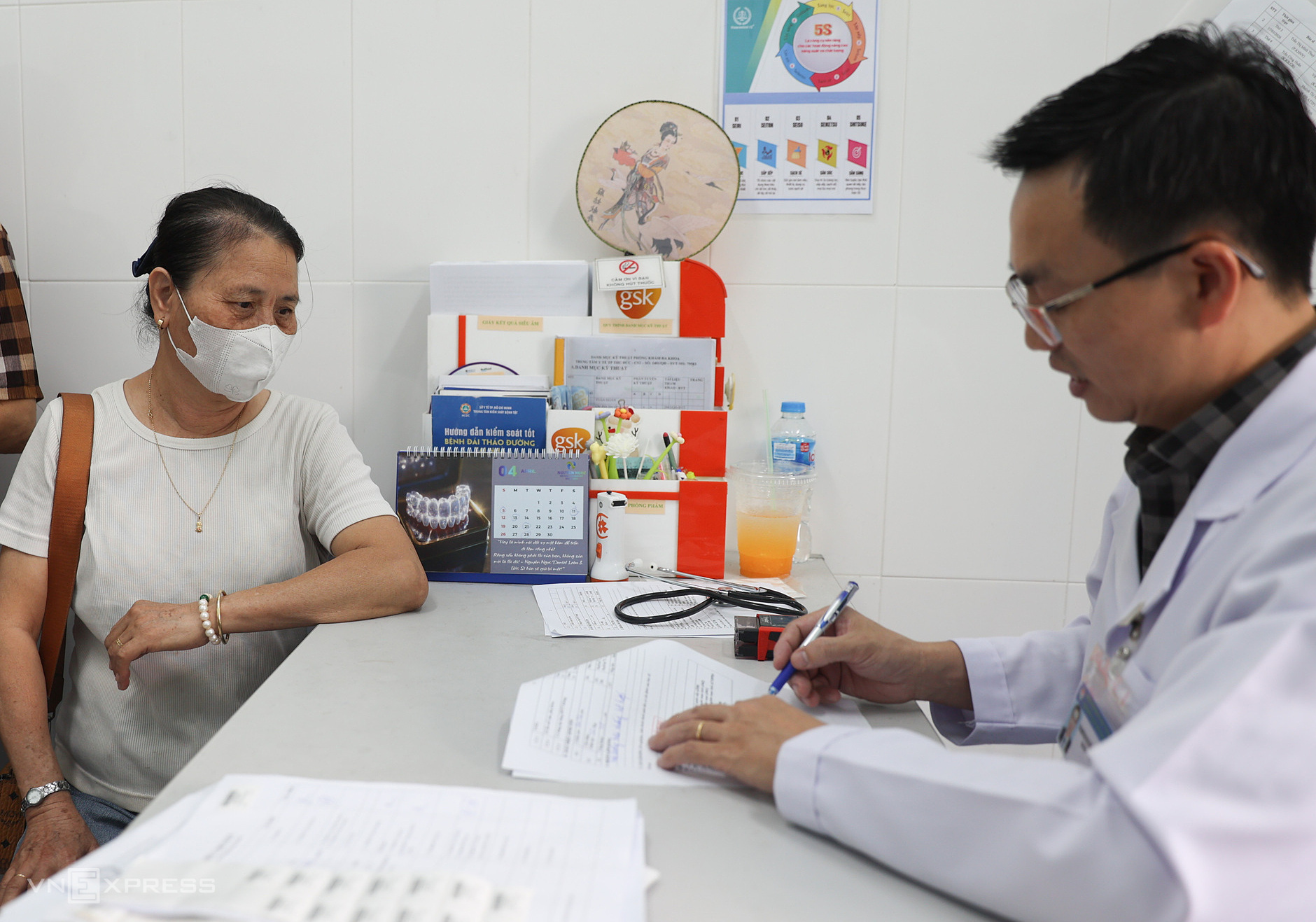 |
Nguoi dan kham benh tai tram y te phuong Tang Nhon Phu, thang 4/2026. Anh: Quynh Tran
On 22/9, the TP HCM People's Council approved a policy to support medical staff rotating to health stations, effective from 1/10/2026 until the end of 2030. Doctors will receive monthly support ranging from 12-20 million VND, depending on their qualifications. This amount will be multiplied by 1,2 times in Thanh An island commune and 1,5 times in Con Dao special zone, equivalent to a maximum of 24 million and 30 million VND, respectively. Nurses, midwives, medical technicians, and pharmacists will receive 8-10 million VND per month.
In addition to boosting human resources, TP HCM is assigning a general hospital or regional medical center to partner with each of the 168 commune, ward, and special zone health stations. The partner hospital will assess the current situation, identify needs, and support the station with training, consultations, technical transfer, initial emergency care, non-communicable disease management, and referrals. Support will also extend to administrative aspects such as quality management, patient safety, medication, laboratory testing, infection control, and digital transformation.
Furthermore, specialized hospitals will support the entire network of health stations in their respective fields through training, consultation, guidance on treatment, and appropriate technical transfers.
In the next phase, the number, specialty, and duration of rotations will be adjusted based on the actual needs of each station. Effectiveness will be measured by the station's treatment capacity, the competence of the local team, and the extent to which residents utilize grassroots healthcare services, rather than merely counting the number of rotating doctors or training sessions.
Le Phuong