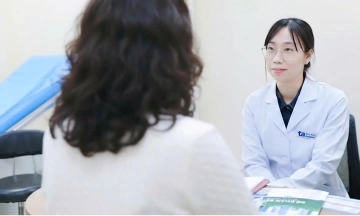
Hoang and his wife, married for three years without children, sought infertility treatment at Tam Anh General Hospital, TP HCM. Doctor Nguyen Cong Danh, from the Andrology Unit, Center for Reproductive Assistance, diagnosed Hoang with severe testicular atrophy, with each testicle measuring only two ml, one-sixth of the normal volume. This condition was attributed to mumps complications he experienced 13 years ago. Endocrine tests confirmed impaired sperm production, showing increased FSH hormone levels and decreased testosterone, though no chromosomal abnormalities were found.
Hoang had previously undergone testicular sperm extraction (TESE) for IVF at another hospital. However, the procedure yielded very few sperm, resulting in only two day-three embryos, and the subsequent embryo transfer was unsuccessful. Recognizing that sperm production might still occur in specific testicular tissues, Doctor Danh recommended microsurgical testicular sperm extraction (micro-TESE) as a more advanced approach.
During the micro-TESE procedure, doctors used a microsurgical microscope, magnified 30 times, to meticulously search for potential seminiferous tubules amidst Hoang's atrophied, scarred, and adhered testicular tissue. Each carefully extracted tissue fragment was immediately transferred to an adjacent laboratory, where embryologists examined it under a microscope to locate viable sperm.
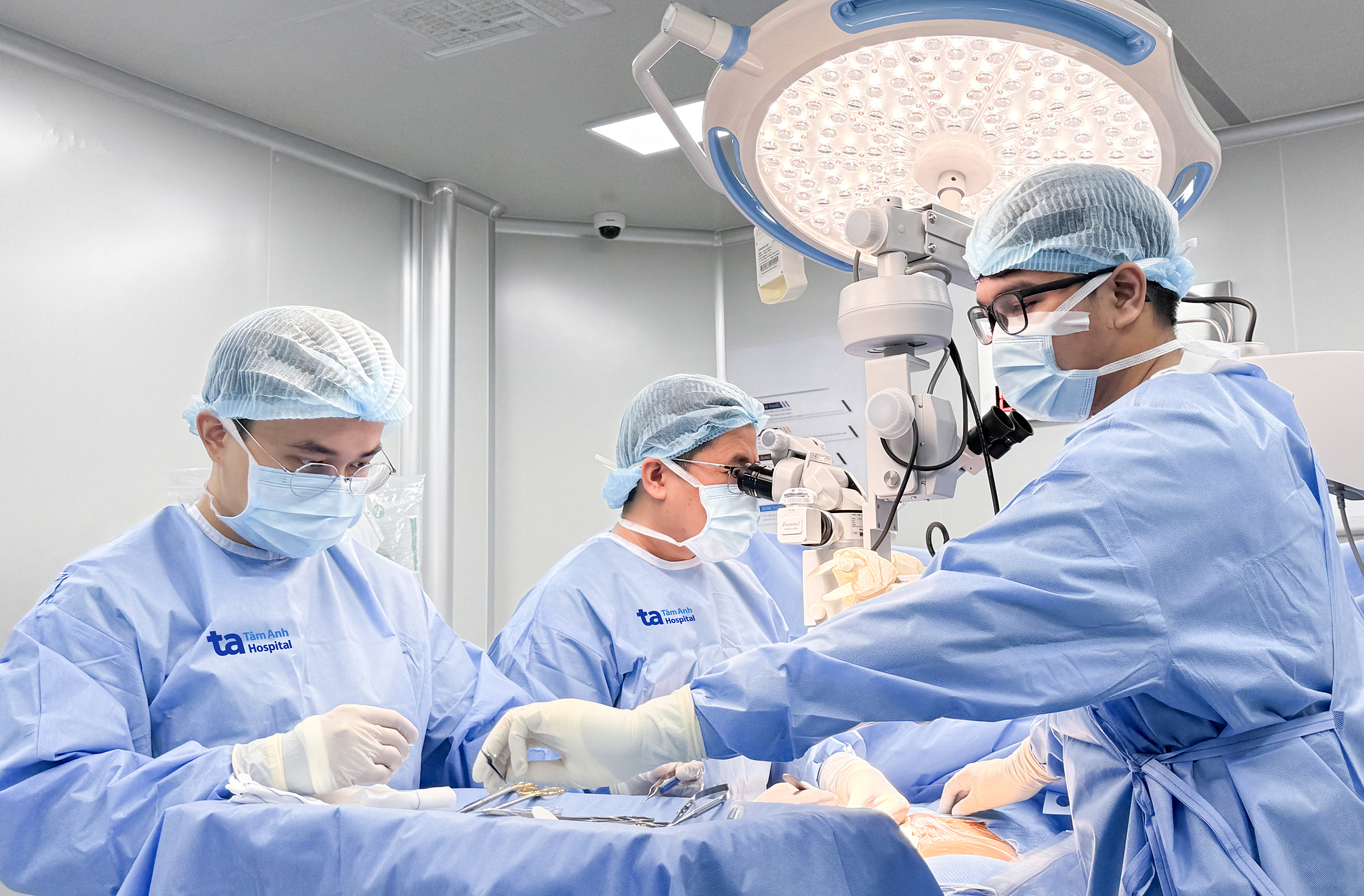 |
Doctor Danh (right) and his team perform micro-TESE microsurgery to find the patient's sperm. *Photo: Tam Anh General Hospital*
Upon the embryologists' announcement of successful sperm retrieval, the surgical team continued their meticulous search, exploring additional potential tissue areas to maximize the number of collected samples. After 90 minutes, the team successfully gathered enough sperm for one IVF cycle and cryopreserved additional samples for future use. Concurrently, doctors addressed Hoang's varicocele during the same operation. Hoang's wife is currently undergoing endometrial preparation, with embryo transfer anticipated in the near future.
Doctor Danh clarified that not all men who contract mumps experience infertility. The risk is typically associated with orchitis complications, especially if mumps occurs after puberty, where infertility rates are recorded at over 35%. This inflammation can damage the cells and structures vital for spermatogenesis, leading to gradual testicular atrophy after the acute phase and consequently, impaired sperm production. In severe cases of testicular damage, patients may develop azoospermia, a condition characterized by the complete absence of sperm in semen.
Men who contract mumps after puberty and experience symptoms like testicular swelling and pain during the illness should undergo early reproductive health checks after recovery. If sperm abnormalities are detected, patients should receive regular monitoring, including hormonal and testicular function assessments. Considering sperm cryopreservation is advisable in necessary cases to preserve fertility.
Ha Thanh
*Patient's name has been changed
Readers can submit questions about infertility here for doctors to answer. |