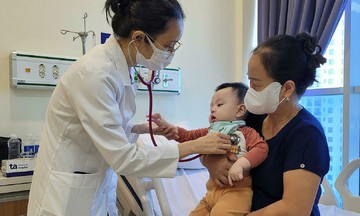
On the morning of 2/12, a representative from University Medical Center Ho Chi Minh City (UMC) announced that after 48 hours of intensive care, the young patient showed many positive signs of recovery. The boy is conscious, cooperative, and has begun to breathe independently. His hemodynamic parameters are stable, and vasopressor requirements are gradually decreasing. Kidney function and other organs show marked improvement, while inflammation markers have decreased.
"These vital signs indicate that the new heart has integrated well with the body, opening up a chance at life for the boy who once faced the brink of death," a UMC representative stated.
 |
The process of transporting the heart from Hanoi to Ho Chi Minh City. *Photo: Hospital provided* |
Previously, the patient's life was hanging by a thread due to end-stage heart failure that was unresponsive to treatment, with survival depending solely on an organ transplant miracle. On the morning of 29/11, hope emerged when Central Military Hospital 108 in Hanoi announced the availability of a suitable organ from a brain-dead donor. University Medical Center Ho Chi Minh City immediately coordinated with City Children's Hospital to activate an urgent cross-Vietnam "organ retrieval - transport - heart transplant" protocol.
Doctor Cao Dang Khang, Head of UMC's Department of Cardiac Surgery, traveled directly to Hanoi to perform the organ retrieval surgery. The heart was removed from the donor's chest, preserved in a specialized solution, and traveled over 1,600 km by air to Ho Chi Minh City, where it was promptly brought into the operating room under optimal conditions.
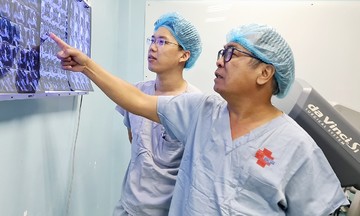
That same afternoon, the heart transplant was performed under the direction of Professor Nguyen Hoang Dinh, Deputy Director of UMC. He noted that this was a particularly complex transplant, challenging in both technique and time. The biggest hurdle was the disparity in body size, as the donor was an adult weighing 57 kg, while the patient weighed only 33 kg. The team had to meticulously plan each suture to fit the larger heart into the child's chest.
Challenges compounded as the patient had just recovered from a bout of pneumonia, high fever, and pre-operative infection. This was further complicated by high pulmonary artery pressure, which increased the risk of right ventricular failure. Critically, the cold ischemia time (the heart outside the body) reached 6 hours, making the recovery of contractile function a major challenge.
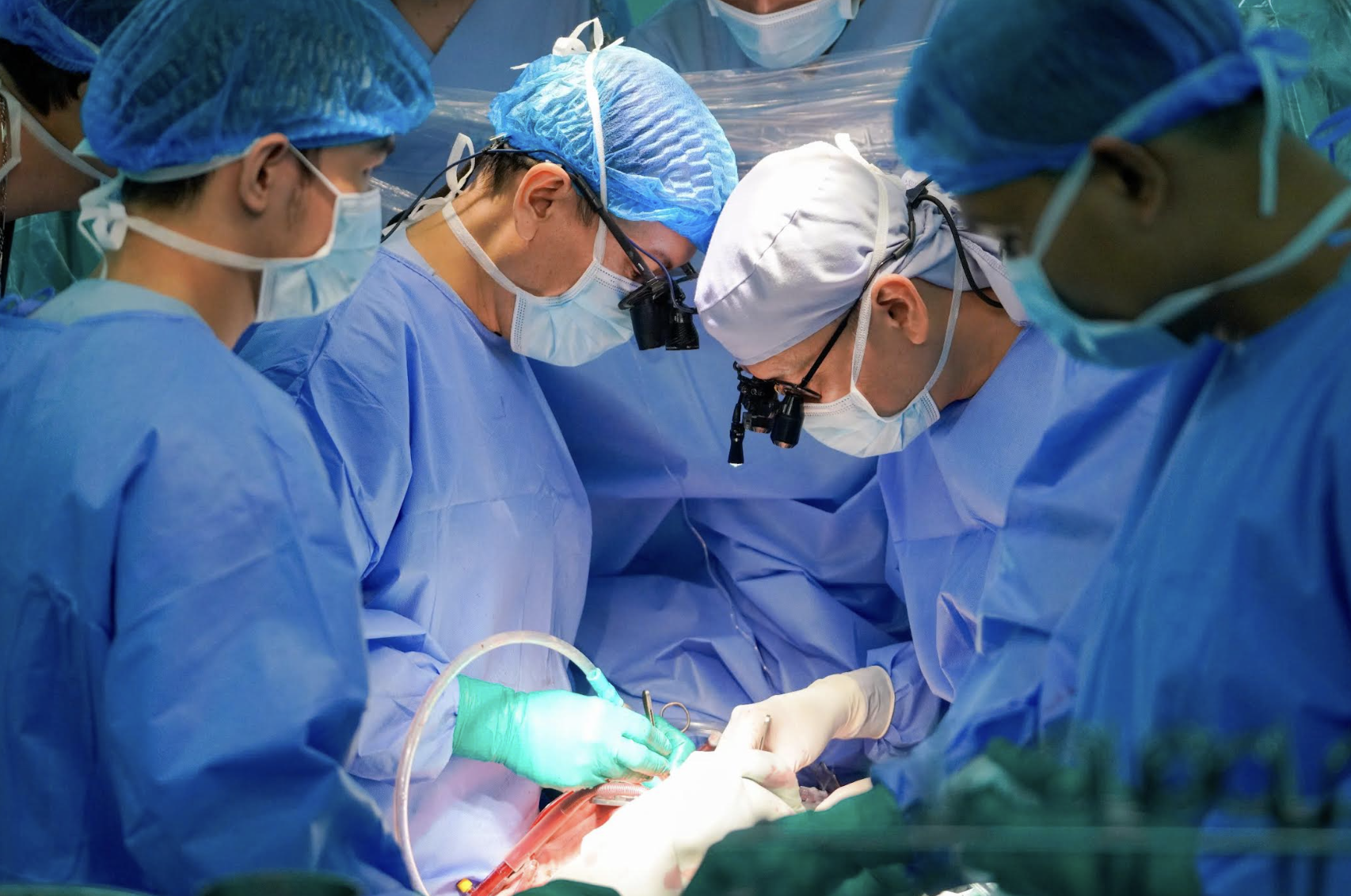 |
Doctors performing a heart transplant for the child patient. *Photo: Hospital provided* |
Around 19:00, Doctor Khang reported that the operating room erupted in emotion as the donated heart beat its first rhythms in its new chest. 90 minutes later, the medical team completed hemostasis, drainage, and chest closure.
This marks the 5th heart transplant and the youngest patient to undergo the procedure at UMC. Khang stated that this success not only signifies a professional advancement but also continues the humanitarian story of organ donation, where life is reborn from the passing of a stranger.
In Vietnam, over 33 years, the medical sector has performed over 9,500 organ transplants, including over 100 heart transplants. Current organ transplant techniques adhere to strict safety protocols and are rigorously licensed by the Ministry of Health.
My Y