During a follow-up visit to Tam Anh General Hospital TP HCM in August, Mr. Tuan showed signs of fatigue and poor appetite. Dr. Ta Phuong Dung, a specialist doctor II and Deputy Director of the Urology - Nephrology - Andrology Center, also Head of the Nephrology - Dialysis Department, prescribed intravenous fluids and electrolytes in the day treatment area to improve his condition, without requiring hospital admission.
For Ms. Thu, the doctor noted stable blood lipids and healthy kidneys. She needs to maintain her diet, medication, and regular follow-up appointments. This was one of the regular check-ups the two have had for over a year. Mr. Tuan is undergoing treatment for kidney failure, while his daughter needs to control her risk of kidney damage.
Two years ago, Ms. Thu's general health check-up revealed several abnormalities, including kidney cysts, hematuria, grade two fatty liver, blood lipids at 4,7 mmol/L (normal is below 1,7 mmol/L), and high blood pressure. Dr. Dung assessed that these factors could silently damage the small blood vessels in the kidneys over time. If not well-controlled, patients may experience a gradual decline in kidney function, progressing to chronic kidney disease, while also increasing the risk of cardiovascular complications and stroke.
Dr. Dung developed a treatment regimen for Ms. Thu, combining medication with dietary adjustments, blood pressure monitoring, and regular check-ups to control metabolic disorders and preserve kidney function. After nearly one year of treatment, Ms. Thu's blood lipid levels decreased to 2,7 mmol/L, and her liver enzymes were stable. Subsequent tests showed creatinine levels ranged between 41-57 µmol/L, indicating good kidney function.
Ms. Thu decided to bring her father from his hometown to be examined and treated alongside her. Mr. Tuan had chronic kidney disease stage 3B for over 10 years, receiving treatment at a local hospital. Upon examination at Tam Anh General Clinic District 7, his glomerular filtration rate (eGFR) was below 30 ml/min/1,73 m² (normal is above 90 ml/min/1,73 m²). He also suffered from mixed hyperlipidemia, fatty liver, anemia due to chronic disease, hyperuricemia, chronic ischemic heart disease, and bronchial asthma.
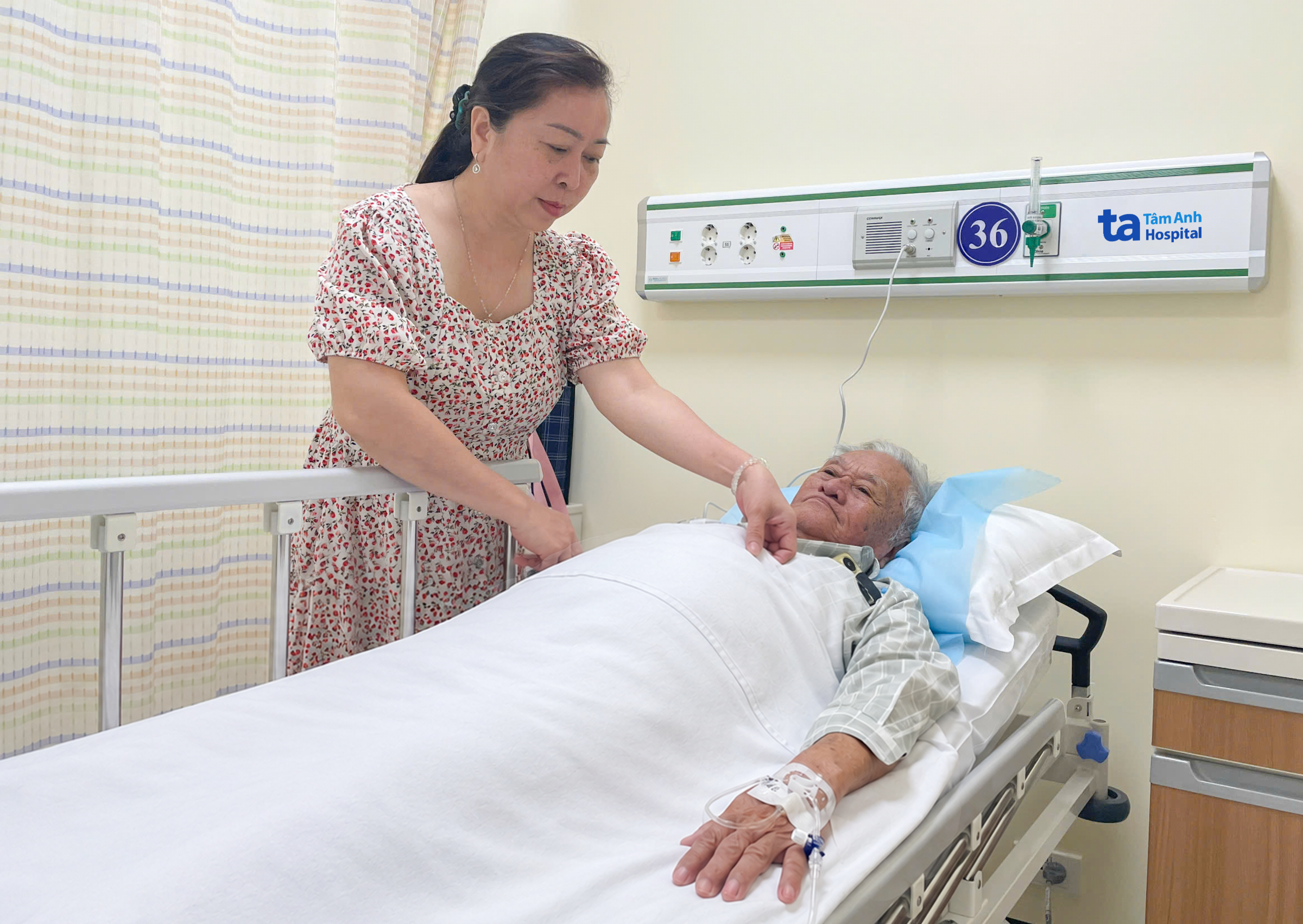 |
Ms. Thu caring for her father while he receives intravenous fluids in the day treatment area at Tam Anh General Clinic District 7. Photo: Dinh Lam |
Ms. Thu caring for her father while he receives intravenous fluids in the day treatment area at Tam Anh General Clinic District 7. Photo: Dinh Lam
For Mr. Tuan, Dr. Dung developed a treatment regimen aimed at preserving kidney function. The patient's care focused on simultaneously managing underlying conditions, adjusting his diet, and closely monitoring blood pressure, blood sugar, and kidney function indicators.
When Mr. Tuan experienced significant fatigue, the doctor prescribed intravenous fluids and electrolytes on-site, allowing him to be discharged the same day without requiring extended hospitalization. As he suffered from multiple underlying conditions simultaneously, the doctor had to carefully adjust medication to both protect kidney function and avoid affecting cardiovascular health, blood sugar, or respiration. As a result, he eats better, feels less fatigued, and moves around more easily. His glomerular filtration rate maintained around 32,63 ml/min/1,73 m², with stable kidney function.
Dr. Dung explained that chronic kidney disease is not a hereditary disease, but some risk factors such as polycystic kidney disease or Alport syndrome can be hereditary. Most cases of chronic kidney disease stem from common conditions such as diabetes, high blood pressure, dyslipidemia, obesity, or medication abuse.
Mr. Tuan developed chronic kidney disease against a background of long-standing diabetes and high blood pressure. Ms. Thu has not yet developed kidney failure but had many risk factors detected early, allowing her to effectively manage underlying conditions and preserve kidney function.
The doctor recommends that if a family has members with kidney disease, diabetes, or high blood pressure, relatives should undergo regular health check-ups to detect early risks of kidney damage and intervene promptly. Everyone should maintain a healthy lifestyle, control blood pressure, blood sugar, blood lipids, and adhere to treatment to slow the risk of disease progression.
Dinh Lam