Dr. Hung Yung-hsiang, a nephrologist with over 20 years of experience in Taiwan, announced this case on 15/9 to warn against the trend of replacing pure water with antioxidant-rich beverages. The patient was admitted to the emergency room after dinner, experiencing severe right flank pain, vomiting, and urine as dark as tea. Imaging scans revealed a significant amount of calcium oxalate crystal stones blocking the urinary tract in both kidneys. Previously, the patient maintained a routine of brewing two pots of strong tea daily, believing it aided digestion and nourished his body, while explicitly avoiding plain water.
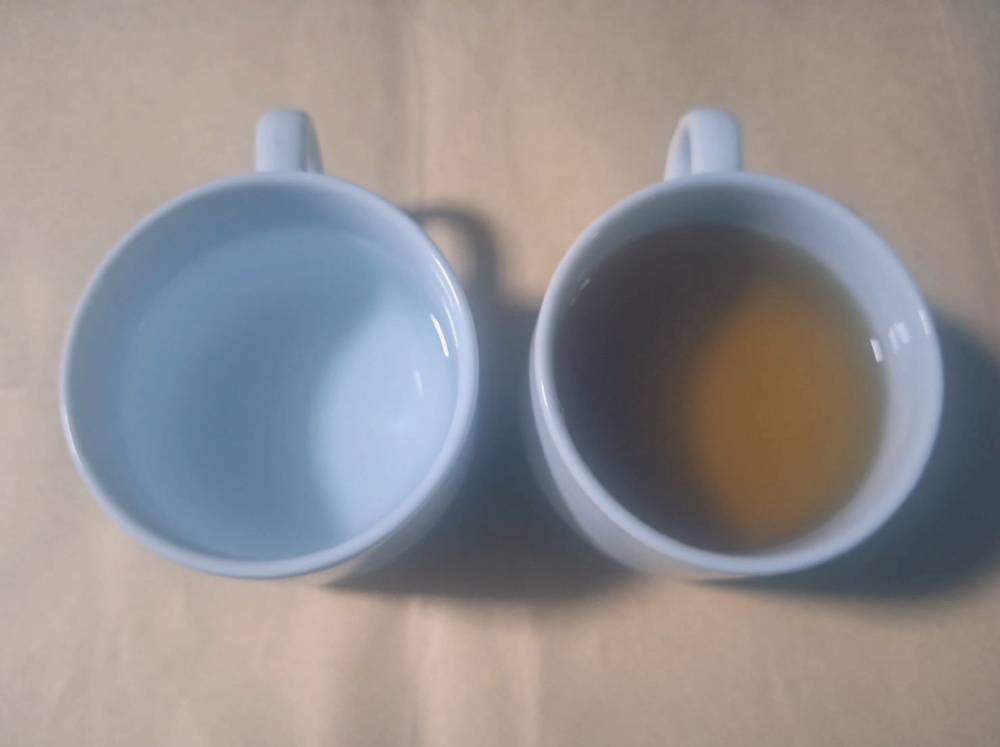 |
Bac si Hung goi y phuong phap bu nuoc "1:1" de uong tra khoa hoc, dong thoi tuan thu nguyen tac "uong tra xen ke nuoc loc". Anh: Tang Chao-tsun
Dr. Hung emphasized that the overuse of strong tea activates three mechanisms that directly harm the excretory system. First, both green and black tea leaves contain concentrated oxalic acid. The New England Journal of Medicine (NEJM) has published studies showing that consuming several liters of strong tea daily causes this acid's concentration to surge in the blood, combining with calcium in the kidneys to form solid crystals, leading to stones and oxalate nephropathy. Second, caffeine, a stimulant in tea leaves, triggers a strong diuretic response, depleting the body's fluid reserves and leading to chronic dehydration. A lack of water causes the blood flowing to the kidneys to thicken, impairing the filtration pressure in the glomeruli. Third, substances like theophylline, phosphorus, and oxalic acid force the glomeruli to increase their workload for excretion, while the body lacks pure water to dilute waste products.
To protect the urinary tract while still enjoying tea, Dr. Hung recommends adopting a 1:1 hydration rule. For every cup of tea consumed, individuals should drink at least one equivalent cup of plain water to flush out accumulated impurities. Additionally, people should avoid steeping tea leaves for too long, refrain from drinking overly strong tea, and avoid tea on an empty stomach.
Binh Minh (According to China Daily News, China Times)