Dr. Nguyen Ngoc Tran, a dermatologist at Tam Anh General Hospital TP HCM, reported that Mai presented with a 5 mm lesion on her forehead and two 3 mm lesions on her cheeks. All areas where the "remedy" was applied showed signs of skin damage, including a slightly pitted center, inflammation, and post-inflammatory hyperpigmentation. The exact nature of the "remedy" Mai used remains unknown. However, Dr. Tran warned that many unverified mole removal products often contain corrosive acids or chemicals. These substances can destroy tissue at the application site, but they struggle to target the mole precisely, often spreading to surrounding healthy skin. High concentrations or prolonged contact with such chemicals can cause burns, ulcers, and persistent pain.
 |
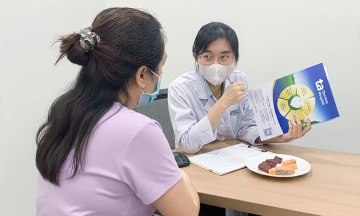
Doctor Tran advises Mai on treatment methods. Photo: Tam Anh General Hospital |
Mai reported that her moles disappeared just one day after applying the product. However, Dr. Tran clarified, "The disappearance of moles after a few days of applying a remedy does not mean they have been safely treated." When the damage penetrates deep into the skin layers, the healing process can alter tissue structure, leading to the formation of pitted scars. Post-injury inflammation can also trigger hyperpigmentation, causing the treated skin to become darker and less aesthetically pleasing than its original state. Furthermore, skin treated with chemicals can experience reduced or complete loss of pigmentation, making subsequent treatment more challenging.
Doctors prioritized controlling Mai's inflammation and providing care for the damaged skin. Once the skin fully healed, they assessed the extent of scarring and hyperpigmentation to determine a suitable treatment plan. After one week, the inflammation was controlled, and the pain subsided. Mai received instructions for gentle care of the affected areas, including adequate moisturizing and sun protection, while being advised to avoid scratching, rubbing, or applying additional acid-based products to the skin.
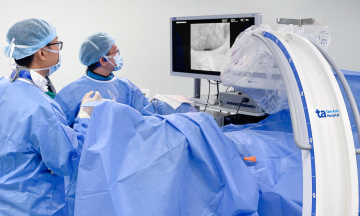
For the post-inflammatory pitted scars, doctors used CO2 gas (Trifill Pro) combined with laser therapy. This approach aims to stimulate collagen regeneration, improving the surface and depth of the scars, as well as addressing hyperpigmentation. These methods are performed only after the skin is free from inflammation and acute damage to minimize irritation and further injury. Dr. Tran strongly advised against self-treating moles before their nature is properly identified. Most moles are benign, but some pigmented lesions exhibit abnormal characteristics that require examination by a dermatologist before removal. Moles that change in size, shape, color, border, or that bleed, ulcerate, or cause prolonged itching, carry a risk of cancer and require thorough examination. Applying chemicals can cause burns, ulcers, scars, and alter the mole's appearance, making subsequent assessment more difficult.
Minh Huong
*Character's name has been changed.
| Readers can submit questions about dermatology and aesthetic skin conditions here for doctor consultation. |