Most cancers, such as lung, colorectal, and breast cancer, progress rapidly. Prolonged surgical delays can lead to uncontrolled tumor growth, diminishing patient prognosis and survival rates. Papillary thyroid cancer, however, is an exception. It is the most common type of thyroid cancer, representing about 80-85% of cases, but typically progresses slowly.
Papillary thyroid cancer originates from thyroid cells. It often remains localized to one lobe for years without symptoms, with tumors growing slowly or not at all.
Your diagnosis of T1N0M0 indicates an early stage: the tumor is under 2 cm, potentially confined to the thyroid gland, without lymph node or distant metastasis. For tumors under 1 cm, immediate surgery might not be required; doctors often recommend active ultrasound monitoring. Surgery becomes necessary if the tumor grows beyond 1 cm, invades adjacent structures, or shows signs of lymph node metastasis.
 |
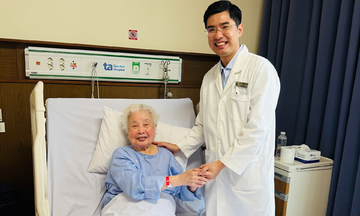
A doctor advises a thyroid cancer patient. Photo: Tam Anh General Hospital |
For early-stage papillary thyroid tumors measuring 1-2 cm, where surgery is indicated, a one-month delay can remain safe if the patient exhibits no suspicious neck lymph nodes, hoarseness, difficulty breathing, or tumor invasion of the trachea or recurrent laryngeal nerve.
You should consult an oncology specialist at a hospital for a thorough examination and to determine the most suitable surgical timing. Based on your specific condition, the doctor will advise whether a delay is advisable or if prompt tumor removal is necessary.
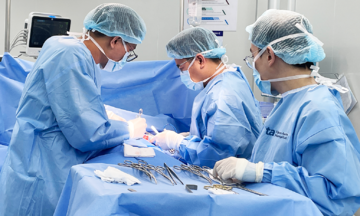
Papillary thyroid cancer surgery, involving the removal of one lobe or the entire gland, typically entails a short hospital stay. However, it requires 7-10 days of postoperative care. Patients might experience hoarseness, surgical site pain, fatigue, temporary hand numbness from transient hypocalcemia, and a cosmetic scar, which could impact daily life and emotional well-being during Tet.
Dr. Ngo Truong Son
Deputy Head of Oncology Department
Tam Anh General Hospital, Hanoi
| Readers can send questions about cancer here for doctors to answer |