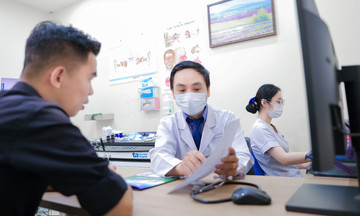
Duyen works in the intensive care unit of a pediatric hospital in TP HCM. This unit specializes in treating critically ill children suffering from conditions such as pneumonia, respiratory failure, septic shock, multiple organ failure, uncontrollable bleeding, and acute myocarditis, often caused by dengue fever, measles, flu, or respiratory syncytial virus (RSV). Many children arrive at the hospital in a severe state, requiring mechanical ventilation, blood filtration, and some even needing ECMO (extracorporeal membrane oxygenation).
"Some children appear normal one moment, and just minutes later, their pulse is undetectable, blood pressure drops sharply, and their heart weakens. We then have to perform chest compressions and constantly adjust the ventilator", Duyen recalls.
If a child overcomes a critical condition, seeing their parents embrace and weep in the hallway brings tears of joy to the medical staff. However, the unit also experiences moments of silence when doctors and nurses are unable to save a child, leaving them with profound sorrow each time they remember.
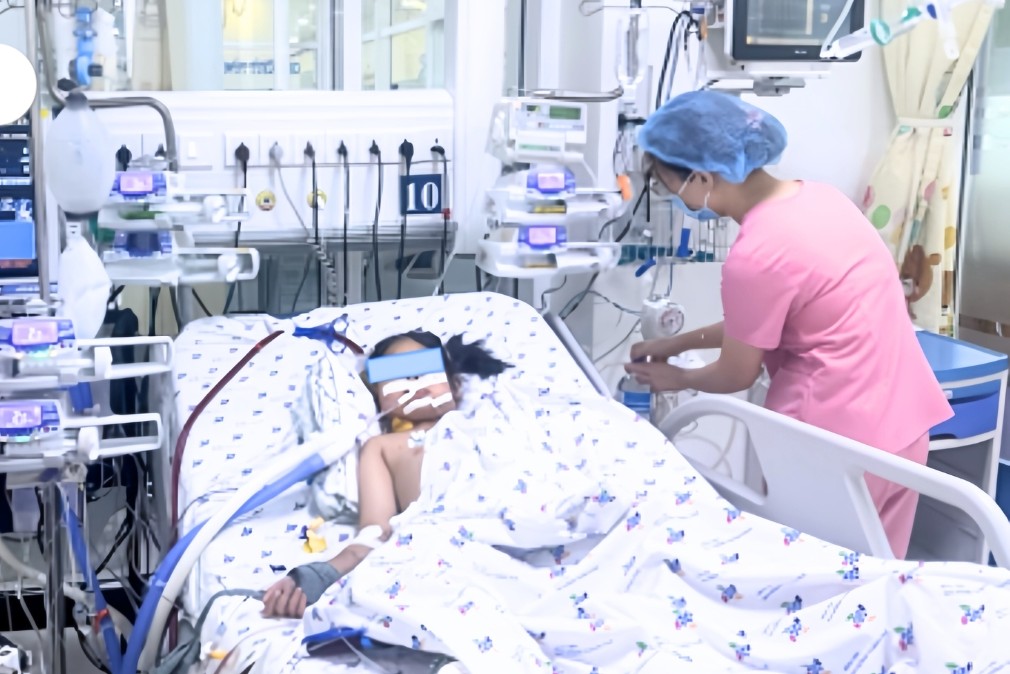 |
An 8-year-old girl with collapsed lung, pneumonia, and severe respiratory failure receiving treatment in the Intensive Care Unit, Children's Hospital of TP HCM. Photo: Children's Hospital of TP HCM.
During the recent Tet holidays, while others gathered with their families, Duyen and her colleagues remained vigilant by the children's bedsides. Their greatest joy is seeing children recover, be discharged, and witnessing the relieved smiles of their parents.
However, the reasons for children's hospitalizations and recoveries also concern Duyen. Factors contributing to severe illness are primarily due to unvaccinated status, incorrect initial treatment, weakened immune systems, malnutrition, chronic diseases, overweight, and obesity. The recovery process also demands significant effort from families.
According to Duyen, implementing all recommended preventive measures, such as vaccination, teaching children to wear masks outdoors, washing hands with soap, providing adequate nutrition, and ensuring children go to bed on time and get enough sleep, should be practiced regularly to help them grow up healthier.
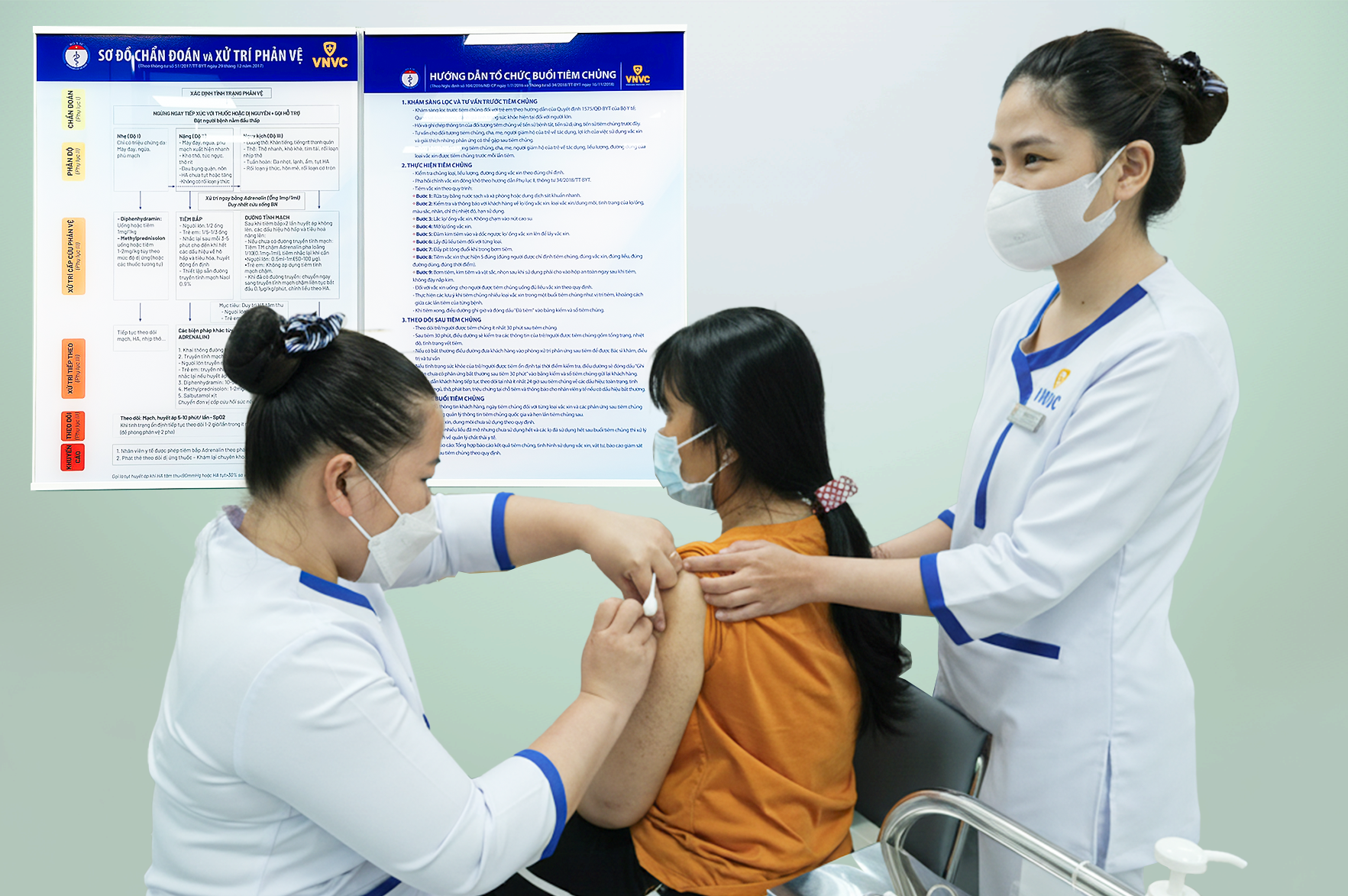 |
Nurse Duyen receives a flu vaccine to protect herself and prevent illness transmission to her children at VNVC Tan Kien in 11/2025. Photo: Dieu Thuan.
Doctor Bach Thi Chinh, Medical Director of the VNVC Vaccination System, states that Vietnam has many vaccines available for both children and adults, and everyone should get vaccinated as early as possible. Vaccines and RSV monoclonal antibodies help prevent bronchiolitis and pneumonia caused by respiratory syncytial virus. Pfizer and GSK vaccines are administered to individuals 60 years and older; Pfizer's vaccine can also be given to pregnant women from 24-36 weeks to transfer antibodies to the infant. Sanofi's monoclonal antibody is administered to children from one day old to 24 months old, providing immediate protection after injection.
Additionally, flu and pneumococcal vaccines help prevent common respiratory diseases. Adults only need one flu shot annually, while children under 9 who have not been vaccinated require two primary doses followed by annual boosters. There are various types of pneumococcal vaccines, administered to children from 6 weeks old and adults. Combination vaccines for measles, mumps, rubella, and chickenpox, as well as measles, mumps, and rubella, help prevent multiple diseases and save time. The dengue fever vaccine requires two doses administered three months apart. Vaccines are also available for other diseases such as: diphtheria, pertussis (whooping cough), tetanus, polio, Hib, meningococcal disease, and Japanese encephalitis.
When symptoms of illness appear, it is crucial to seek medical attention early and not to be complacent or attempt self-treatment at home, as this can lead to severe complications.
Hoang Minh