While steam inhalation does not eliminate viruses or bacteria, it helps reduce symptoms of many conditions such as the common cold, sinusitis, laryngitis, bronchiolitis, and allergies that cause itchy eyes, runny nose, and nasal congestion. Individuals suffering from ear, nose, and throat conditions can humidify their airways by inhaling steam.
It aids sleep: Adequate sleep strengthens the immune system to combat colds, sinusitis, and upper respiratory tract infections. The body needs rest to fight illness. Inhaling warm steam at night helps individuals clear congested mucus, breathe easier, and consequently reduces restlessness.
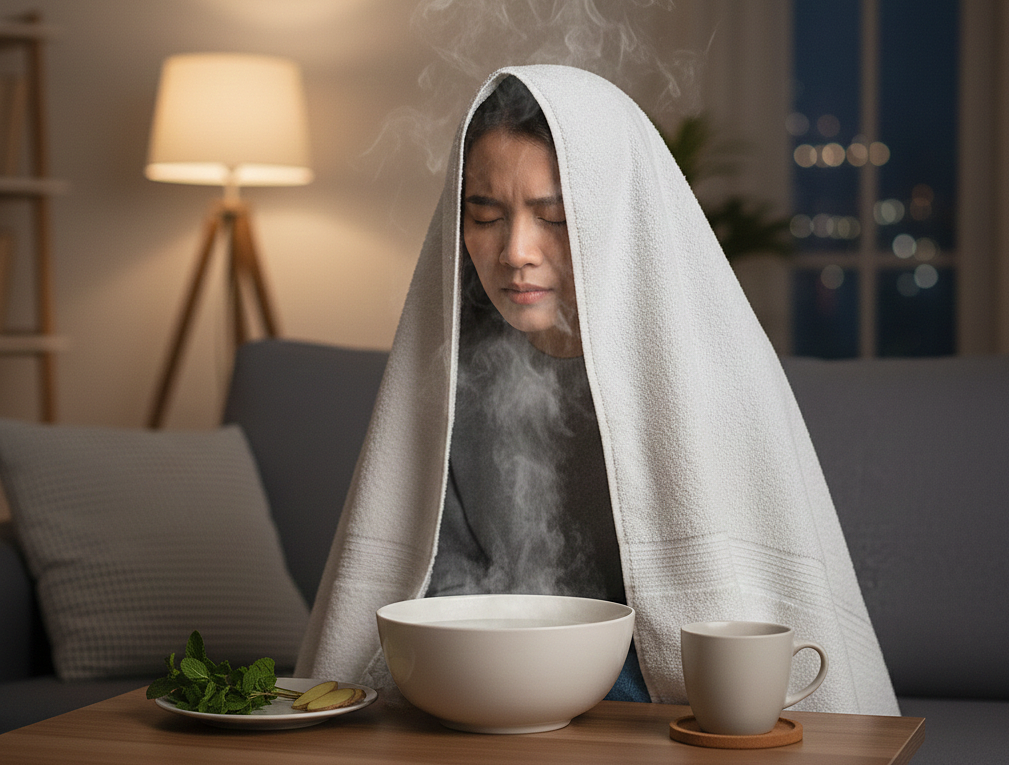 |
Warm steam inhalation helps thin mucus. Image created by AI.
It reduces hoarseness: Sinusitis or tonsillitis often cause sore throats and irritate the vocal cords, leading to hoarseness. Warm steam inhalation delivers moisture to the vocal cord area, rehydrating them and supporting the improvement of their activity and function.
It eases sore throats: Steam helps soothe pain, swelling, and inflammation of the tissues in the throat, reducing discomfort.
It controls nasal congestion: Inhaling steam can also reduce nasal congestion because it thins mucus in the lungs, throat, and sinuses, thereby decreasing pressure and facilitating easier breathing.
It rehydrates nasal passages: Sinusitis, allergic rhinitis, and colds often accompany dry and irritated sinuses. This condition causes discomfort and can lead to nosebleeds. Steam inhalation therapy provides moisture to these areas, helping to control symptoms.
Individuals can prepare a clean basin of warm water and use a towel draped over their head, steaming their nose and throat two times a day, preferably in the evening to enhance effectiveness. You can also use a room humidifier in the bedroom at night or take a warm shower before bed to utilize the steam, clear airways, relax, and sleep better.
Children and infants are susceptible to burns. Parents should not allow children to self-administer warm steam inhalation. Adults should avoid placing their face too close to the basin of steaming water, as it can damage skin and eyes.
Inhale steam with slow, deep breaths for at least 2-5 minutes, adding more hot water every 2-3 minutes. Each steaming session should last approximately 10-15 minutes. Essential oils such as eucalyptus, tea tree oil, and lavender can be added to enhance anti-inflammatory and antibacterial effects.
Anh Chi (According to Very Well Health)
| Readers can ask questions about ear, nose, and throat conditions here for a doctor's consultation. |