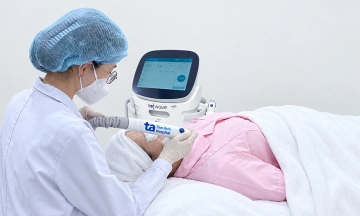
The patient was admitted to Ba Ria General Hospital's emergency room following a work accident. He sustained fractures to his left ribs from the 2nd to the 11th, a broken shoulder blade, pneumothorax, pleural effusion, and a hematoma in his chest wall. Despite drainage tube insertion and medical treatment, his condition did not improve.
Blood continued to accumulate, forming clots in the pleural cavity and compressing the lung. If left untreated, these clots could form a fibrous layer around the lung, restricting its expansion and increasing the risk of lung collapse and pleural infection.
Ba Ria General Hospital consulted with Doctor Nguyen Van Viet Thanh, Head of Thoracic Surgery and Goiter Department at Binh Dan Hospital. Recognizing the patient required specialized surgical intervention, but noting that transporting a patient with severe chest trauma posed additional risks, Binh Dan Hospital dispatched a specialist to Ba Ria to collaborate with the local team.
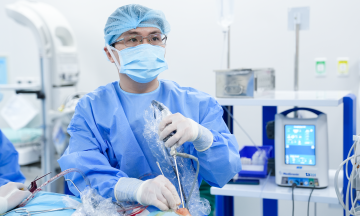
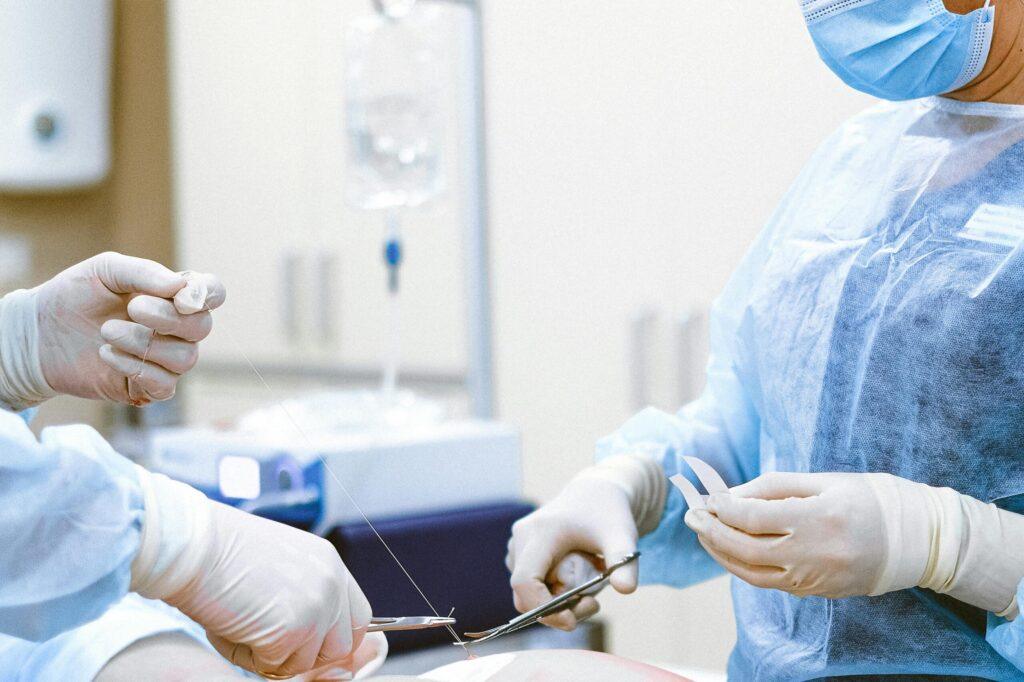
After approximately two hours of thoracoscopic surgery, doctors removed about 1,000 ml of blood clots, cleaned the pleural cavity, released the compressed lung, and helped it re-expand.
On 21/9, a representative from Binh Dan Hospital stated that this case exemplifies one of three cooperation models with Ba Ria General Hospital recently. The other two methods involve the Ba Ria team performing local surgery with support from Binh Dan specialists, or transferring patients to Binh Dan for specialized procedures before returning to Ba Ria for continued treatment.
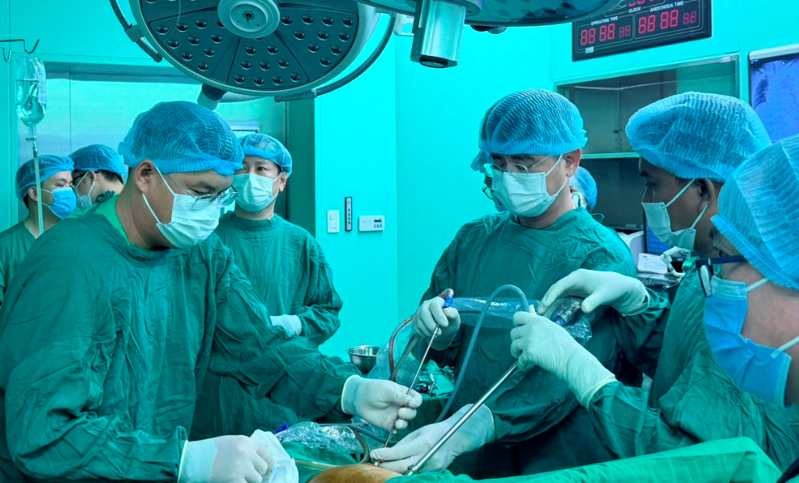 |
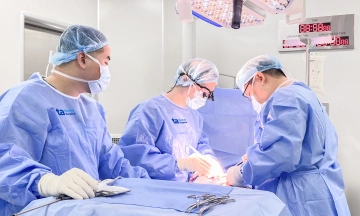
Binh Dan Hospital doctors performing surgery at Ba Ria General Hospital. *Photo: Hospital provided* |
According to Doctor Pham Huu Doan, Deputy Director of Ba Ria General Hospital, the two hospitals select suitable options based on the patient's condition and local treatment capabilities. This collaboration also helps local doctors gain experience and gradually master complex techniques.
Tang Chi Thuong, Director of the Ho Chi Minh City Department of Health, praised this approach as it helps realize the development orientation of a multi-tiered, multi-polar, multi-center healthcare system. Terminal-level and specialized hospitals not only receive transferred patients but also leverage their role as core hospitals, providing specialists and techniques to support healthcare facilities in specific regions.
For the Ba Ria - Vung Tau medical hub, the goal is for Ba Ria General Hospital to increasingly master specialized techniques and manage more severe cases locally. Only cases beyond local capabilities require transfer to higher-level facilities, with patients returning to the locality for continued treatment once stable.
Previously, since late August, Binh Dan Hospital initiated a comprehensive support program for Ba Ria General Hospital, focusing on thoracic and vascular surgery, general surgery, urology, anesthesia and resuscitation, and diagnostic imaging. The two hospitals collaborate under a "Department with Department, Room with Room" model, combining remote consultations, dispatching specialists for on-site support, and transferring techniques. Binh Dan also plans to send young doctors to work long-term in Ba Ria, aiming to build a local professional team.
Le Phuong