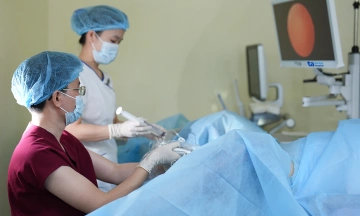
Ms. Hoa often ate white bread instead of rice, consumed little meat, fish, or eggs, preferred sweets, and had a sedentary lifestyle. Her health check-up at Tam Anh General Hospital, Ho Chi Minh City, revealed bad cholesterol (LDL) at 180 mg/dL, liver enzymes above 100 (normal is under 35), and a body fat percentage of 46%.
Dr. Do Tien Vu, from the Department of Endocrinology and Diabetes, stated that Ms. Hoa likely developed fatty liver disease due to her lifestyle habits. Her unbalanced diet, excess refined carbohydrates, unhealthy fats, and insufficient protein to maintain muscle mass created conditions for fat accumulation, even without significant weight gain. This phenomenon is known as TOFI syndrome, or "thin outside, fat inside", meaning an individual appears lean externally but has a high percentage of visceral fat, leading to metabolic issues like elevated liver enzymes and fatty liver disease.
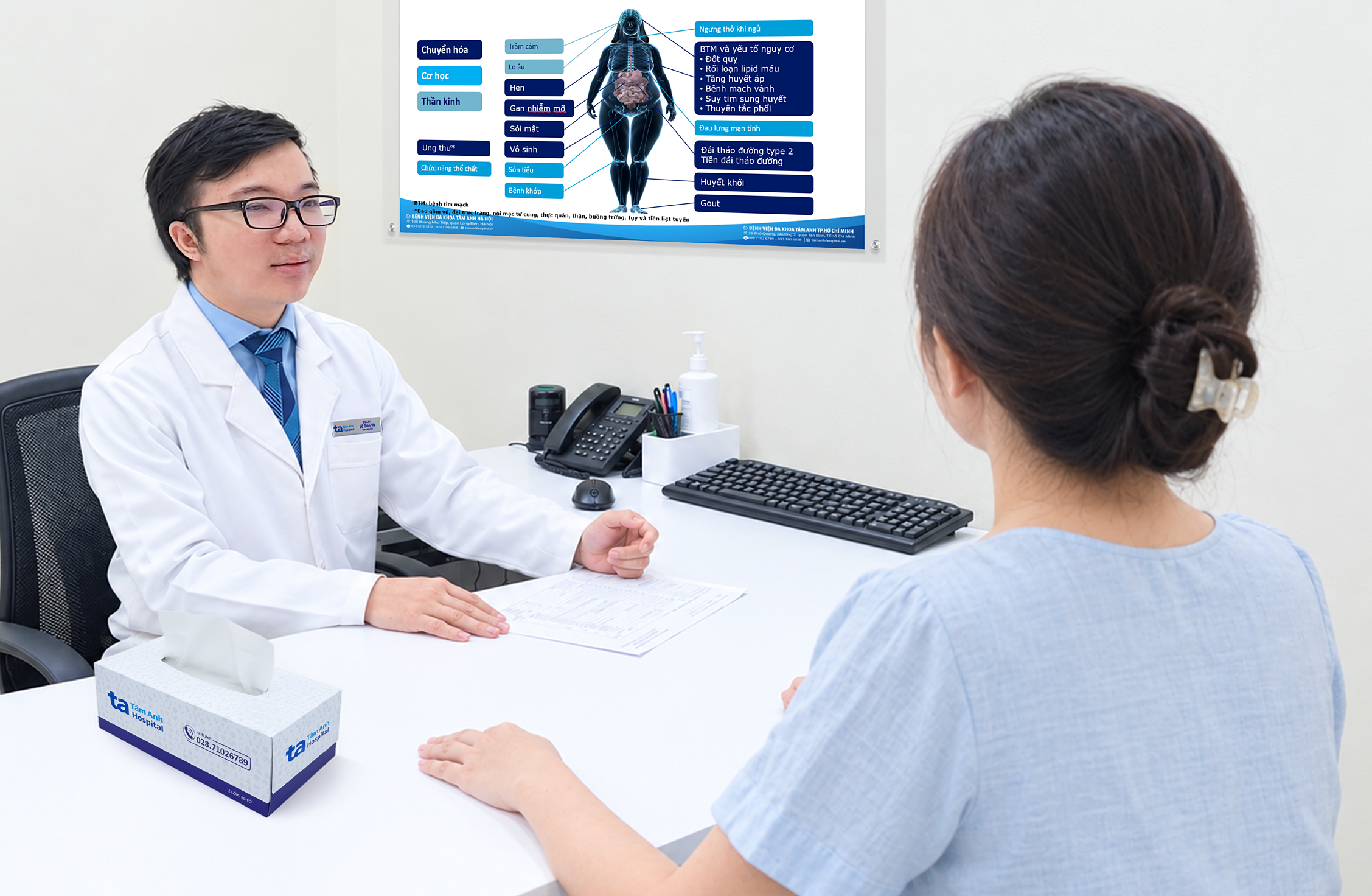 |
Dr. Vu advises Ms. Hoa on fatty liver treatment. *Photo: Tam Anh General Hospital* |
According to Dr. Vu, fatty liver disease commonly affects overweight or obese individuals, those with type 2 diabetes, and heavy alcohol drinkers. However, lean individuals also face risk due to mechanisms linked to insulin resistance, high visceral fat, genetic factors, or co-existing medical conditions. Fatty liver disease primarily stems from metabolic disorders in the liver and adipose tissue; body weight is only a minor factor.
Fatty liver disease often presents no clear symptoms, so patients usually discover it incidentally during health check-ups. In some severe cases, fatty liver can cause fatigue, a heavy sensation in the right hypochondrium, poor appetite, bloating, and elevated liver enzymes in tests.
The doctor prescribed Ms. Hoa medication for liver enzymes and blood lipids, combined with dietary adjustments and increased physical activity. Patients need to balance carbohydrates, protein, and healthy fats, reduce sugar and refined carbohydrates, and consume more green vegetables, fish, and beneficial fats. She was encouraged to perform basic resistance exercises to increase muscle mass and reduce body fat.
After three months, her fatty liver disease improved from grade three to grade one, and her body fat percentage dropped to under 35%—a safe level. Patients should maintain a scientific diet, regular exercise, and periodic monitoring of liver enzymes and liver ultrasounds to detect early liver and metabolic issues.
Bach Duong
*Patient's name has been changed*
| Readers can ask questions about endocrine diseases here for doctors to answer. |