Nhan has a history of hypertension and smoked about two packs of cigarettes daily for 15 years. Dr. Nguyen Vinh Quang, a Level I Specialist in the Emergency Department at Tam Anh General Hospital in Ho Chi Minh City (TP HCM), suspected the patient had peripheral vascular damage due to long-term heavy smoking.
 |
Fingertips of Nhan turned purple and necrotic. Photo: Tam Anh General Hospital
To determine the cause, doctors ordered a Doppler ultrasound of the upper limb arteries and veins. The results showed significantly reduced blood flow in the small arteries supplying fingers 2, 3, and 4 on both hands. The subcutaneous soft tissue around these fingers was edematous and infiltrated. These signs indicated that arterial blood flow to many fingertips was diminishing. When oxygen-rich blood does not adequately meet tissue demands, the fingertips suffer prolonged oxygen deprivation, leading to pain, purplish discoloration, changes in color, ulceration, and progression to necrosis.
Doctors diagnosed the patient with thromboangiitis obliterans, also known as Buerger's disease. This condition involves inflammation and the formation of thrombi within small and medium-sized blood vessels, primarily in the hands and feet. When the vessel lumen becomes inflamed and obstructed, blood struggles to reach the fingertips and toes.
 |
Dr. Quang advised the patient to quit smoking to improve his condition. Photo: Tam Anh General Hospital
Dr. Quang explained that thromboangiitis obliterans is linked to smoking and nicotine-containing products. Nicotine damages and disrupts the function of the endothelium, the layer of cells lining the inside of blood vessels, triggering abnormal inflammatory and immune responses. When vessel walls are damaged and inflammation occurs, thrombi are prone to forming within the lumen. This process primarily affects small and medium-sized blood vessels in the hands and feet, reducing blood flow to these areas. The disease often begins in small blood vessels, so initial symptoms can be easily mistaken for skin or nerve damage.
Nhan received medical treatment aimed at improving circulation, controlling the thromboangiitis, and preventing further disease progression. Doctors strongly advised the patient to quit smoking.
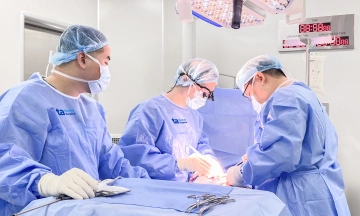
One month later, the limb ischemia was controlled, and the non-viable fingertips gradually formed a clear demarcation with healthy tissue, without any signs of infection. The medical team debrided the necrotic tissue, and Nhan's wounds healed well.
According to Dr. Quang, smoking not only harms the lungs but also directly impacts the cardiovascular and vascular systems, promoting inflammation and thrombus formation. Long-term smokers who experience symptoms such as pain, coldness, numbness, purplish discoloration, or other abnormal color changes in their fingers or toes should seek early medical attention. For individuals with thromboangiitis obliterans, quitting smoking is the most crucial measure to limit further disease progression.
By Nhu Ngoc
*Patient's name has been changed
Readers can submit questions about cardiovascular disease here for doctors to answer.