An X-ray of eight-month-old Duc Anh revealed increased density in several bronchovascular branches in both lungs. He showed mild dehydration, a soft abdomen, and mild bloating. His mother reported that he had recently been in close contact with his sister and cousin, both infected with influenza A.
Doctor Nguyen Thi Ngoc Nga, a Master of Science and pediatrician in the Department of Pediatrics at Tam Anh General Hospital Hanoi, treated Duc Anh with antiviral medication, antibiotics, and supportive care. This included fever reduction, nebulization, nasal and throat hygiene, and nutritional supplements. After five days of treatment, the child's fever subsided, cough improved, and his condition stabilized, leading to discharge.
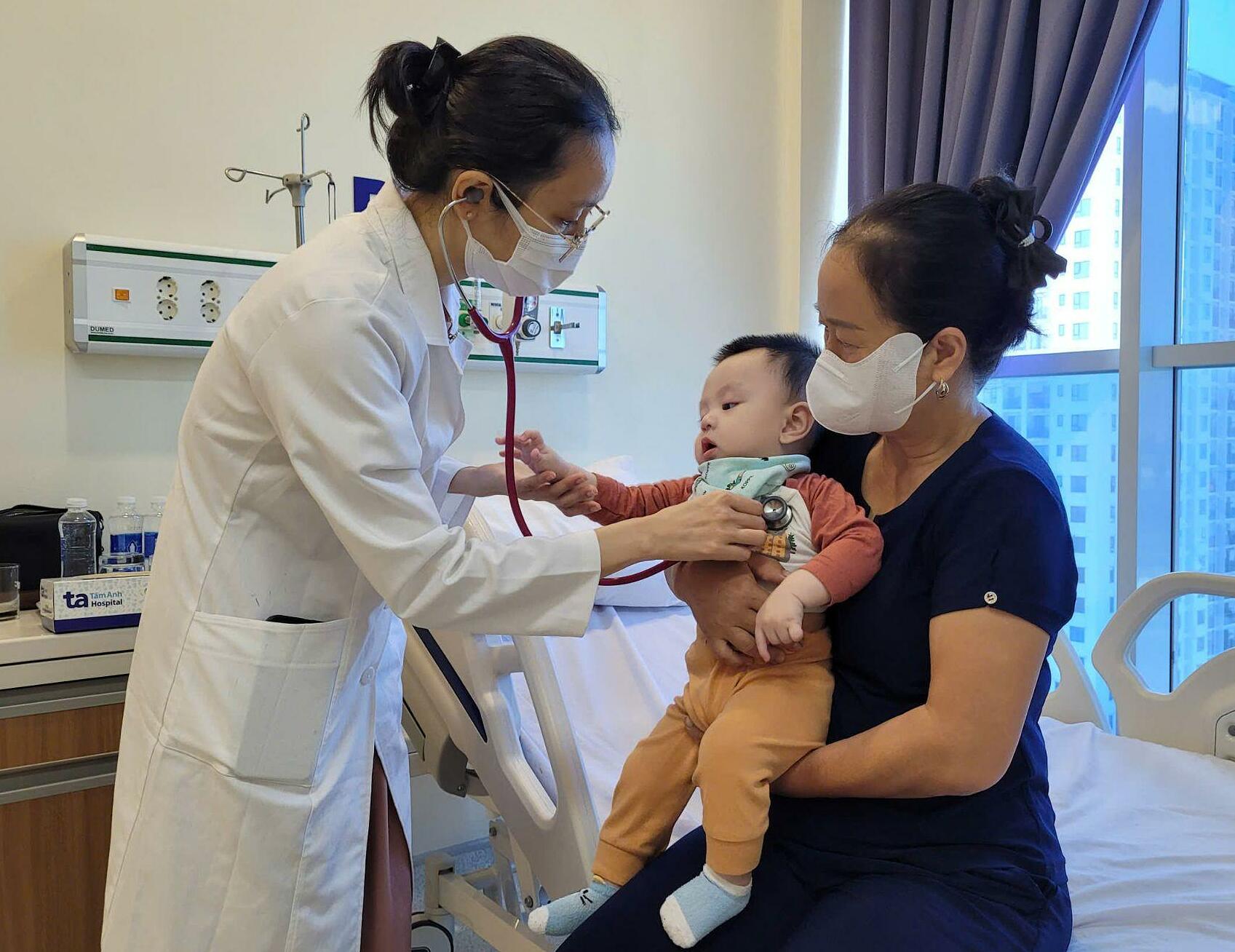 |
Doctor Nga examining Duc Anh before his discharge. Photo: Hai Au |
Doctor Nga examining Duc Anh before his discharge. Photo: Hai Au
Doctor Nga noted a sharp increase in children presenting for influenza A treatment at the hospital recently. In early november, hospitalizations for influenza A rose by nearly 30% compared to the previous month, with many cases involving siblings from the same family. These surges are attributed to shifts in humidity and significant day-night temperature differences, which facilitate the virus's survival and spread.
Influenza A is a highly contagious respiratory viral infection. The virus spreads readily through droplets expelled when an infected individual coughs, sneezes, or speaks. Children can also contract the illness by touching virus-laden surfaces—like doorknobs, desks, or toys—and then touching their eyes, nose, or mouth.
In young children, influenza A presents with diverse symptoms, including fever above 38 degrees Celsius, dry or productive cough, runny nose, stuffy nose, sore throat, headache, chills, and loss of appetite. Some children also develop digestive issues such as diarrhea or vomiting, which are often confused with the common cold. Influenza A weakens a child's immune system, increasing susceptibility to secondary bacterial infections like pneumococcus, Staphylococcus aureus, and Haemophilus influenzae. These can lead to severe complications such as pneumonia, bronchiolitis, respiratory failure, encephalitis, and meningitis.
To prevent influenza, parents should ensure children receive an annual flu vaccine, as the virus constantly evolves. Children must wash their hands frequently, avoid touching their face, and wear masks outdoors. Parents should also provide children with adequate nutrition, consistent sleep schedules, increased physical activity, and sun exposure in favorable weather to aid vitamin D synthesis and strengthen immunity.
Children diagnosed with influenza A require ample rest, abundant fluids for rehydration, and fever-reducing or symptomatic medications as prescribed by a doctor. During monitoring, if a child exhibits unusual signs—such as a high fever that does not subside, difficulty breathing, rapid breathing, or refusal to feed—parents should seek immediate hospital care.
Trinh Mai
| Readers can submit questions about children's diseases here for doctors to answer. |