Hung's mother initially thought her son had a common cold or a respiratory viral infection, giving him fever-reducing medication and monitoring him at home. However, the fever recurred continuously, and on the second day, Hung experienced nosebleeds. Test results at Tam Anh General Hospital - District 8 confirmed a positive diagnosis for dengue virus. Doctor of First Degree Specialization Duong Minh Hung, from the Pediatrics department, diagnosed Hung with dengue fever accompanied by acute bronchitis. The child had nosebleeds twice within just two days of fever onset. This mucosal bleeding is a warning sign that dengue fever could progress to a severe stage, necessitating hospital admission.
Doctors closely monitored for signs of bleeding, as well as the child's pulse, blood pressure, urine output, and platelet and red blood cell counts. The medical team simultaneously managed the fever, provided rehydration, and offered supportive treatment for the accompanying acute bronchitis. After 6 days, Hung's fever subsided, his cough decreased, his appetite improved, and his laboratory indicators stabilized, allowing him to be discharged for continued monitoring at home.
 |
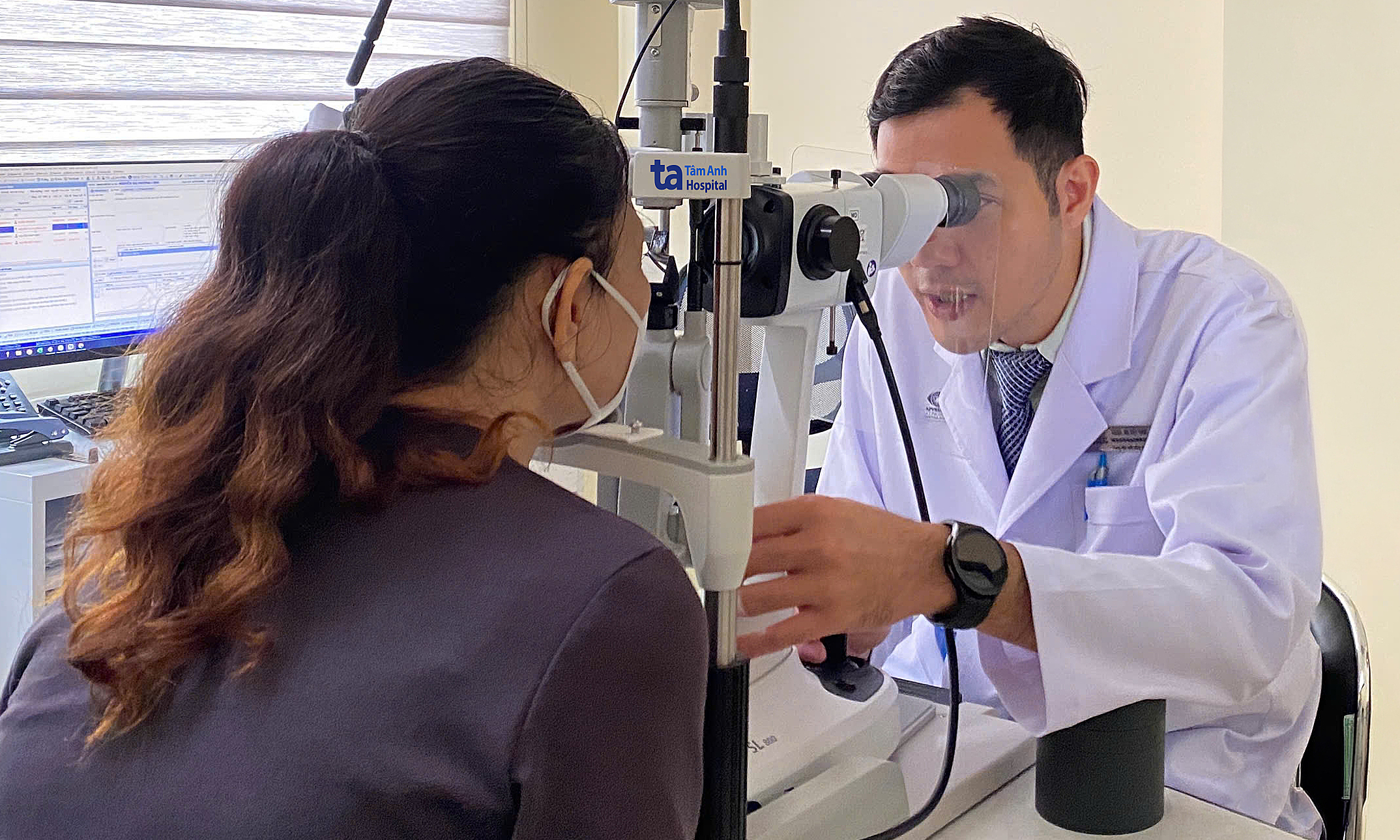
Doctor Hung checks Hung's health before discharge. *Tam Anh General Hospital*
When the dengue virus enters the body, it can reduce the number or impair the function of platelets, affecting blood vessel walls and the blood clotting process. Patients may easily experience nosebleeds, bleeding gums, or subcutaneous hemorrhages. Additionally, the disease can progress to a severe stage due to blood plasma leakage, caused by fluid loss from the blood vessels.
However, not all children with dengue fever experience bleeding or rashes. In the initial days, children typically develop a sudden high fever of 39-40 degrees Celsius, headache, and muscle aches, which can be easily mistaken for a common viral fever.
Dengue fever typically progresses through three stages: the fever stage, the critical stage, and the recovery stage. The critical stage usually appears from the 3rd to the 7th day after onset.
As dengue fever is a year-round endemic disease, Doctor Hung advises parents to seek early medical attention for children experiencing sudden, continuous high fever. This is especially crucial if the high fever is accompanied by nosebleeds, bleeding gums, severe abdominal pain, continuous vomiting, lethargy, restlessness, or infrequent urination.
The dengue virus has four serotypes: DENV-1, DENV-2, DENV-3, and DENV-4. Individuals who have previously contracted dengue fever still risk reinfection with a different serotype. Doctor Hung recommends that families get vaccinated against dengue fever, particularly children, and combine this with eliminating mosquito larvae, removing mosquito breeding sites, and preventing mosquito bites to reduce the risk of contracting the disease.
Phuong Dang
* Character's name has been changed
| Readers can submit questions about children's diseases here to receive answers from doctors |