Tests conducted at Tam Anh General Hospital Hanoi revealed a high white blood cell count of 19,2 G/L and an elevated CRP level of 32,74 mg/L, both indicative of significant inflammation. For healthy children, these values typically range from 6-17 G/L and below 1 mg/L, respectively. Doctor Dinh Xuan Hoang, of the Pediatrics Department, diagnosed Khoi with phimosis and analyzed his urine, confirming a urinary tract infection. Phimosis facilitates urine retention under the foreskin, creating a moist environment conducive to bacterial growth. Improper diaper changing and genital hygiene can also allow bacteria to develop and enter the urethra. The infant's immature immune system further compromises his ability to fight off bacteria.
Doctors initially treated Khoi with antibiotics, closely monitoring his condition and response to the medication. By the third day, his white blood cell count had slightly increased to 19,39 G/L, and his CRP level surged to 70 mg/L, indicating worsening inflammation and a lack of response to the initial antibiotic. A urine culture performed after two days confirmed the presence of Escherichia coli bacteria. Doctors then ordered an antibiogram to determine bacterial sensitivity and adjusted the antibiotic regimen accordingly.
Following the revised treatment plan, the child's condition improved. Khoi's fever subsided, he fed well, and his overall health stabilized. He was discharged after 7 days.
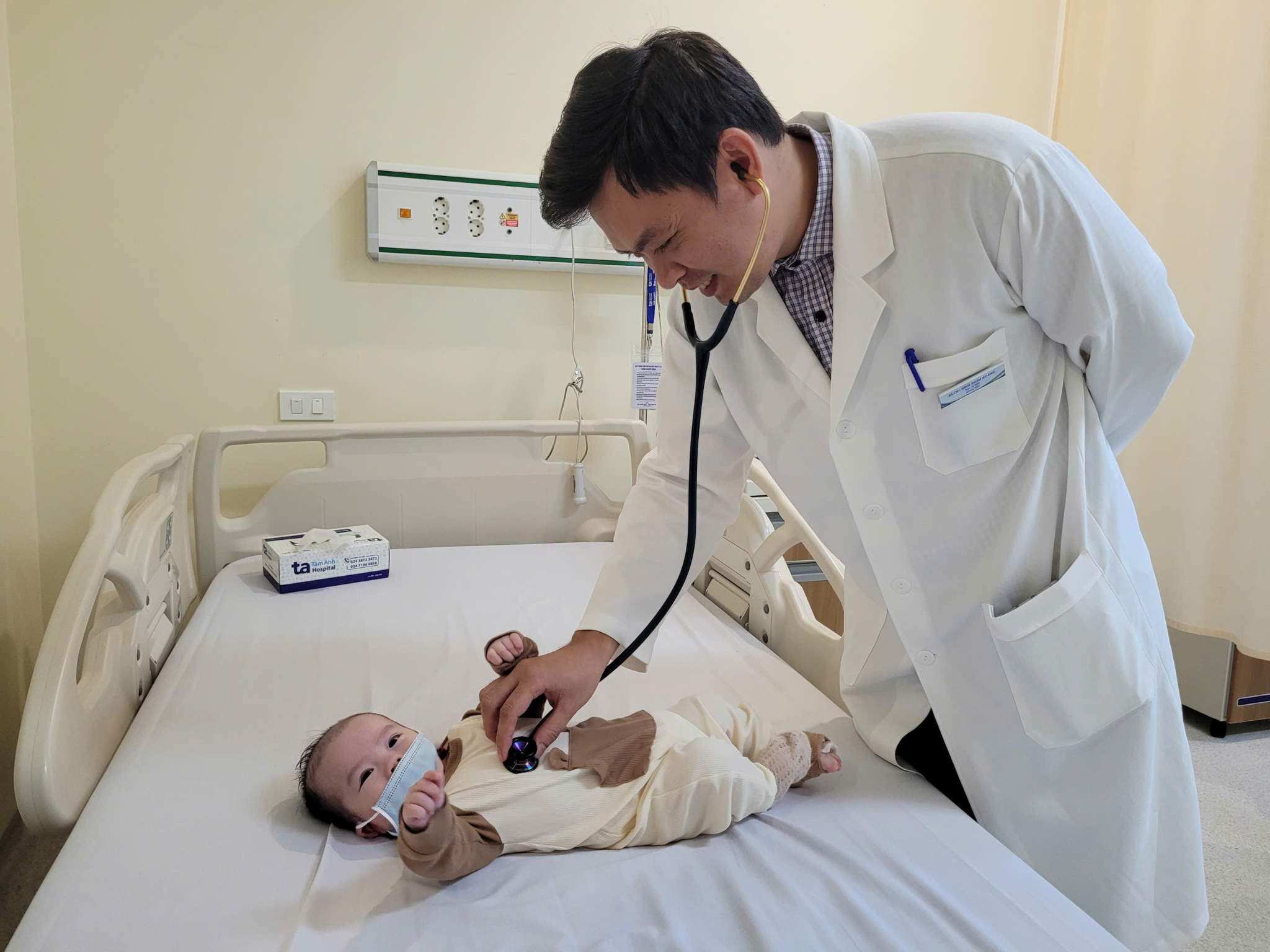 |
Doctor Hoang examining Khoi. *Photo: Hai Au* |
According to Doctor Hoang, urinary tract infections are common in children, with a higher incidence in girls due to their shorter urethra and its proximity to the anus. If bacteria from the urinary tract enter the bloodstream, they can lead to kidney infections, sepsis, or meningitis. The primary cause of these infections is typically gram-negative bacteria, most commonly Escherichia coli (E.coli), which normally resides in the large intestine and accounts for about 80-90% of cases. This type of bacteria is increasingly exhibiting antibiotic resistance, which complicates treatment and prolongs recovery.
Early detection of UTIs is challenging, especially in infants, because initial symptoms are often non-specific. To minimize the risk of infection in young children, doctors advise parents to change diapers frequently. The genital area should be gently cleaned with water and thoroughly dried before putting on a new diaper. Children should also drink enough water and be encouraged to urinate regularly.
Parents should seek medical attention if their child exhibits an unexplained fever, poor feeding, excessive crying, or unusually strong-smelling urine. Prompt diagnosis and treatment ensure complete recovery and help prevent recurrence.
Trinh Mai
| Readers can submit questions about neonates here for doctors to answer |