Sprains and dislocations are common everyday injuries, with dislocations being the more serious condition requiring prompt care. Dr. Vo Chau Hoang Long, from the Center for Orthopedic Trauma at Tam Anh General Hospital Ho Chi Minh City, notes that these two types of injuries share similar symptoms, often leading to confusion, improper care, and suboptimal recovery outcomes. Here are some signs to help distinguish between them.
A sprain is the stretching or tearing of a ligament caused by sudden force. The ankle, wrist, and knee are the most common sites for sprains. When a sprain occurs, individuals experience sudden sharp pain, which may temporarily subside before gradually increasing, especially with movement. This is accompanied by progressive swelling around the joint, limited mobility, and sometimes a feeling of joint instability.
Dislocations are more severe than sprains, occurring when a sudden, strong impact on a joint forces the bone ends out of their normal alignment. This often involves damage to multiple surrounding ligaments. Joints at highest risk for dislocation include the shoulder, elbow, knee, hip, fingers, and ankle. When this injury happens, individuals typically experience intense pain, even with slight movement. The joint appears significantly swollen and deformed, possibly with bruising and numbness around it, making normal joint movement impossible.
Dislocations can damage blood vessels and nerves passing through the affected joint. Without timely treatment, this condition can lead to severe complications, including limb damage or amputation.
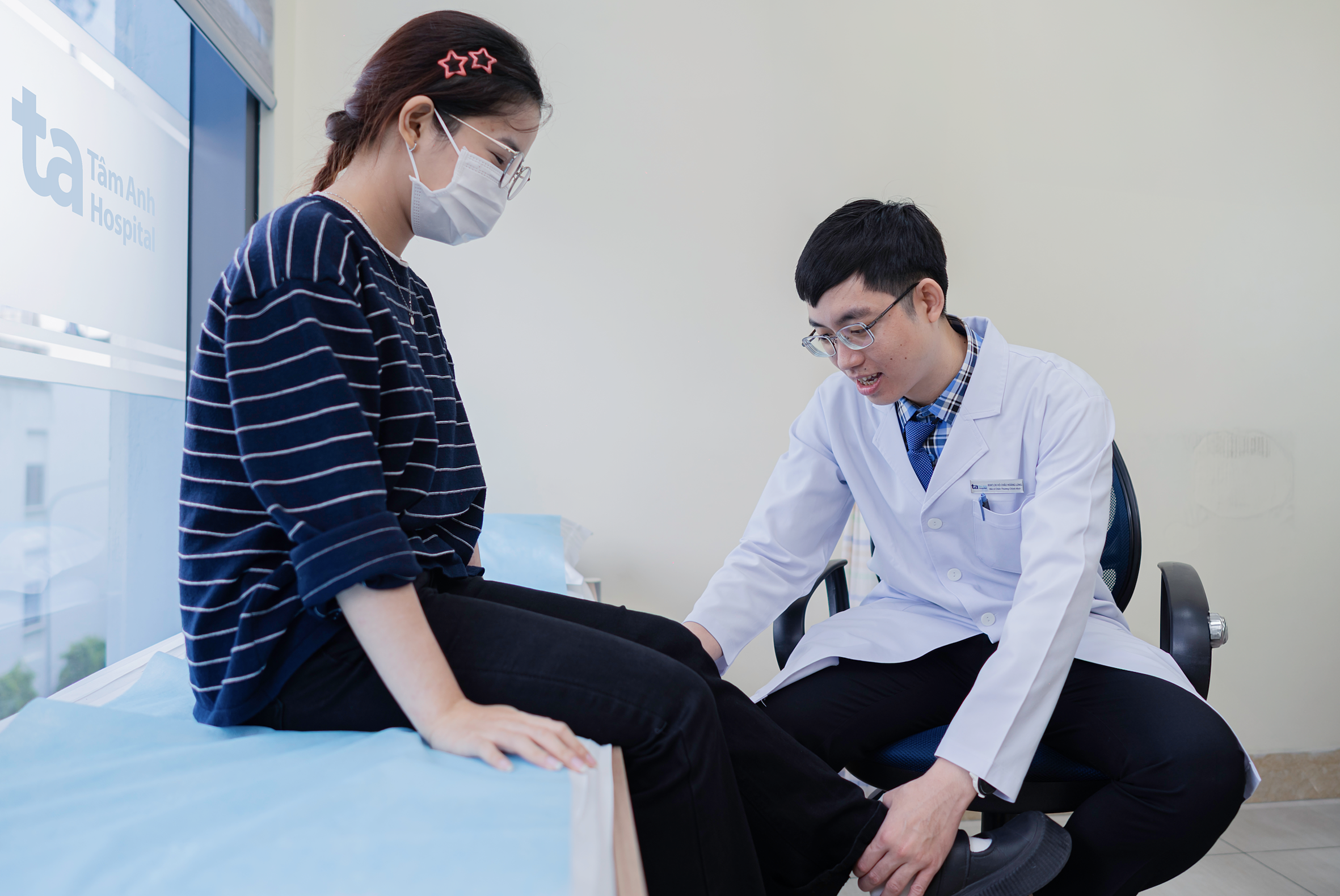 |
Dr. Long assesses a patient's ankle joint condition. Photo: Tam Anh General Hospital |
Dr. Long assesses a patient's ankle joint condition. Photo: Tam Anh General Hospital
Dr. Long advises that individuals with sprains or dislocations require proper first aid to reduce swelling and pain, limiting the impact on mobility.
For sprains, RICE is the recommended first aid principle for mild to moderate cases. Patients should ensure adequate rest, limit movement, avoid placing full weight on the injured joint, and use crutches or supportive devices if walking is necessary.
Apply ice two to three times a day during the first 48-72 hours, for 15-20 minutes each session. Apply moderate compression around the sprained joint to reduce swelling and support joint stability, being careful not to bandage too tightly to prevent impeding blood circulation. Elevate the injured joint above heart level to reduce swelling and improve blood flow. Avoid applying oils, hot compresses, or massage during the first 48-72 hours, as these can worsen symptoms. If the condition does not improve after 48-72 hours, or if pain intensifies and the joint cannot bear weight, patients should seek medical evaluation.
In the event of a dislocation, it is crucial to immobilize the injured joint to prevent further damage to its components, especially blood vessels and nerves. Patients must never attempt to self-reduce a dislocated joint. Instead, use a splint or simple materials (wood, cardboard) to temporarily fix the joint in the position it was injured. Afterward, seek immediate medical attention at the nearest specialized healthcare facility for examination by a doctor. Once a diagnosis is made, doctors will perform a closed reduction of the dislocated joint under imaging guidance, with pain medication and joint anesthesia.
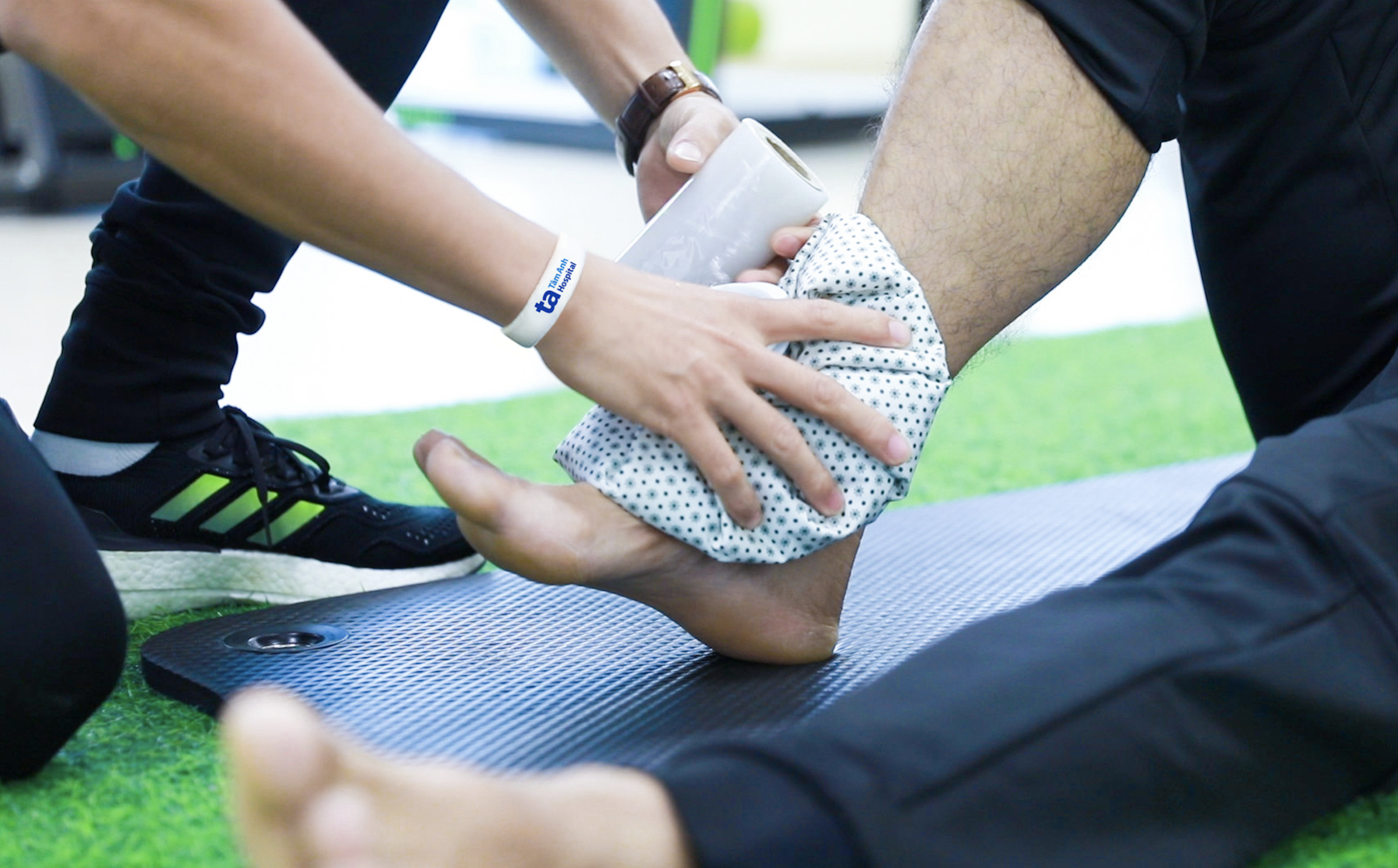 |
Correct cold compress application effectively reduces pain from sprains. Photo: Tam Anh General Hospital |
Correct cold compress application effectively reduces pain from sprains. Photo: Tam Anh General Hospital
For faster recovery, patients should avoid strenuous activity immediately after the injury. Once pain subsides, they can begin gentle rehabilitation exercises to maintain range of motion and strengthen muscles around the joint. The intensity of these exercises should gradually increase under a doctor's guidance, avoiding overexertion to prevent complications.
By Phi Hong
| Readers can submit questions about musculoskeletal diseases here for doctors to answer. |