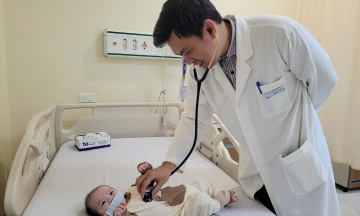
Dr. Ha Huynh Kim Yen, Head of the Obstetrics and Gynecology Unit at Tam Anh District 7 General Clinic, reported a 3-4 cm gestational sac located outside the uterus. This sac posed an immediate rupture risk, potentially causing internal abdominal bleeding.
During the laparoscopic surgery, Dr. Yen found the gestational mass had aborted through the fallopian tube's fimbrial end. It had fallen into the abdominal cavity and adhered to the fimbria in the left ovarian fossa, close to the patient's ureter. Dr. Yen carefully separated the mass from the fimbria and left ovarian fossa, protecting the ureter. The team also removed the entire blood clot to prevent any residual tissue in the abdominal cavity.
The gestational mass had damaged the fallopian tube where it developed. Consequently, the surgical team had to remove the affected fallopian tube. This procedure may reduce Ms. Thuan's future chances of natural pregnancy, as only one fallopian tube remains. The entire mass from the ovarian fossa was successfully removed. Ms. Thuan was discharged after 4 days, her condition stable.
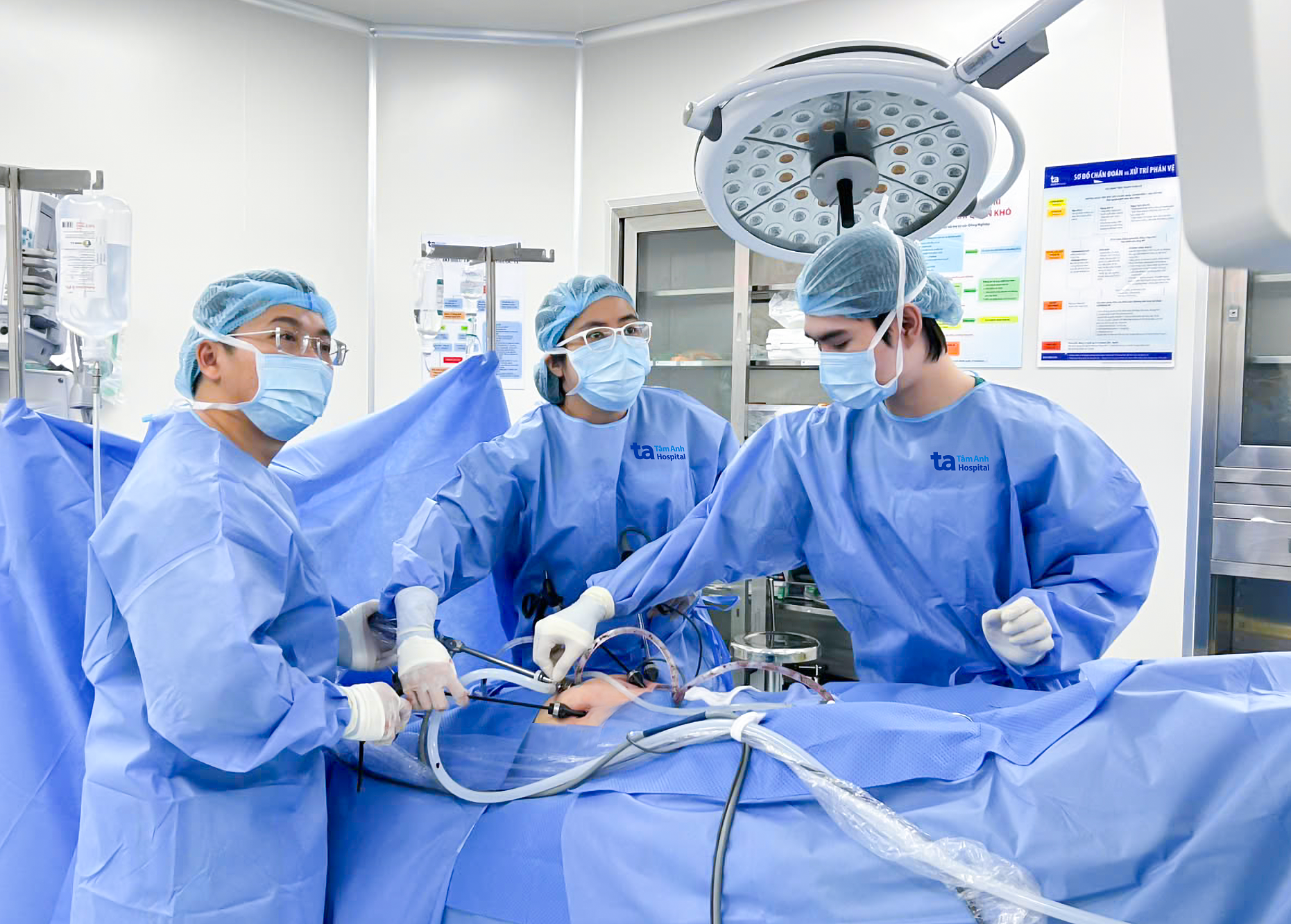 |
Dr. Yen (center) and her team performing laparoscopic surgery to treat an ectopic pregnancy. *Photo: Tam Anh General Hospital* |
An ectopic pregnancy occurs when a fertilized egg implants outside the uterus. Most frequently, these pregnancies are found in the interstitial segment, the fimbrial end of the fallopian tube, or the uterine horn. Less common sites include previous surgical scars, the cervix, ovaries, or the abdominal cavity. Early detection is crucial; rupture can cause severe, life-threatening bleeding. Abdominal pregnancies, specifically, necessitate complex surgery due to risks of substantial blood loss, damage to nearby organs, infection, and retained fetal tissue.
Risk factors for an ectopic pregnancy include: pelvic inflammatory disease, a history of fallopian tube surgery, a previous ectopic pregnancy, infertility, or improper use of contraception.
Women of reproductive age experiencing a missed period for 5 days or more, a positive pregnancy test, and symptoms like lower abdominal pain or abnormal vaginal bleeding should seek early prenatal care. This ensures timely determination of the pregnancy's location and prompt treatment if abnormalities arise.
Minh Tam
*Patient's name has been changed*
| Readers can submit questions about obstetrics and gynecology here for doctors to answer. |