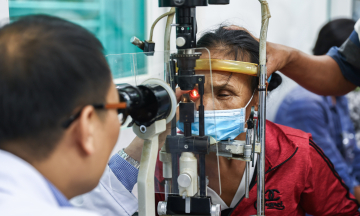
This was the key message discussed by national and international medical experts at a recent scientific seminar organized by the Vietnam Medical Association, in collaboration with GSK Vietnam.
The link between shingles and chronic conditions
Experts indicate that the virus causing shingles has a high latency rate in adults. Risk factors for developing the disease include age, weakened immunity, or chronic medical conditions. Research shows that one in three adults will contract shingles. This risk increases in individuals with certain chronic diseases.
Studies have observed that cardiovascular patients face an approximately 34% higher risk of developing shingles compared to the general population. Those with diabetes or chronic kidney disease have an elevated risk of shingles by about 38% and 29% respectively, compared to the general population.
During the event, Dr. Tran Hoa, Head of Interventional Cardiology Unit at University Medical Center Ho Chi Minh City (TP HCM), shared a case of a 56-year-old patient with a history of diabetes and hypertension. The patient was recently hospitalized for severe acute chest pain, diagnosed as myocardial infarction, and subsequently underwent coronary artery stenting.
"The patient continued to experience recurrent, prolonged chest pain. After ruling out stent re-stenosis, we discovered characteristic blisters on the patient's chest," he stated. Dr. Tran Hoa concluded that these were signs of shingles, indicating the patient faced not only cardiovascular issues but also complications from herpes zoster. He added that in older adults with chronic diseases, infections like shingles often progress more severely and can lead to prolonged complications.
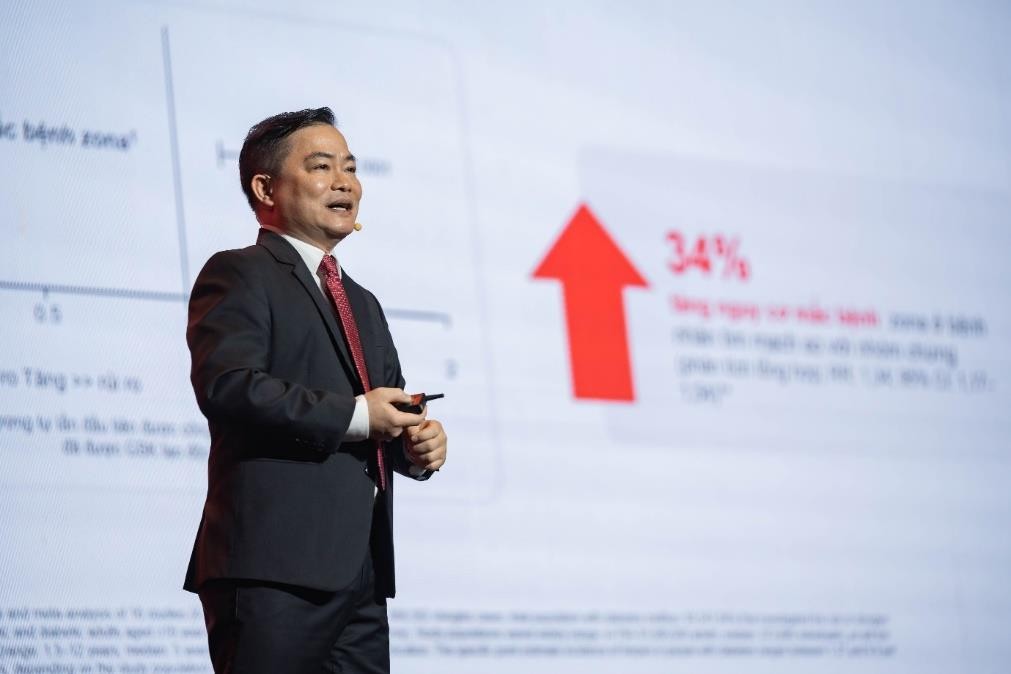 |
Dr. Tran Hoa presented on the severe condition of shingles in a patient with a history of diabetes and hypertension. Photo: GSK |
In a subsequent presentation, Professor Tony Cunningham, Director of the Centre for Virus Research at the Westmead Institute for Medical Research and Professor of Medicine and Health at the University of Sydney, emphasized that preventing shingles helps reduce the risk of postherpetic neuralgia (PHN) and a range of other complications, such as secondary bacterial infections, scarring, skin pigmentation changes, and ocular complications. PHN is a condition where pain can persist even after the rash has healed, sometimes lasting for months or years.
Towards a multi-specialty prevention model
Given the growing burden of shingles in individuals with chronic diseases, global health organizations issue recommendations and prevention guidelines for at-risk groups, including those with chronic kidney disease, diabetes, rheumatoid arthritis, or immunocompromised individuals.
In her presentation, Associate Professor Dr. Duong Thi Hong, Deputy Director of the National Institute of Hygiene and Epidemiology, cited scientific data and practical experience from Vietnam and internationally, highlighting the severe impact of shingles on adults and those with chronic diseases. "Integrating shingles prevention into chronic disease management can reduce the disease burden and improve quality of life," she noted.
 |
Experts shared experiences on implementing shingles prevention strategies for adults. Photo: GSK |
Concurring with this perspective, Associate Professor Dr. Nguyen Hoang Dinh, Deputy Director of University Medical Center TP HCM, stated that implementing a comprehensive, integrated healthcare model, from prevention to treatment for individuals with chronic diseases, is an effective approach in the context of an aging population.
Associate Professor Nguyen Hoang Dinh also added that coordination among specialties and the proactive role of treating physicians are crucial in counseling and prevention, thereby enhancing care effectiveness and providing long-term benefits for both patients and the healthcare sector.
 |
Dr. Pham Thi My Lien, President of GSK Vietnam. Photo: GSK |
At the event, Dr. Pham Thi My Lien, President of GSK Vietnam, expressed GSK's honor in collaborating with leading national and international experts to discuss scientific updates and practical experiences in adult shingles prevention in Vietnam.
"By partnering with health agencies, professional associations, and the medical community, we believe we will contribute to raising awareness and strengthening confidence in prevention efforts, helping people proactively protect their health and live healthier lives," President My Lien further stated.
Lan Anh