Master, Doctor Dao Van Minh, from the Department of General Surgery at Tam Anh Hanoi General Hospital, explained that the bulge changed in size depending on the child's posture and activity, swelling when the child cried and shrinking when lying still. Congenital inguinal hernias, caused by a patent processus vaginalis, are common, affecting approximately 0,8-4,4% of full-term infants and 30% of premature babies, and are more frequently observed in boys.
During fetal development, the testicles descend from the abdomen into the scrotum through the processus vaginalis. After birth, this canal typically closes and degenerates. If it fails to close completely, a persistent connection between the abdominal cavity and the scrotum can allow intestines or fat to descend, leading to an inguinal hernia.
Early treatment for this condition is crucial due to the risk of incarcerated hernia within the first year of life. When the intestine becomes trapped in the hernia sac, children may experience pain, irritability, vomiting, and abdominal distension. Severe cases can lead to intestinal obstruction, necrosis, perforation, peritonitis, and potential impact on testicular function.
The patient underwent surgery to release the herniated organ and close the patent processus vaginalis, preventing abdominal organs from further descending into the groin and scrotum. During the operation, the surgical team inserted a 5 mm endoscope through the navel to observe the entire abdominal cavity and groin area, identifying the patent processus vaginalis on the left side. Doctors made a 3 mm incision in the groin, threaded a suture beneath the peritoneum, and ligated the neck of the processus vaginalis near the deep inguinal ring.
Following surgery, the processus vaginalis was successfully closed, and the testicle was preserved. Kha was monitored inpatient, receiving antibiotics and anti-inflammatory medication combined with a personalized nutritional regimen, and was discharged after one day.
 |
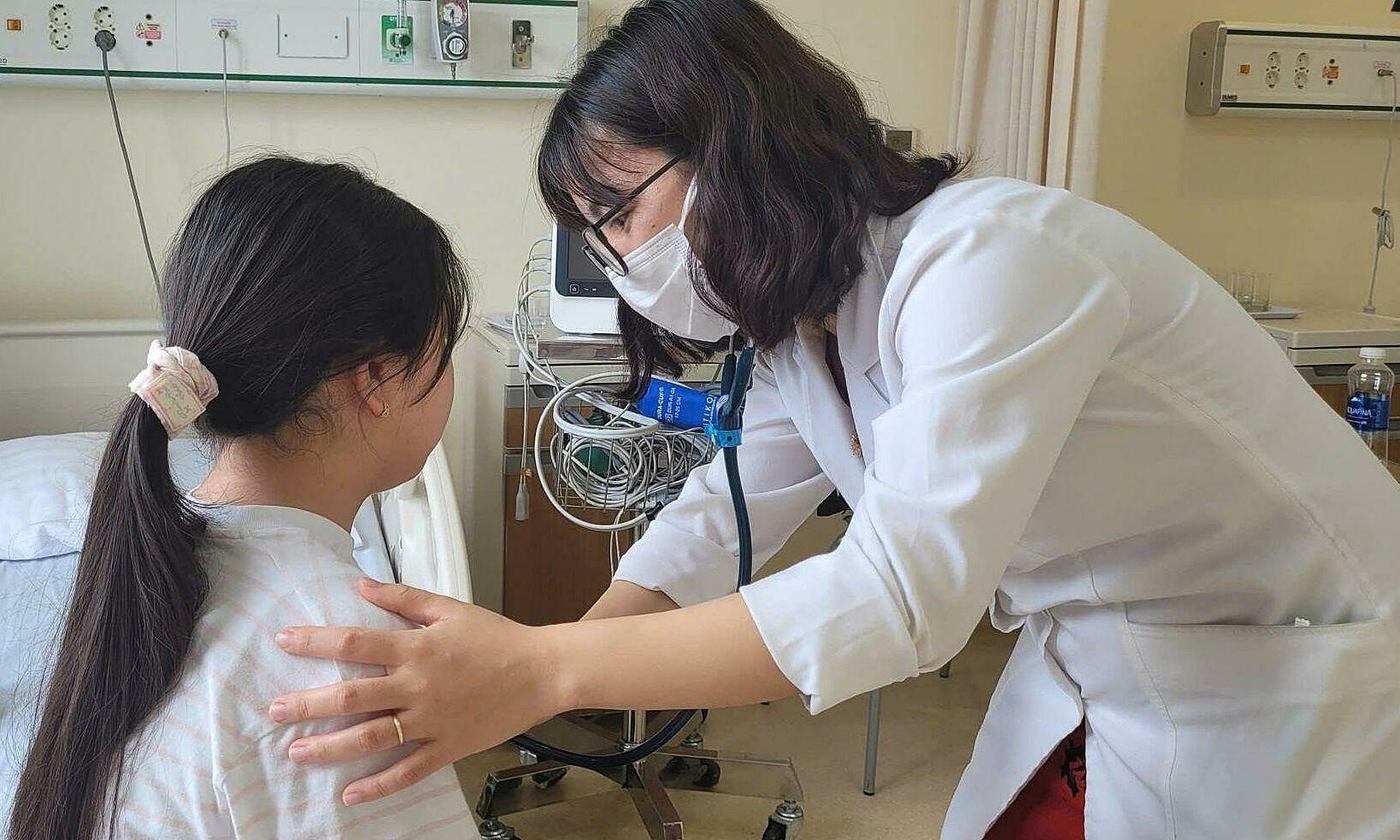
Doctor Minh examining baby Kha before discharge. Photo: Hai Au |
According to Doctor Minh, risk factors for patent processus vaginalis include prematurity, urinary tract malformations, or maternal smoking. Typical signs of the condition include an abnormal bulge in the groin or scrotum, which may appear immediately after birth or several months to years later. This bulge usually becomes more prominent when the child cries, coughs, runs, jumps, or strains during bowel movements, and reduces when the child rests.
After three months of age, the likelihood of spontaneous closure of the processus vaginalis decreases, and by about one year of age, very few cases close completely. A large opening leads to congenital inguinal hernia, while a small opening can cause hydrocele of the testis.
Doctor Minh stated that surgery is the most effective treatment for patent processus vaginalis. Currently, laparoscopic surgery is preferred due to its small incision, reduced pain, high aesthetic appeal, and faster intervention and recovery times.
After surgery, children typically experience mild pain or discomfort during the first one or two days. Parents must administer medication as prescribed, maintain wound hygiene, avoid direct water exposure, and limit strenuous activity for approximately one week. If the child experiences severe pain unresponsive to painkillers, prolonged high fever, or swelling and redness at the incision site, they should be taken to the hospital immediately.
Doctors advise parents to seek early medical attention for children with an abnormal bulge in the groin or scrotum to prevent complications.
Trinh Mai
| Readers can submit questions about pediatric diseases here for doctors to answer |