Ms. Hong suffered her first stroke at 45. Since turning 55, she has had six more strokes, the most recent being a month ago. These were mild to moderate and, due to timely emergency care, left no lasting effects. This latest incident, however, caused sudden complete paralysis and loss of sensation on her left side, along with Broca's aphasia (understanding speech but unable to articulate words). She was rushed to Tam Anh General Hospital, Ho Chi Minh City.
Doctor Pham Thi Thanh Truc, a specialist in neurology at the Neuroscience Center, stated that Ms. Hong arrived at the hospital within the first hour of symptom onset. A brain CT scan revealed signs of acute cerebral infarction, indicating she was within the "golden hour" (the initial 4,5 hours). Doctors administered intravenous thrombolytic medication to restore blood flow to the brain and limit brain damage.
Post-emergency MRI 3 Tesla results showed Ms. Hong had multiple old infarcts in both cerebral and cerebellar hemispheres. A large area of brain tissue loss in the left hemisphere indicated irreversible brain damage from recurrent strokes over many years. These accumulated brain injuries heighten the risk of long-term neurological dysfunction.
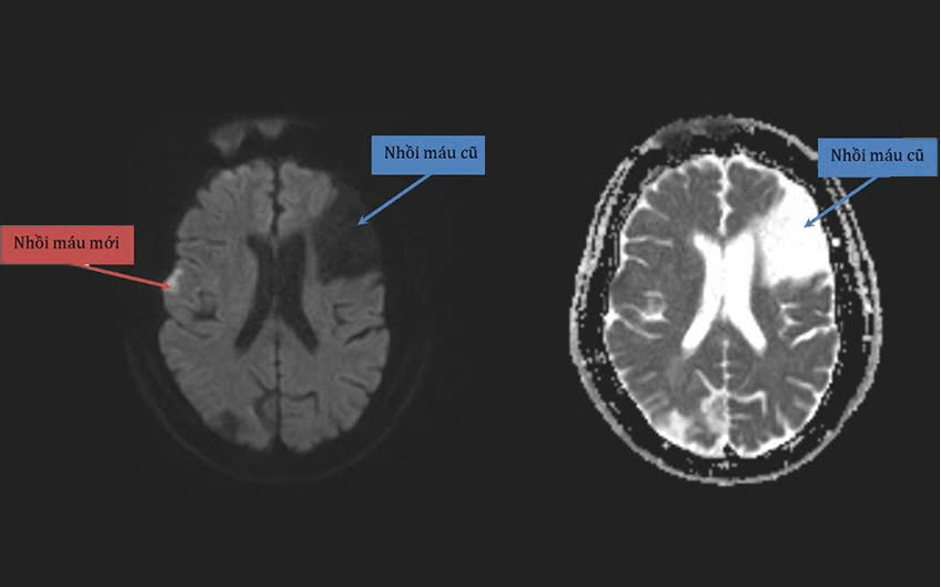 |
MRI 3 Tesla image showing Ms. Hong's new cerebral infarction and large area of brain tissue loss. *Photo: Tam Anh General Hospital*
According to Doctor Truc, most recurrent stroke cases are linked to poorly controlled risk factors such as hypertension, diabetes, or dyslipidemia. However, Ms. Hong's indicators for these conditions were monitored and treated quite stably.
To identify the origin of the recurrent strokes, doctors further assessed her using the RoPE score, a tool that estimates the likelihood of a stroke being related to a patent foramen ovale in the heart. Her score was 6 points, corresponding to approximately a 70% probability that the strokes were related to this anomaly.
A transesophageal echocardiogram was ordered, which confirmed Ms. Hong had a patent foramen ovale (PFO) measuring 5x6,1 mm. This is a small opening between the two atria, present since fetal development, which usually closes naturally after birth but persists in some adults.
Doctor Truc explained that in a healthy individual, blood clots forming in the venous system travel with the blood to the right side of the heart and then to the lungs. There, the pulmonary capillary network acts as a "natural filter", retaining most blood clots before blood reaches the left side of the heart to circulate throughout the body.
When a patent foramen ovale is present, blood clots can bypass the lungs, moving directly from the right atrium to the left atrium. From the left heart, these clots can then travel via the carotid artery to the brain, causing blockages and leading to a stroke. This phenomenon is known as paradoxical embolism.
"Blood clots originating from the heart often obstruct large cerebral arteries, creating extensive infarcts and leading to strokes," Doctor Truc stated. If only symptoms are treated without addressing the abnormal passage in the heart, patients face a high risk of recurrent strokes, with subsequent episodes often being more severe.
After five days of thrombolytic injections, Ms. Hong became alert, communicated better, spoke more clearly, regained normal strength in her left arm, and saw significant improvement in her left leg. Her NIHSS score decreased from 18 to 2 points.
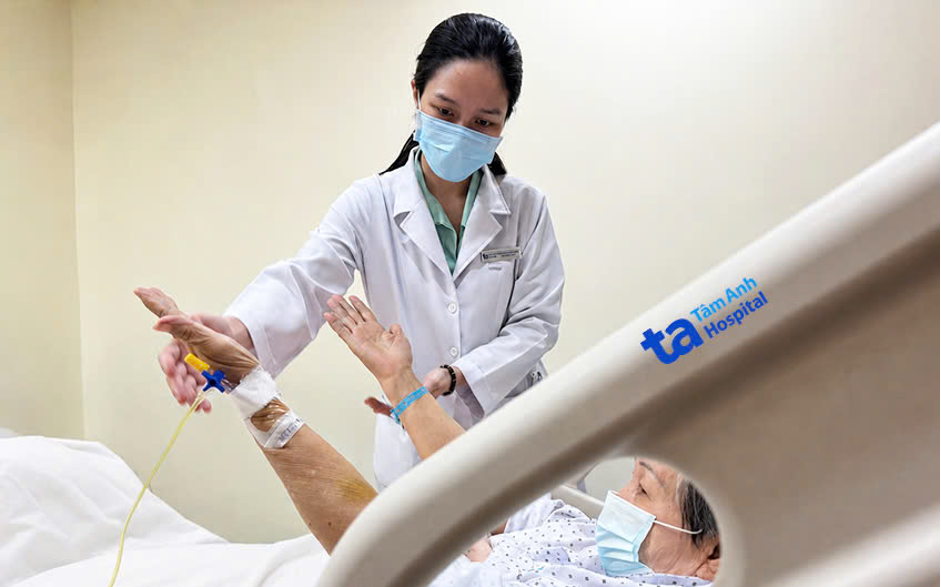 |
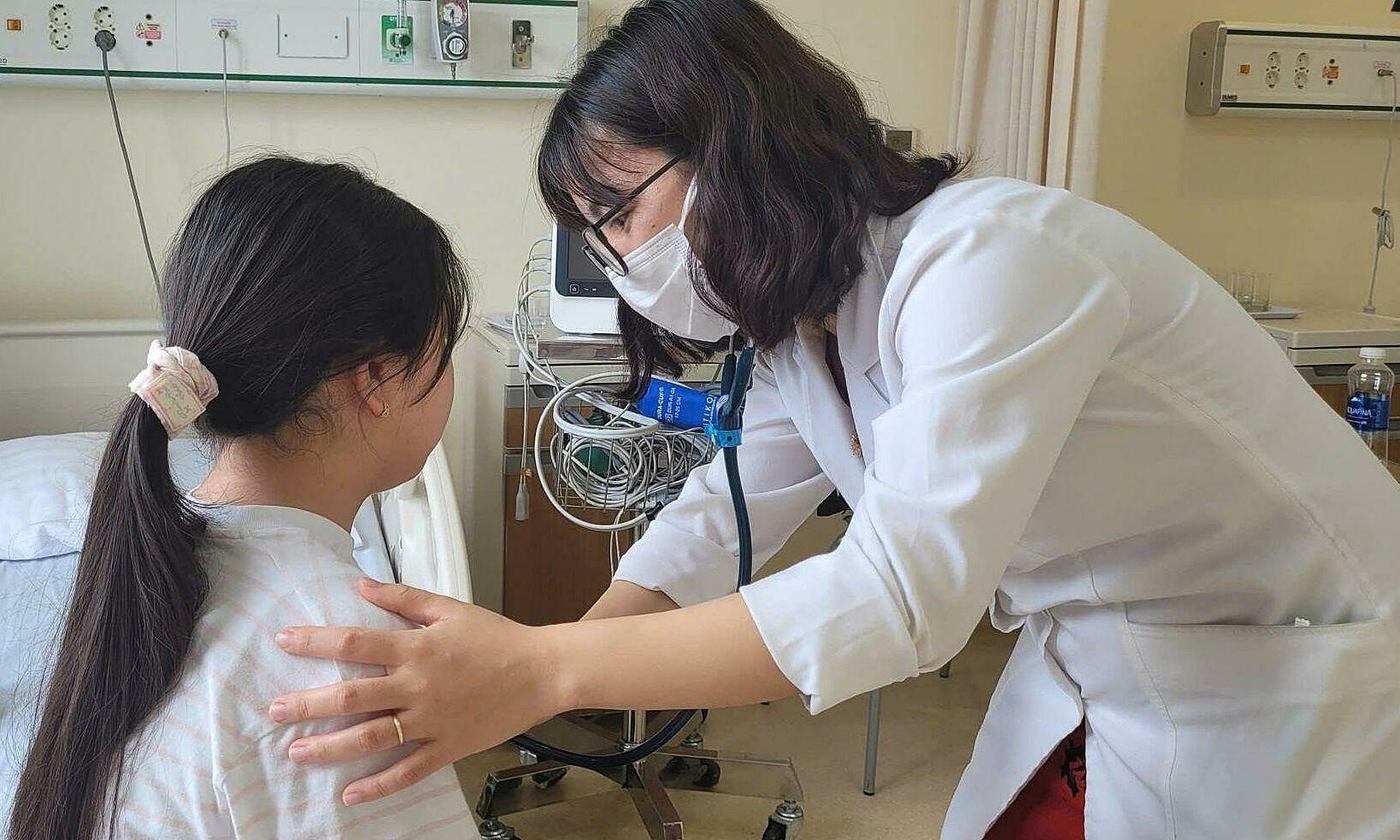
Doctor Truc assessing Ms. Hong's muscle strength and post-stroke recovery. *Photo: Hospital provided*
To prevent future strokes, neurologists and cardiologists consulted and recommended transcatheter patent foramen ovale closure using a specialized device. This procedure eliminates the abnormal connection between the two heart chambers, thereby preventing blood clots from traveling to the brain.
Doctor Truc advises that patients experiencing recurrent strokes, even with well-managed underlying conditions, should undergo specialized investigations to identify the root cause and receive definitive treatment, thereby reducing the long-term risk of recurrence.
Trong Nghia
*Patient's name has been changed
| Readers can ask questions about neurological diseases here for doctors to answer. |