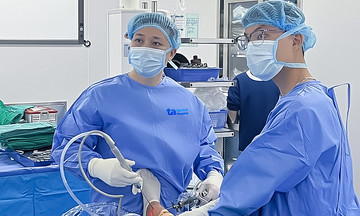
A 50-year-old woman, Ms. Thu, sought medical attention after experiencing dizziness for over a month. Cranial magnetic resonance imaging (MRI) at Tam Anh General Hospital, Ho Chi Minh City, revealed a left internal carotid artery aneurysm. The aneurysm measured approximately 4x5 mm, had a neck of 3,5 mm, irregular borders, and a small protrusion.
Dr. Duong Dinh Hoan, Specialist Level I and Head of the Neuro-Intervention Unit at the Center for Diagnostic Imaging and Interventional Radiology, identified this as a latent brain vascular lesion. Given Ms. Thu's underlying conditions of hypertension and dyslipidemia, she faced an elevated risk of aneurysm rupture, which could lead to a hemorrhagic stroke. Consequently, doctors prescribed immediate endovascular intervention using a flow diversion stenting method, guided by a digital subtraction angiography (DSA) system.
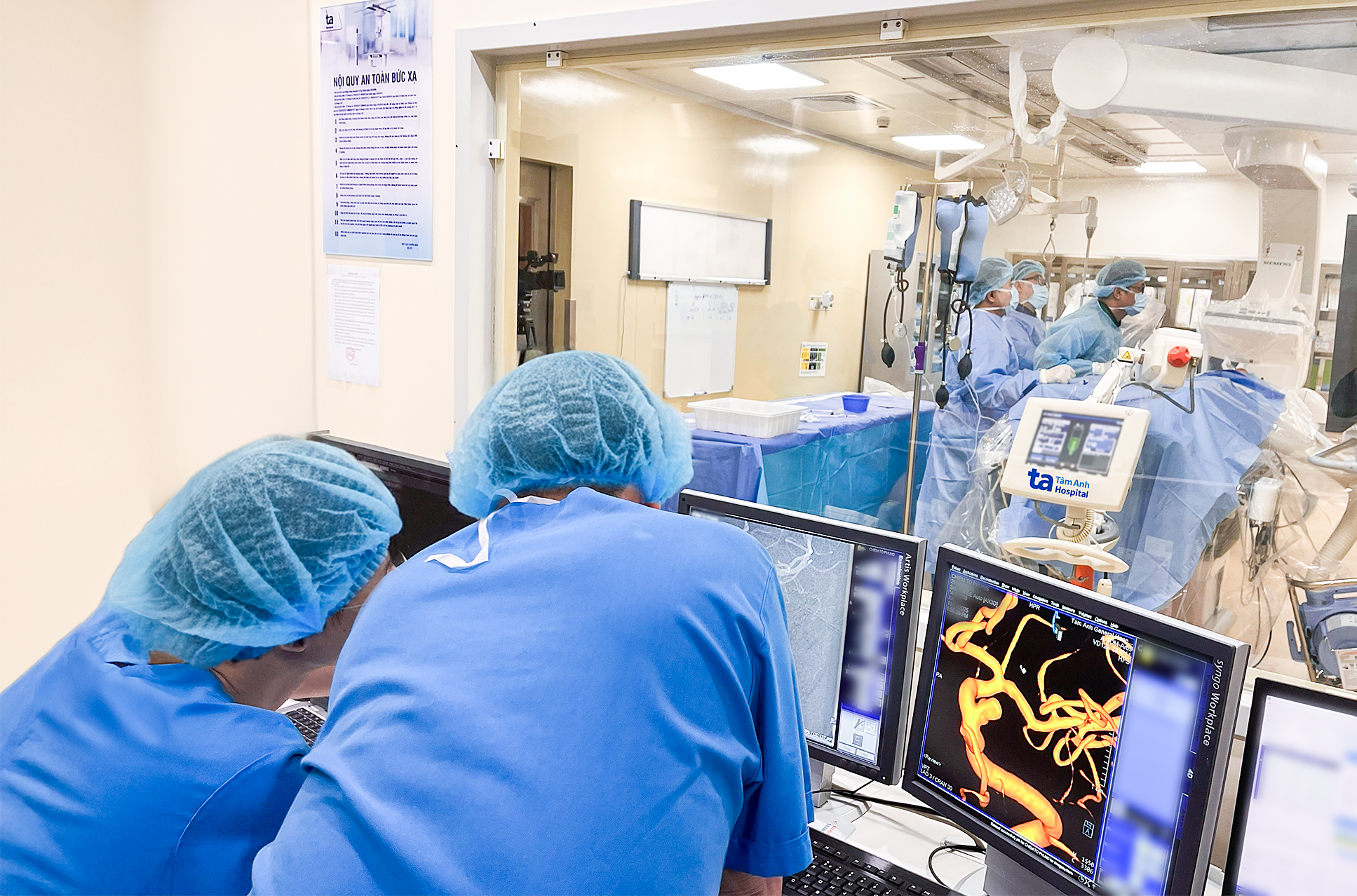 |
The medical team performs flow diversion stenting for the patient. Photo: Tam Anh General Hospital
During the procedure, the medical team carefully inserted a fine metal mesh tube, known as a stent, into the left internal carotid artery, precisely covering the aneurysm neck. Once deployed, the stent redirected blood flow along the main vessel, preventing it from entering the aneurysm. This intervention gradually reduced the amount of new blood flowing into the aneurysm, causing it to shrink over time. The stent also reinforced the vessel wall, thereby reducing the risk of future aneurysm rupture.
Following the intervention, Ms. Thu was conscious and made a good recovery. She was prescribed dual antiplatelet therapy to manage her blood pressure and blood lipids, and was discharged after three days. Doctors advised her to strictly adhere to the dual antiplatelet therapy for six months and to attend all scheduled follow-up appointments to prevent any long-term complications.
Brain aneurysms often develop silently, presenting no specific symptoms. Many cases are only discovered incidentally during brain vascular screenings, CT scans, or MRI scans conducted for routine health check-ups or treatment of other conditions. However, if an aneurysm ruptures, patients face a severe risk of cerebral hemorrhage, which can be fatal or result in debilitating sequelae.
Dr. Hoan highlighted that the flow diversion stenting method represents a significant advancement in treating brain aneurysms, particularly for wide-neck aneurysms, those located in difficult areas, or those with a high risk of rupture. This minimally invasive technique is beneficial as it preserves healthy blood vessels and significantly reduces risks for patients compared to more traditional methods, such as open surgery.
Nhat Thanh
*Patient's name has been changed
| Readers can submit questions about neurological diseases here for doctors to answer. |