Ho Chi Minh City Hospital for Tropical Diseases, in collaboration with the Ho Chi Minh City Center for Disease Control (HCDC), conducted training on 22/4 for the entire healthcare system. This initiative focused on diagnosing, treating, and preventing meningococcal disease amidst a recent surge in cases. Data from multiple years reveals the predominance of type B strains. Pasteur Institute Ho Chi Minh City recorded all tested strains as type B from 2013-2026, and military surveillance from 2014-2021 showed a 91,3% prevalence.
Dr. Nguyen The Thinh, Deputy Head of the Department of Acute Infectious Disease Prevention at the HCDC, reported that Ho Chi Minh City accounts for the highest number of cases in the region, with 10 instances since the year's start. This includes one fatality, a two-year-old child. Notably, most of these cases lacked an identifiable source of infection following epidemiological investigations.
Dr. Thinh attributed the rise in cases to the public's diminished immune systems following the Covid-19 pandemic. This reduction in immunity may lessen vaccine effectiveness, creating conditions for outbreaks of infectious diseases like meningococcal disease, measles, and seasonal flu.
Dr. Tran Kim Hung from Ho Chi Minh City Hospital for Tropical Diseases added that meningococcal bacteria naturally reside in humans, typically inhabiting the nose, pharynx, and throat, and spreading via respiratory droplets during close contact. A significant challenge is that 5-25% of healthy individuals can be asymptomatic carriers, with this figure potentially reaching 20% among young people, and often higher in crowded settings.
This explains why, in Vietnam, the highest concentration of cases occurs among pre-school children, students, and in environments like dormitories, prisons, or barracks. The risk of transmission further increases with sharing food, drinks, or close physical contact. Healthcare workers also face infection risk if exposed to patient secretions without protective masks, particularly during procedures such as intubation or phlegm aspiration.
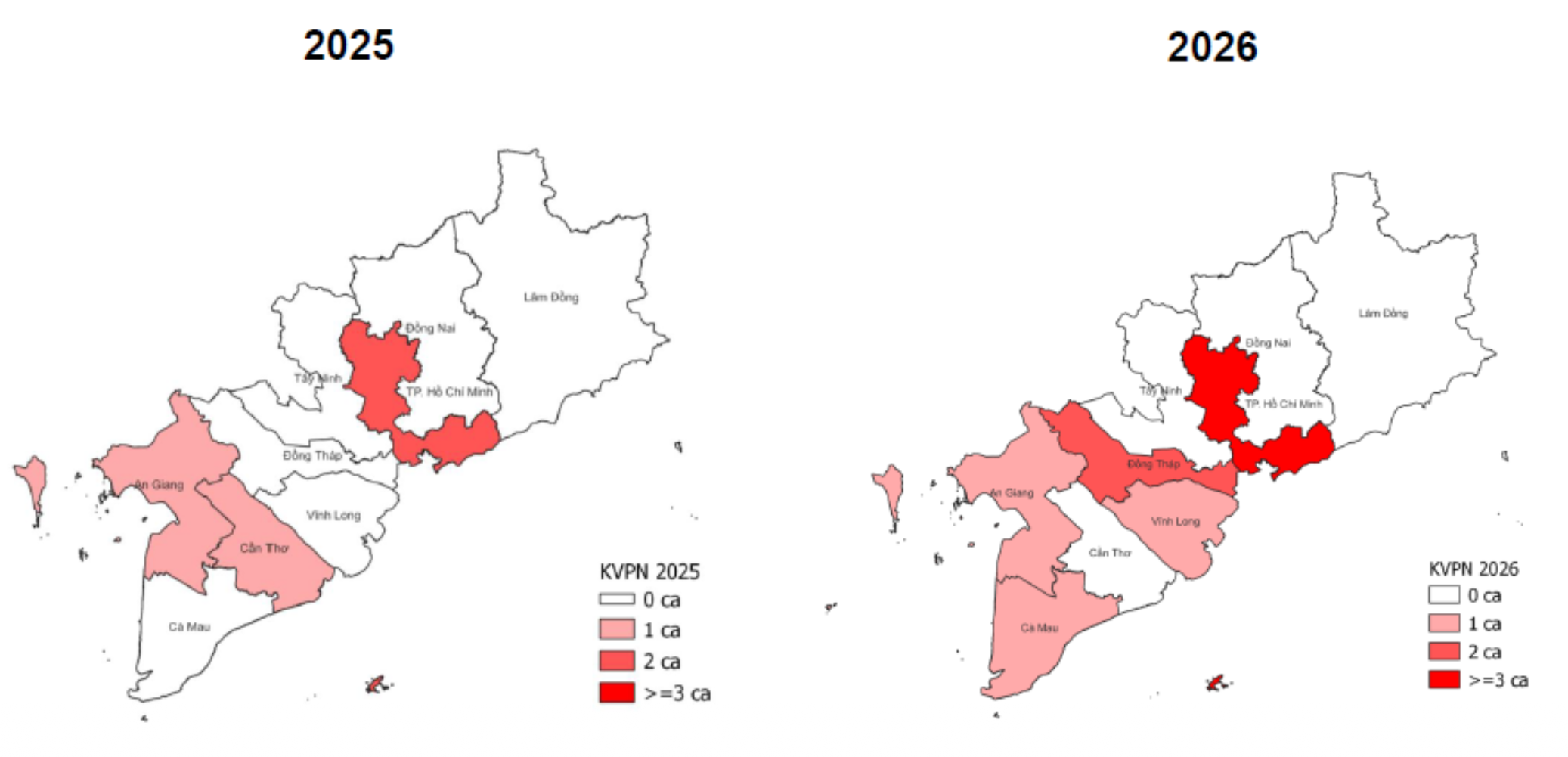 |
Map showing the distribution of meningococcal cases in Southern Vietnam during the first 11 weeks of 2025 (left) and early 2026 (right), indicating an increase in the number of affected provinces and cities. Photo: Pasteur Institute Ho Chi Minh City |
According to Dr. Ho Dang Trung Nghia, meningococcal disease poses an epidemic risk, carrying a mortality rate of 10-20% and leaving severe sequelae in 11-19% of survivors. The incubation period ranges from two to 10 days, during which patients can transmit the disease from before symptom onset until 24 hours after specific antibiotic treatment.
Symptoms often begin suddenly with high fever, headache, and fatigue. More severe manifestations include vomiting, neck stiffness, altered consciousness, and a distinctive map-like necrotic purpuric rash on the skin. Fulminant cases can rapidly progress to shock and death within 24 hours.
Experts predict a continued rise in cases if early control measures are not implemented, especially in densely populated areas with frequent population movement. Effective prevention strategies include vaccination, maintaining personal hygiene, limiting exposure to infection sources, and seeking medical attention immediately upon suspecting symptoms.
Le Phuong