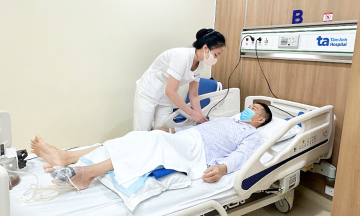
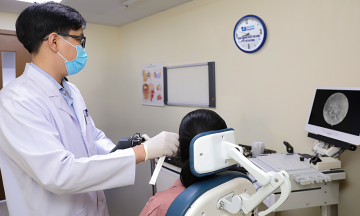
Breathing exercises, practiced for just a few minutes, offer a simple yet powerful way to manage stress and promote a sense of calm. By focusing on your breath, you can actively influence your body's physiological responses, leading to a more relaxed state.
Here are five effective breathing techniques you can incorporate into your daily routine:
Diaphragmatic breathing
Often called "belly breathing", this technique focuses on engaging the diaphragm. To perform it, place one hand on your abdomen. Inhale slowly through your nose, allowing your belly to expand. Then, exhale gradually through your mouth, making the exhalation longer than the inhalation. This method helps shift your body into a relaxed state by activating the parasympathetic nervous system, which slows heart rate, lowers blood pressure, and reduces stress.
Even breathing
For this exercise, sit or stand tall with relaxed shoulders. If standing, keep your feet about 30 cm apart and look straight ahead. Inhale slowly through your nose, counting one-two-three, then gently exhale, also counting one-two-three, without holding your breath. Maintain this slow, steady rhythm for 2-5 minutes, focusing on your breath. Even breathing helps stabilize heart rate, soothe the nervous system, and alleviate tension.
Humming bee breath (Bhramari Pranayama)
Humming bee breath is a yoga technique that calms the mind and reduces stress by creating a gentle, humming sound like a bee during exhalation. Sit upright, close your eyes, and take a deep breath through your nose. Then, exhale slowly, making an "mmm" sound. You can gently close your ears with your fingers to better feel the vibration. This exercise can quickly calm the nervous system, reduce anxiety, and promote relaxation.
Circular breathing
In circular breathing, you inhale and exhale continuously and smoothly, without a distinct pause between the two phases. Imagine your breath moving in a closed circle to maintain an even rhythm. Breathe slowly and gently, without straining, and continue for several minutes. This technique helps maintain a continuous flow of breath, calming the nervous system and enhancing concentration.
Box breathing (4-4-4-4)
Box breathing involves inhaling for 4 counts, holding your breath for 4 counts, exhaling for 4 counts, and then holding your breath again for 4 counts before repeating the cycle. Perform this for a few minutes at a slow, steady pace. This exercise stabilizes breathing, reduces stress, and improves emotional control, and can be done anywhere.
Important considerations for breathing exercises
While breathing exercises are simple, incorrect execution can reduce their effectiveness or even cause dizziness. Avoid straining with overly deep breaths; instead, start with shorter counts and gradually increase as your body adapts.
Posture is also crucial. Sit with a straight back or lie comfortably, avoiding positions that compress the lungs. When inhaling, breathe through your nose, allowing your abdomen or chest to expand naturally without raising your shoulders—a common mistake that leads to shallow, less effective breaths. Practice in a well-ventilated space, avoiding overly enclosed, cold, or dry environments.
If you experience symptoms like dizziness, nausea, rapid heart rate, or discomfort, stop immediately and return to normal breathing. Avoid practicing immediately after a heavy meal or when you are overly tired. Suitable times include mornings or before sleep.
By Le Nguyen (Source: Times of India)
| Readers can submit respiratory questions here for a doctor's response. |