The rabies virus is present in a cat's saliva and can be transmitted to humans through bites, scratches, or by licking open wounds. Animals frequently lick their paws and claws, allowing the rabies virus from their saliva to adhere to these areas. Even if a cat's claws are trimmed, if the animal licks its paws, the rabies virus can still remain there. If scratched by a cat, the rabies virus on the claws can enter the body through the wound, or even a skin abrasion.
If scratched by a cat, you should wash the wound thoroughly with soap under running clean water for 15 minutes. Then, disinfect the wound with 45-70 degrees Celsius alcohol or iodine alcohol. This helps remove dirt and any rabies virus present at the wound site. Afterward, seek medical attention for a doctor to examine the wound and prescribe vaccination, potentially combined with anti-rabies serum. Absolutely do not squeeze, puncture, apply leaves, use irritating substances, bandage the wound tightly, or attempt folk remedies for rabies.
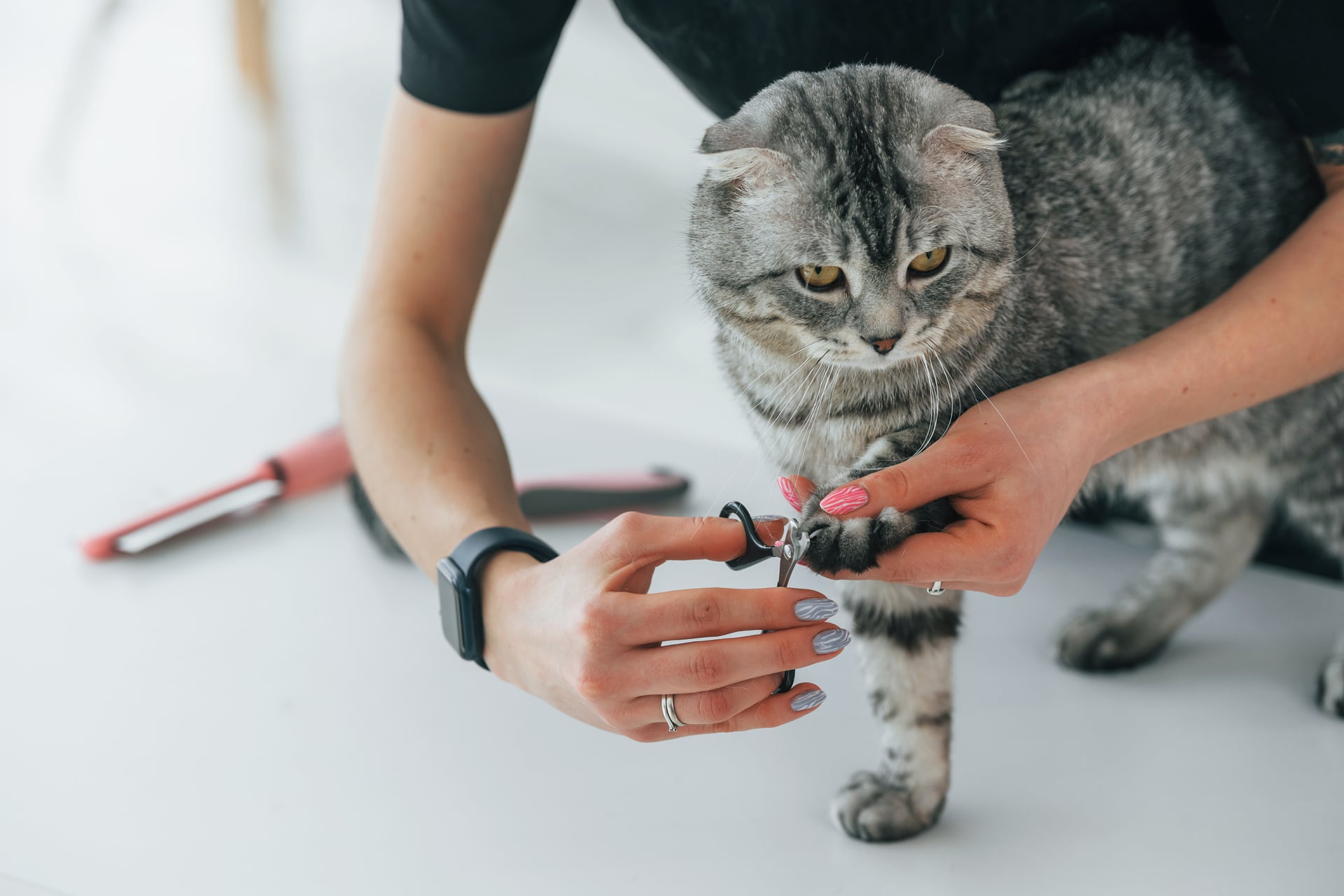 |
Cats habitually lick their claws, allowing the rabies virus from their saliva to adhere to them and transmit to humans through scratches. *Photo: Vecteezy*. |
Rabies has a fatality rate of nearly 100% once symptoms begin. Besides cats, the rabies virus is also abundant in the saliva of other warm-blooded mammals such as dogs, rats, rabbits, bears, and bats. It can transmit to humans through bites or scratches. According to guidelines from the Ministry of Health, individuals bitten or scratched by warm-blooded mammals require rabies vaccination. This applies even if they were previously vaccinated, the wound does not bleed, or if they were licked on broken skin or the mucous membranes of the eyes, nose, or mouth. People should not be complacent, thinking that pet dogs or cats are safe and pose no risk. Do not wait to monitor the animal's health for 10 days before getting vaccinated against rabies.
In addition to following wound care instructions and recommended rabies vaccination, you should monitor the cat as advised by your doctor. You should also not discontinue the vaccination schedule without a doctor's instruction, or stop after just one dose.
Currently, Vietnam has two types of rabies vaccines, from France and India. These are two new-generation rabies vaccines that do not contain neural cells, thus not affecting memory. They can be administered before exposure (pre-exposure prophylaxis) or after exposure (post-exposure prophylaxis). The pre-exposure schedule consists of three doses on days 0, 7, and 21 or 28. The post-exposure schedule consists of 5 doses (intramuscular injection) or 8 doses (intradermal injection, two doses per visit). Depending on the animal's condition during the post-bite monitoring period, the number of doses may be reduced. If both pre-exposure and post-exposure doses are completed, only two booster doses are needed if bitten or scratched again, without requiring serum.
Doctor Ha Manh Cuong
Medical Manager, VNVC Vaccination System
Readers can submit vaccine consultation questions here.