Ms. Nhung wore a brace on her right leg for lifelong support. Recently, her left leg became painful after a fall. She underwent meniscectomy surgery at a local hospital and tried various medications and injections, but the pain persisted.
At Tam Anh General Hospital TP HCM, X-rays revealed end-stage osteoarthritis in her left knee. The knee was also hyperextended and internally rotated by 27 degrees, with a noticeable pelvic tilt and leg length discrepancy, consequences of years of relying primarily on her left leg.
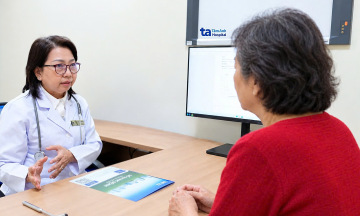
Dr. Nguyen Dai Duong, an orthopedic trauma specialist, stated that joint replacement surgery is the optimal treatment to prevent complete loss of mobility.
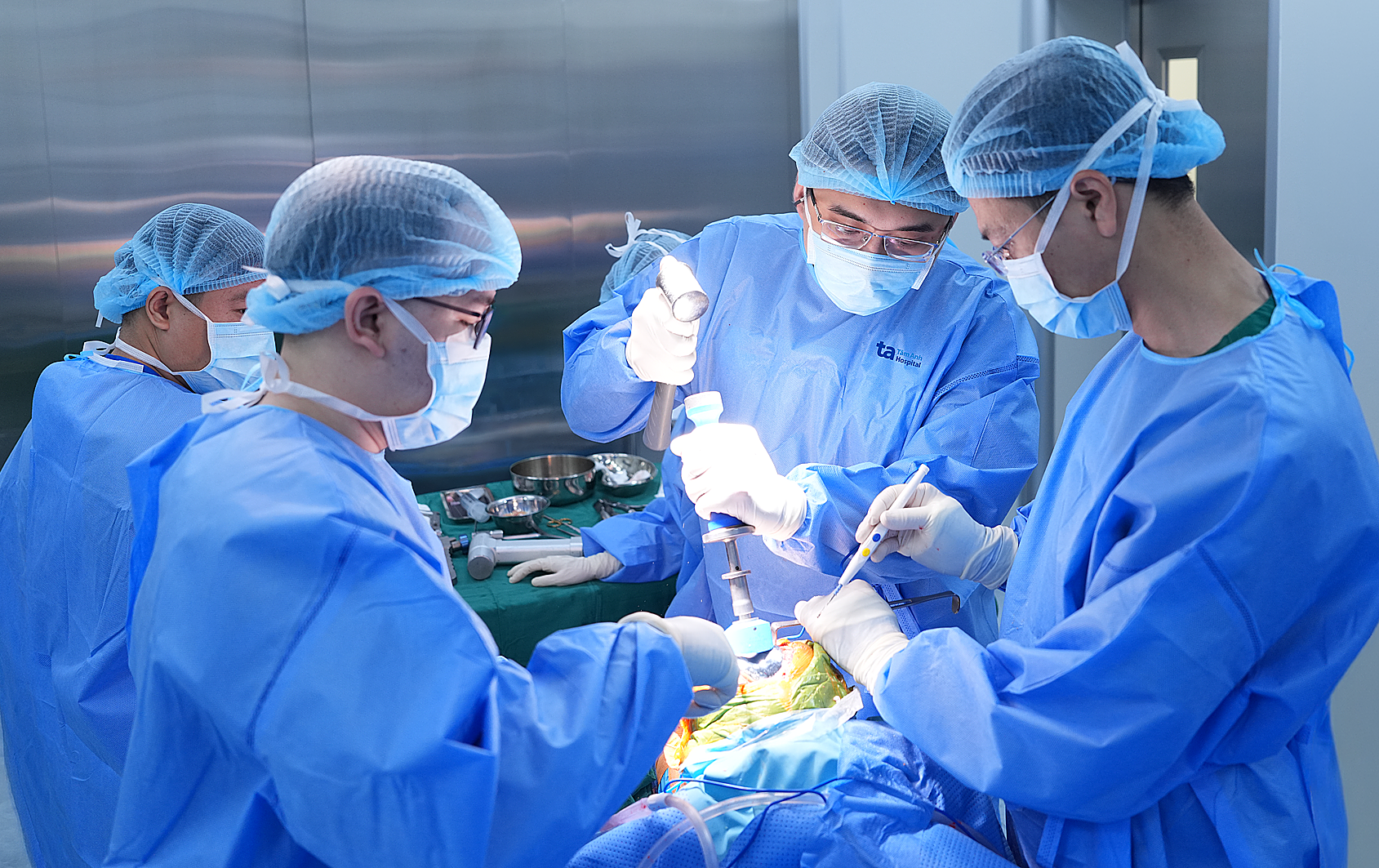 |
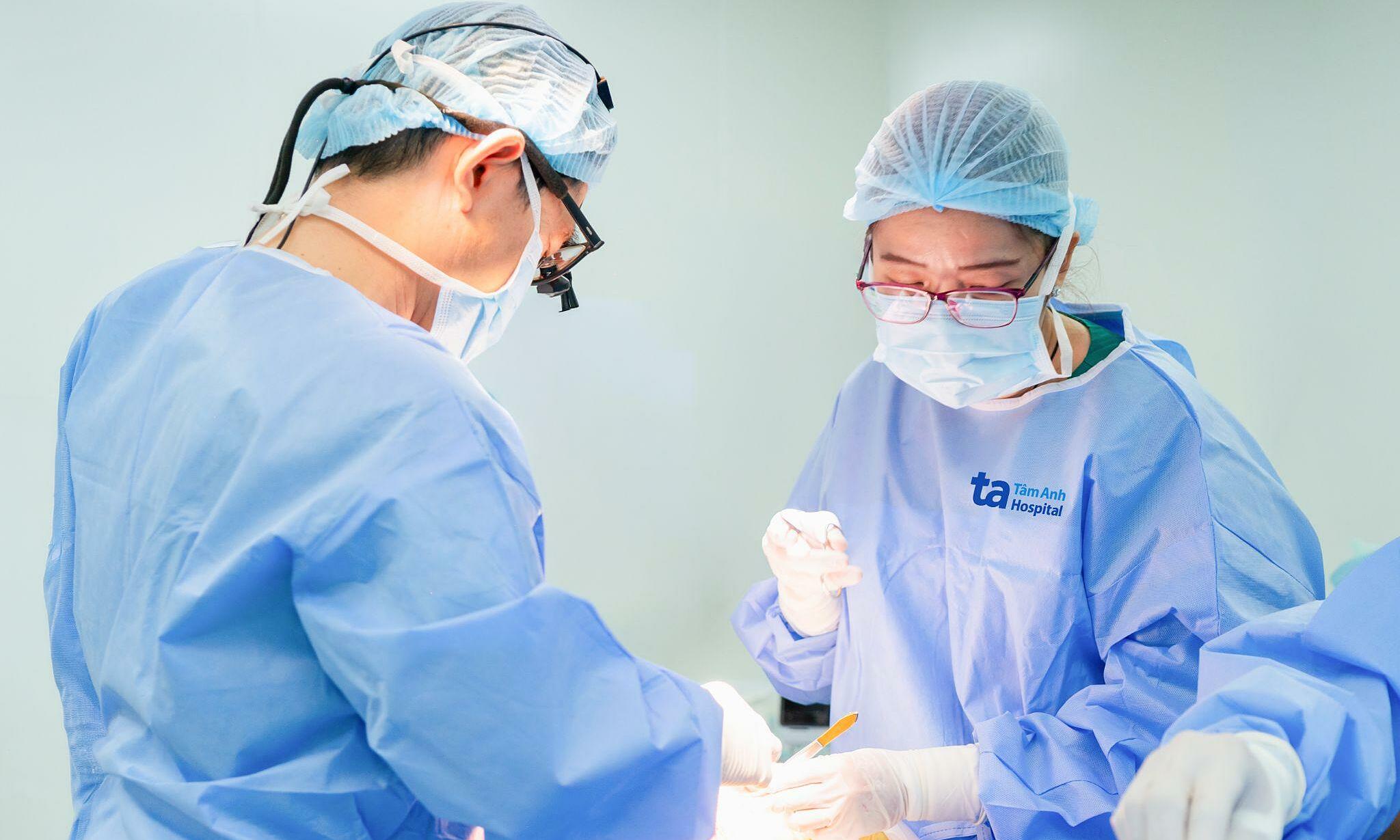
Dr. Dai Duong (second from right) performs knee replacement surgery for Ms. Nhung. *Photo: Tam Anh General Hospital* |
The patient underwent full-length leg X-rays to precisely determine the degree of deformity, assess bone quality, the condition of surrounding soft tissues, and mobility. Specialized joint replacement software assisted Dr. Duong in planning leg axis correction, soft tissue balancing, and selecting the appropriate artificial joint.
After opening the knee joint and removing damaged components, Dr. Duong implanted a suitable artificial knee joint, correcting the limb axis as straight as possible while ensuring soft tissue balance around the joint. The goal was to enable the patient to walk naturally after surgery and perform flexible flexion, extension, and rotation movements.
On the first day after surgery, Ms. Nhung began rehabilitation exercises for knee flexion and extension to prevent joint stiffness and muscle contractures, promoting rapid recovery. Two days later, she was pain-free, able to walk, and preparing for discharge.
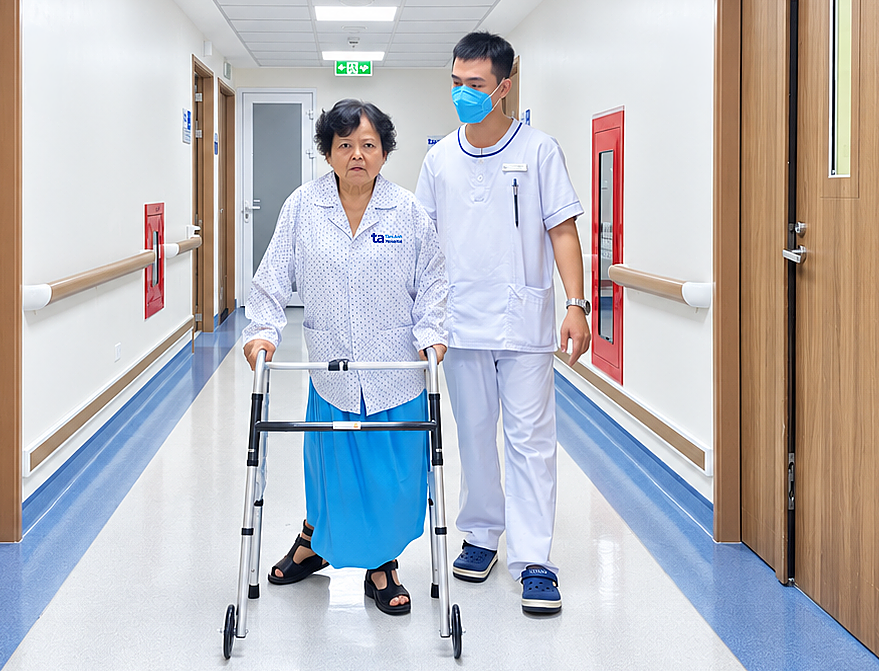 |
Ms. Nhung practices walking after left knee replacement surgery. *Photo: Tam Anh General Hospital* |
Dr. Duong explained that knee osteoarthritis is part of the natural aging process or results from injuries and prolonged inappropriate movement. With early detection and proper treatment, patients can recover well, minimizing impacts on daily life. For cases with co-existing health issues like multiple underlying conditions, paralysis, or muscle weakness, patients should seek examination at medical facilities specializing in orthopedic trauma or musculoskeletal diseases for specific and appropriate treatment.
Phi Hong
| Readers can submit questions about musculoskeletal diseases here for doctors to answer. |