Answer:
Congenital ptosis occurs when the upper eyelid droops to a lower-than-normal position, appearing either at birth or during the first few months of life. This condition can affect one or both eyes, with varying degrees of severity, either symmetrical or asymmetrical.
The primary causes include abnormal development or damage to the levator palpebrae superioris muscle, genetic factors, or associations with conditions such as third cranial nerve palsy, Horner syndrome, periocular tumors, or levator muscle dysplasia.
Children with ptosis typically present with a drooping eyelid margin that cannot be lifted when opening the eye, and an absence of an eyelid crease. While mild cases primarily affect aesthetics, severe cases involve the eyelid obstructing the visual axis, impeding vision development. Without timely correction, children risk visual impairment, amblyopia (lazy eye), and even atrophy of the nerve pathways from the brain to the eye, impacting both vision and overall development.
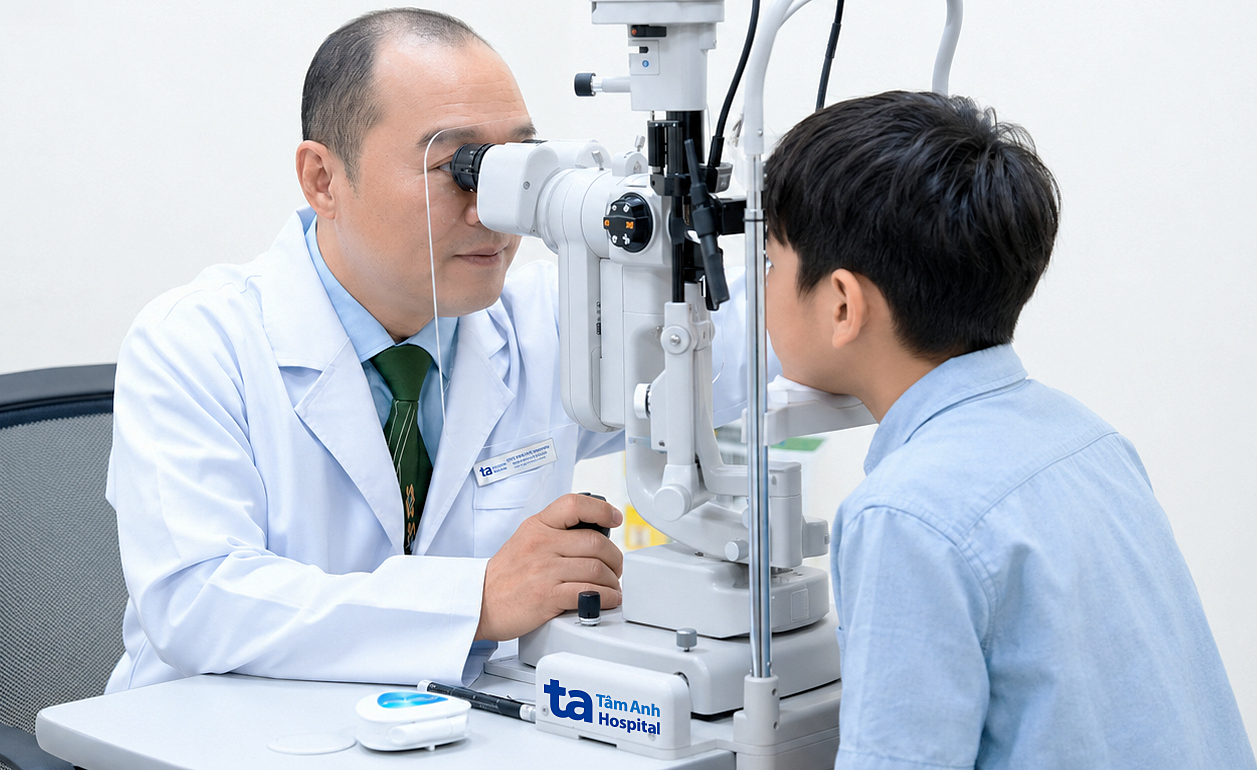 |
Associate Professor, Doctor Nguyen Thanh Nam examines a young boy's eye. Illustration: Tam Anh General Hospital. |
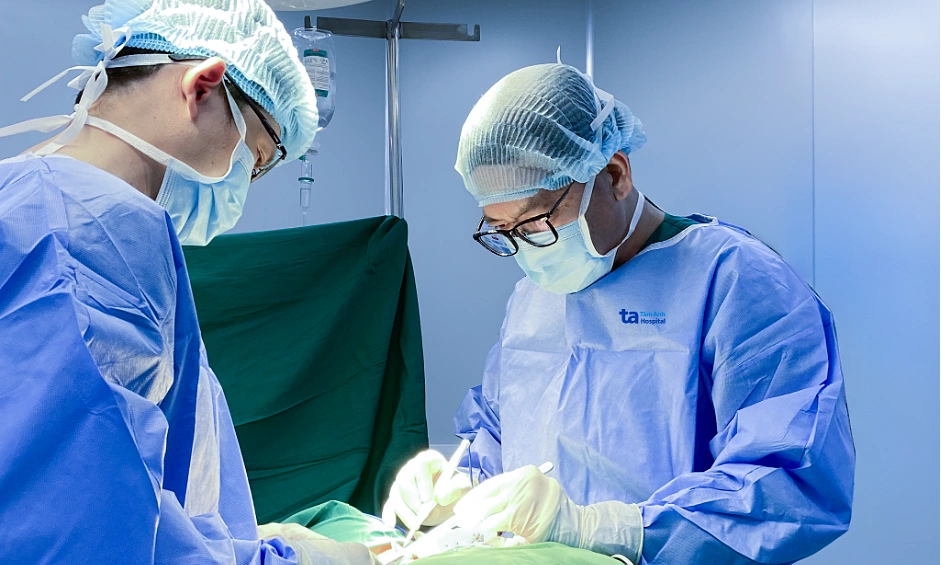
Currently, the primary treatment for congenital ptosis is levator muscle surgery, which helps widen the visual axis, protect vision, and improve aesthetics. If the levator muscle is weak, doctors may perform a frontalis sling surgery to reposition the eyelid.
The timing of surgery depends on the degree of ptosis, the child's condition, and age. Children under three years old with ptosis not covering the pupil or not yet affecting vision will undergo regular monitoring. If the eyelid obstructs the visual axis or signs of amblyopia have appeared, early surgery is necessary to mitigate the risk of irreversible vision loss. The 4-5 age range is optimal for surgery, offering a good prognosis and high recovery potential.
Your son is 7 years old, has congenital ptosis, and shows signs of visual axis obstruction. It is essential to take him to a hospital with an ophthalmology department for an evaluation of his levator muscle function, eyelid lag, as well as vision, refractive error, and amblyopia checks. If his overall health permits and he meets surgical criteria, he can undergo bilateral eyelid surgery to restore the visual axis, balance both eyelids, and improve both function and aesthetics. This condition will not resolve on its own; eyelid correction is necessary to limit its impact on vision.
Associate Professor, Doctor Nguyen Thanh Nam
Director, High-Tech Eye Center
Tam Anh General Hospital System, TP HCM
| Readers can submit questions about ophthalmic conditions here for a doctor's response. |