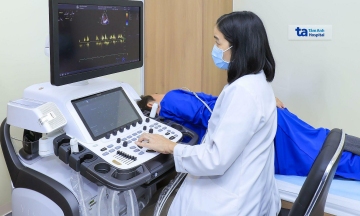
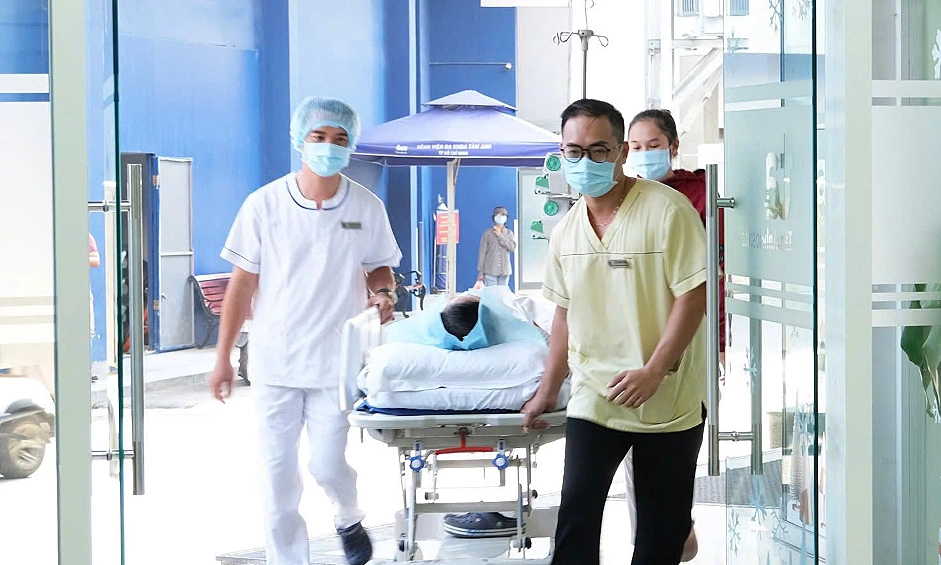
An ultrasound at Tam Anh General Clinic, District 7, revealed a firm, mobile 3 cm tumor in Luan's parotid gland. Doctor Le Ngoc Vinh, from the Department of Surgical Oncology, diagnosed it as a pleomorphic adenoma. A fine-needle aspiration (FNA) biopsy indicated it was benign, but this type of tumor carries a risk of becoming malignant and can compress the facial nerve if it continues to grow.
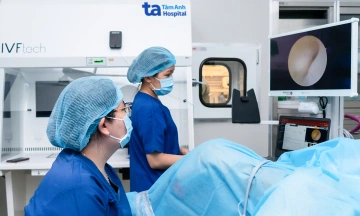
Luan underwent surgery to remove the tumor, which was situated near the facial nerve, as thin as a thread. The surgical team skillfully maneuvered instruments to separate the nerve from the tumor, then carefully dissected the entire tumor, preserving all five branches of the facial nerve to prevent recurrence.
Following surgery, Luan was able to move his facial muscles, eat, and speak normally. The wound was dry, and he was discharged after 12 hours of observation.
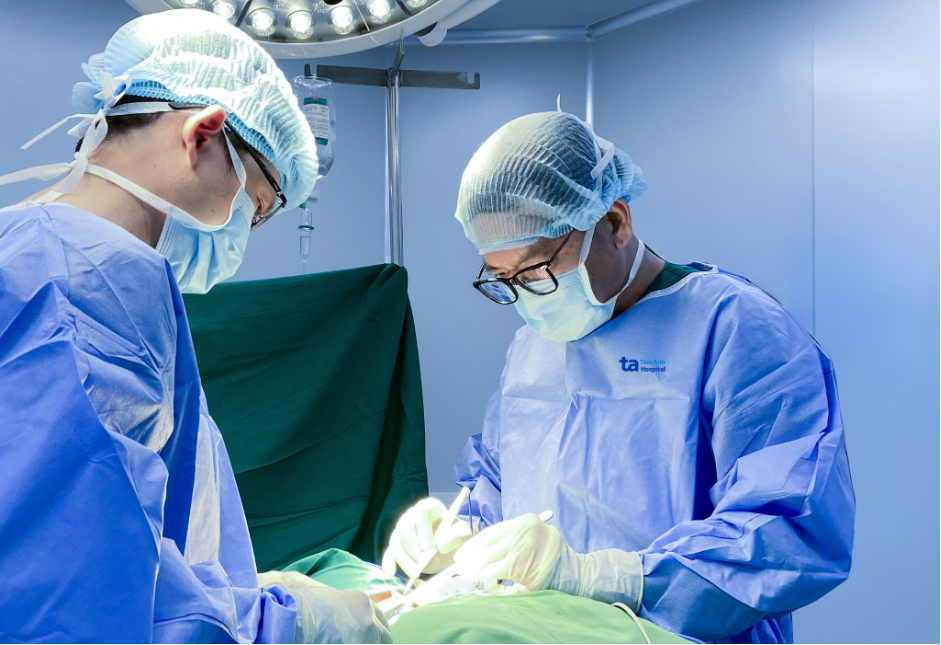 |
Doctor Vinh performing surgery on a patient. Photo: Tam Anh General Hospital
The parotid gland is the largest salivary gland in the body. Parotid gland tumors form when parotid gland cells grow abnormally. Doctor Vinh stated that about 80% of parotid gland tumors are benign, while 20% are malignant. Some benign parotid gland tumors, such as the mixed tumor Luan had, still carry a risk of becoming malignant.
Parotid gland tumors can occur at various ages, but are most common in people aged 30-50. The exact cause is currently unknown, but several factors may increase the risk of parotid gland tumors, including smoking and a history of radiation therapy for head and neck cancer.
As the tumor grows, it can cause swelling in the face or jaw, compressing surrounding organs and leading to difficulties swallowing, numbness, burning sensations, or a tingling feeling in the parotid region.
Doctor Vinh advises individuals with a tumor to seek early medical examination to determine if it is benign or malignant and to receive appropriate treatment. Parotid gland tumors should be surgically removed when they are small to reduce complications. If the tumor is large, surgery becomes more challenging due to anatomical changes and often requires a wider resection to ensure complete removal and minimize recurrence.
After surgery, patients should have follow-up appointments every three months for one year, and then every 6 months for the next 5 years, for evaluation and timely intervention.
Khai Minh
*Patient's name has been changed
| Readers can submit questions about cancer here for doctors to answer. |