“My child is the shortest in the class; could they be growth hormone deficient?” This is a question Dr. Nguyen Nhat Nam, Head of the Endocrinology Unit at FV Hospital, frequently encounters during examinations for children with delayed growth.
According to Dr. Nam, while a child's current height is a common parental concern, pediatric endocrinologists prioritize both current height and growth rate. A healthy child in the pre-pubertal stage typically grows about 5-8 cm annually. If a child grows less than 4-5 cm per year, or if their height consistently falls below the standard growth curve for their age, parents should consult a pediatric endocrinologist to determine the underlying cause, rather than attempting self-treatment for height improvement.
 |
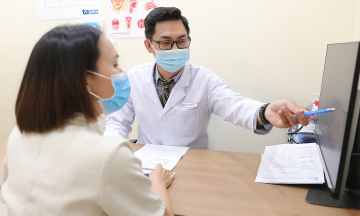
Dr. Nguyen Nhat Nam examines and advises on growth issues at FV Hospital. *Photo: FV Hospital* |
Dr. Nam explains that while growth hormone (GH) is vital for child development, GH deficiency is just one of many potential causes of short stature. Guidelines from the American Endocrine Society and the European Society for Pediatric Endocrinology indicate that delayed growth can stem from various factors, including: genetics, malnutrition, hypothyroidism, chronic kidney disease, congenital heart disease, children born small for gestational age (SGA) who fail to catch up in growth, or genetic syndromes like Turner and Noonan. Therefore, a comprehensive evaluation requires more than just current height; it must include growth progression over several years, family history, pubertal stage, bone age, and specialized endocrine tests.
“Treatment is only effective when the correct cause is identified. Not every short child requires growth hormone supplementation,” Dr. Nam stated.
In recent years, growth hormone has garnered significant attention from parents seeking to improve their children's height. However, Dr. Nam emphasizes that this therapy has strict indications, reserved for specific medical conditions such as growth hormone deficiency, Turner syndrome, Prader-Willi syndrome, children born small for gestational age who fail to catch up in growth, and other special cases. This treatment typically spans many years and does not produce quick results within a few months. Throughout the therapy, children require regular monitoring, dose adjustments based on weight and developmental progress, and close supervision for potential side effects to ensure both efficacy and safety.
Many families mistakenly believe that growth hormone treatment concludes once a child reaches their desired height. In reality, some patients require re-evaluation upon reaching adulthood. For individuals with growth hormone deficiency that persists into adulthood, discontinuing treatment can negatively impact muscle mass, bone density, and lipid metabolism, thereby increasing the risk of cardiovascular and metabolic diseases later in life.
“The goal of treatment extends beyond simply helping children grow taller; it also aims to ensure a healthy skeletal system, good muscle mass, and stable metabolic health into adulthood,” Dr. Nam explained.
 |
FV Hospital utilizes a multidisciplinary approach for pediatric growth hormone treatment. *Photo: FV Hospital* |
At FV Hospital, children undergo evaluation by an integrated team of endocrinology and pediatrics specialists, in collaboration with nutrition, imaging, and laboratory departments. This multidisciplinary approach ensures an accurate diagnosis before treatment is prescribed. For patients requiring growth hormone supplementation, doctors provide continuous monitoring from childhood through adulthood, adjusting treatment protocols as needed and tracking metabolic indicators and bone density in line with international recommendations.
Dr. Nguyen Nhat Nam advises parents who observe their child is shorter than peers to monitor the child’s growth rate periodically for at least 6 months. Early medical consultation is recommended if there are abnormal signs, such as a slower-than-expected growth rate.
“The crucial aspect is not to achieve rapid height growth, but to accurately identify the cause of delayed growth. This allows for the selection of appropriate and safe treatment methods, ultimately helping children achieve their optimal adult height,” Dr. Nam concluded.
Hai My
For more information on growth hormone treatment for children or to schedule an examination with Dr. Nguyen Nhat Nam, please contact the Endocrinology Unit at FV Hospital. Address: 6 Nguyen Luong Bang Street, Tan My Ward (former District 7), Ho Chi Minh City. Phone: (028) 3511 3333.