Answer:
Blisters are a typical sign of chickenpox. Initially, lesions appear as 5-10 mm red spots on the chest, back, and face, then spread throughout the body. After 12-24 hours, these turn into fluid-filled, itchy blisters. According to the US Centers for Disease Control and Prevention (CDC), the number of lesions can range from just a few to up to 500.
If not properly cared for, blisters are prone to secondary bacterial infections like Staphylococcus aureus and Streptococcus. This can lead to pus, foul-smelling discharge, high fever, and burning pain. Ruptured blisters can cause deep ulcers, necrosis, and bacterial entry into the bloodstream. Specifically, Staphylococcus aureus can lead to septic shock and multi-organ failure. The virus can also cause pneumonia, meningitis, and hepatitis. After recovery, the virus remains in nerve ganglia and can reactivate as shingles under conditions such as old age, a weakened immune system due to underlying diseases, or prolonged stress.
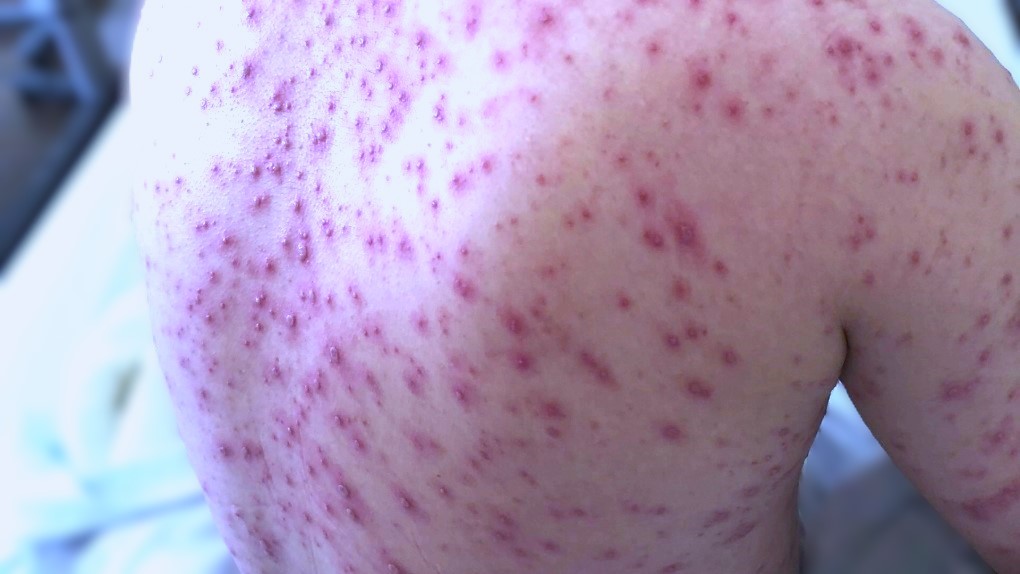 |
Chickenpox patients can develop up to 500 blisters on the skin. Photo: Tam Anh General Hospital |
Individuals with chickenpox should follow a doctor's treatment plan, avoiding self-medication or applying leaves to blisters. It is necessary to maintain hygiene in the affected areas, avoiding scratching to prevent blisters from rupturing and limiting secondary infections. Additionally, a nutritious diet, adequate hydration, vitamin supplements, and sufficient sleep are essential to support the immune system.
The chickenpox virus spreads easily through respiratory droplets and contact with contaminated objects; approximately 90% of non-immune individuals will contract the disease upon close contact. You should isolate until all blisters have crusted over before returning to work or interacting with others. Family members should avoid contact with you and prevent the disease by maintaining hygiene, frequent handwashing, wearing masks, and monitoring their health. The chickenpox vaccine helps prevent the disease by up to 98% when two doses are administered and almost completely prevents severe complications.
Currently, Vietnam has three types of monovalent chickenpox vaccines from Korea, the US, and Belgium. There is also one combination vaccine from the US that prevents measles, mumps, and rubella. Among these, the Korean vaccine is administered to children from 12 months to 12 years of age. The other three vaccines are suitable for both children and adults. Individuals who have had chickenpox still risk developing shingles and can transmit chickenpox to others. The shingles vaccine is recommended for individuals aged 50 and older, and for those aged 18 and older with a high risk of developing the disease.
Dr. Nguyen Tien Dao
Medical Manager, VNVC Vaccination System
Readers can submit questions for vaccine consultation to be answered by a doctor here.