Sinusitis occurs when the lining of the sinuses, air-filled cavities behind the cheekbones and forehead, becomes inflamed, swollen, and produces excess mucus. These cavities normally humidify and warm inhaled air, also draining nasal fluids. When sinus openings are blocked, fluid cannot escape, leading to stagnant mucus. This creates an environment for bacterial growth, worsening inflammation and causing symptoms such as nasal congestion, runny nose, sneezing, mouth breathing, and pain in the sinus area. Symptoms that recur continuously and last over 12 weeks are considered chronic sinusitis.
Nasal rinsing helps clean the nasal cavity and sinuses using a physiological saline solution. This method thins and drains mucus, removes dust, bacteria, and allergens, and soothes the nasal lining. Nasal rinsing is typically performed with specialized devices such as rinse bottles or gentle pressure sprays. For chronic sinusitis that worsens with seasonal changes, you can rinse your sinuses two to three times daily with physiological saline. Proper daily nasal rinsing helps reduce the risk of recurrence and superinfection during weather changes.
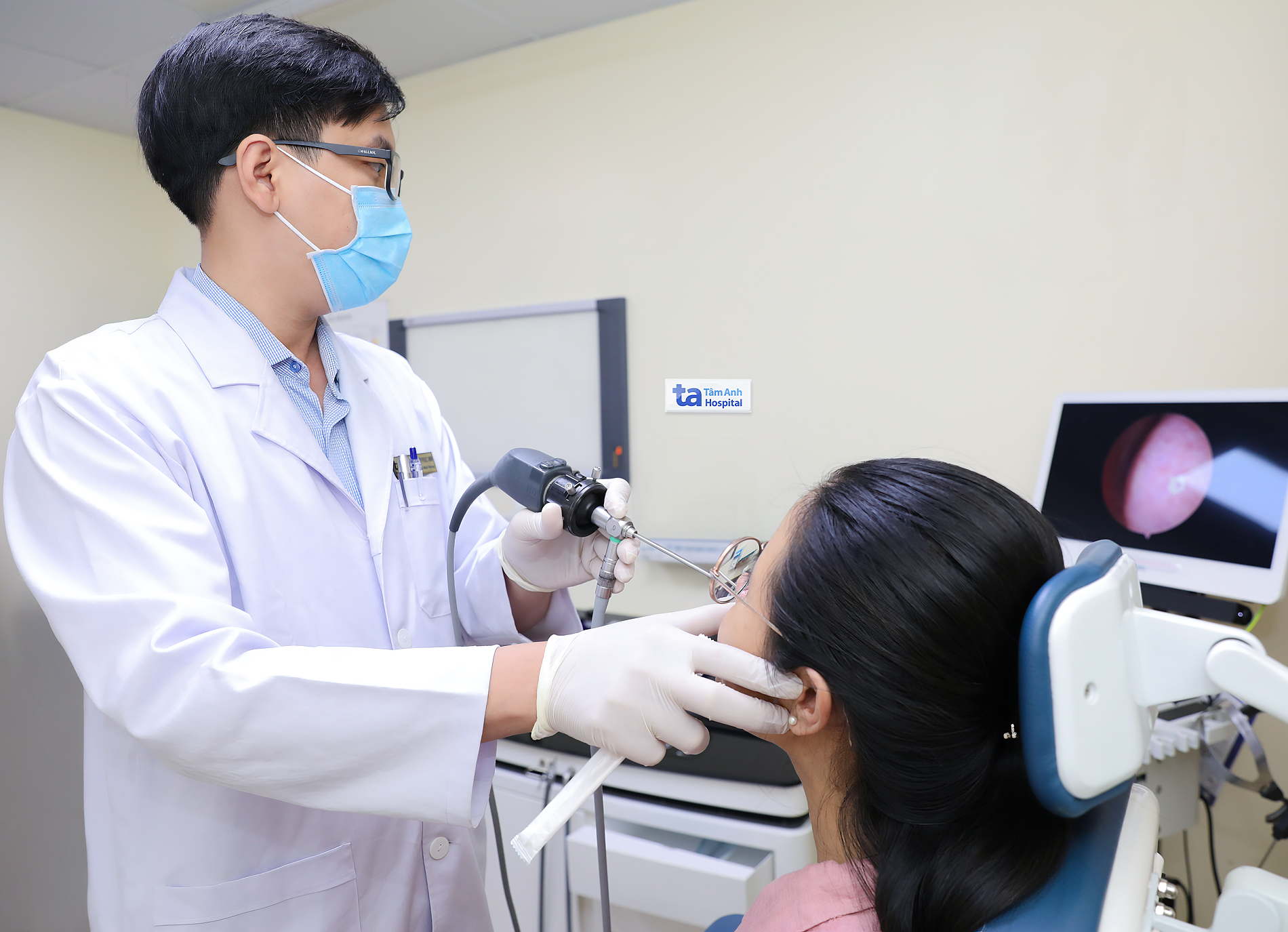 |
Doctor Phuc Anh performs a nasal endoscopy for a sinusitis patient. Illustration: Tam Anh General Hospital.
You should use sterile 0,9% physiological saline (NaCl) purchased from pharmacies. Avoid making your own solution, as it may not meet hygienic standards or have the correct dilution ratio, which can harm the nasal and throat lining. Do not irrigate your nose with strong pressure, as it can irritate and dry out the nasal lining.
To rinse your nose correctly, lean gently over a sink and tilt your head to one side, with the lower ear pointing downwards. Open your mouth slightly and breathe through your mouth to avoid choking. Place the tip of the rinse bottle into the higher nostril, then tilt or gently squeeze to allow the solution to flow from this nostril to the other, carrying mucus out. After rinsing, blow your nose gently to remove any remaining solution and secretions. Avoid blowing forcefully, as it can damage the nasal lining. Repeat the process for the other nostril.
If, after regular daily nasal rinsing, symptoms such as nasal congestion, headaches, or persistent thick nasal discharge continue, you should visit an Ear, Nose, and Throat (ENT) specialist for an evaluation of your sinusitis and appropriate treatment.
Dr. Diep Phuc Anh
Ear, Nose, and Throat Center
Tam Anh General Hospital, TP HCM
| Readers can submit questions about ear, nose, and throat conditions here for a doctor's response. |