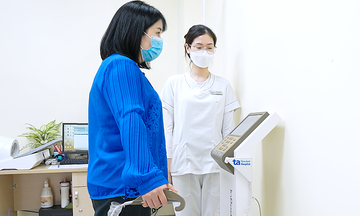
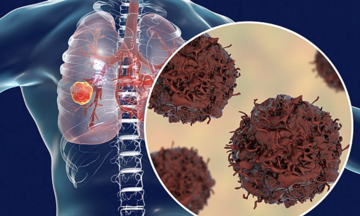
An MRI scan of Ms. Thai at Tam Anh General Hospital, Ho Chi Minh City, revealed abnormalities in the right cavernous sinus and dilated ophthalmic veins.
The cavernous sinus is a venous cavity located deep within the skull base, on either side of the sella turcica, responsible for draining blood from the eyes and brain back to the heart. Dr. Thi Van Gung, Second-Degree Specialist and Head of the Endovascular Intervention Unit at the Center for Diagnostic Imaging and Interventional Radiology, explained that a carotid-cavernous fistula is an "abnormal connection" that causes excessive blood flow into the cavernous sinus. This increases pressure, leading to congestion and dilation of these blood vessels, including the ophthalmic veins.
Doctors performed endovascular intervention on the patient, guided by a digital subtraction angiography (DSA) system. A catheter was inserted through an artery in the groin to reach the fistula. Specialized medical glue was then used to seal the fistula, restoring proper blood flow.
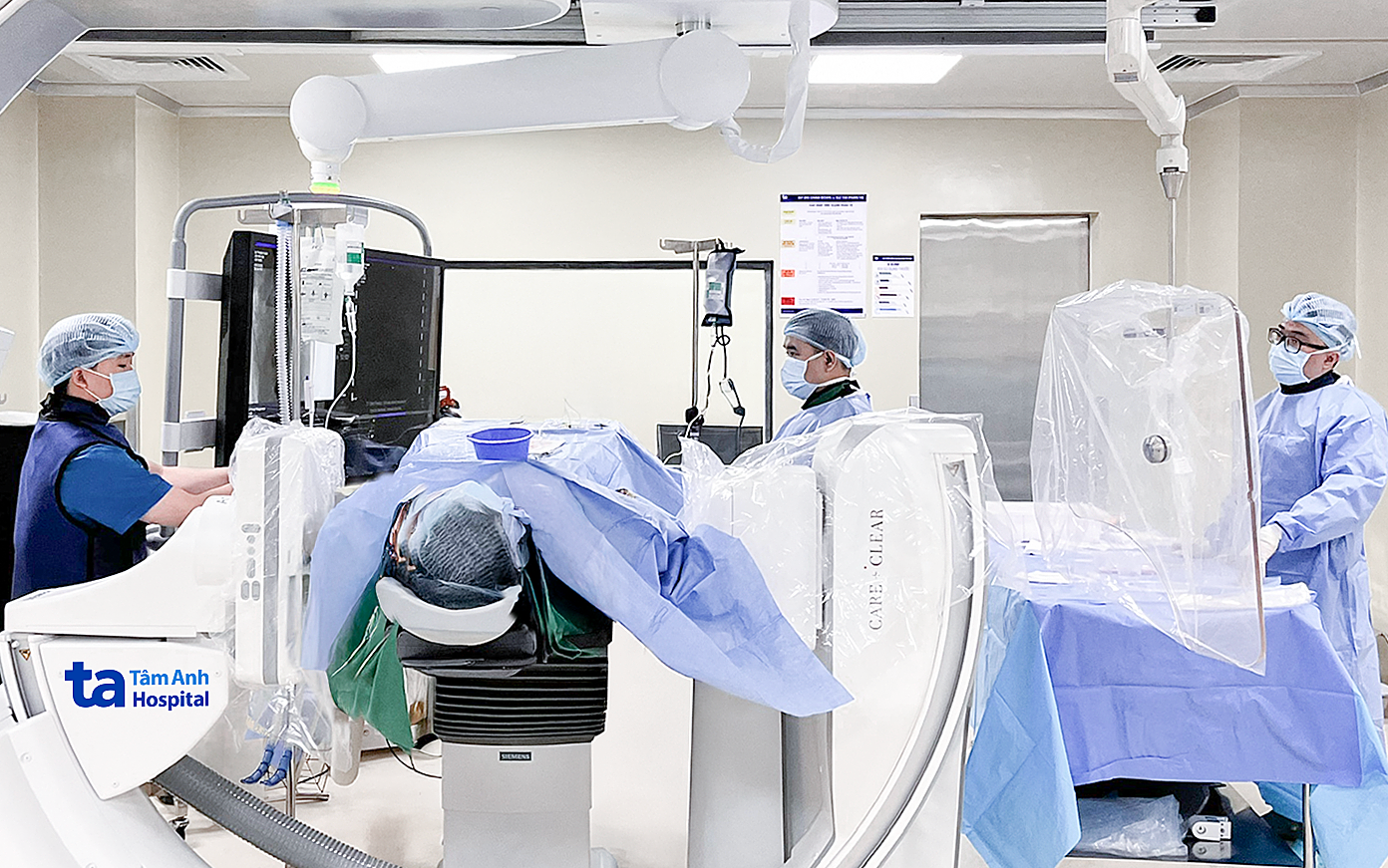 |
The intervention team sealed the fistula under the guidance of the DSA system. Photo: Tam Anh General Hospital |
Following the procedure, Ms. Thai's condition improved significantly. Her headaches and blurred vision decreased, and her vital signs stabilized. She was discharged two days later.
According to Dr. Gung, endovascular intervention is a superior option compared to other treatments for carotid-cavernous fistula, such as open surgery. It is less invasive, reduces hospital stay, and offers a higher chance of preserving visual function if performed early. The timing of the intervention depends on diagnostic imaging and any co-existing conditions.
Depending on the pressure level and progression time, patients with cerebral vascular fistulas may experience symptoms gradually or with rapid onset. Direct fistulas often occur after head trauma or a ruptured aneurysm. Indirect fistulas involve small connections from dural vascular branches, progressing more subtly, and are common in post-menopausal women.
Common symptoms include red or bulging eyes, gradual vision loss or pain, eyelid swelling, pulsatile tinnitus, headaches, double vision, or drooping eyelids. These symptoms are easily confused with other eye conditions, which can lead to delayed detection and improper treatment, increasing the risk of complications.
Nhat Thanh
* The patient's name has been changed.
| Readers can submit questions about neurological diseases here for doctors to answer. |