Thanh recounted how, with many year-end gatherings, he often met friends for drinks at canalside street stalls. The weather was humid, and on many evenings, he would go shirtless to stay cool, sitting late into the night, enjoying a few beers and chatting. He noticed mosquitoes buzzing around the table but paid little attention. Two weeks ago, he began experiencing fever, eye socket pain, body aches, and a patchy red rash on his arms. He went to the hospital for examination and was diagnosed with dengue fever, requiring hospitalization due to body aches, a bitter taste in his mouth, and fluctuating fever.
"Normally, my wife always protects our family from mosquitoes by clearing stagnant water, sealing dark corners, and keeping repellent sprays ready. As a result, I'm almost never bitten, which made me complacent about mosquito prevention outdoors", Thanh said.
 |
Late-night gatherings pose a risk of contracting dengue fever and other mosquito-borne diseases. Illustration: Vecteezy |
Dang Khoa, 26, from Can Tho, also contracted dengue fever a week after watching a football match. He wore shorts, sat at a street stall to eat and drink, and cheered for his favorite team. Mosquitoes swarmed under the table, leaving his legs red with bites, but Khoa only applied medicated oil, occasionally swatting a mosquito before continuing to watch. A few days later, he developed a high fever, extreme fatigue, and a rash, only to discover he had dengue fever after a medical examination. The young man shared, "Now I avoid mosquitoes; I don't underestimate them like I used to".
Doctor Le Thi Minh Nguyet, Medical Manager at VNVC Vaccination System, stated that dengue fever is caused by the Dengue virus, with the Aedes mosquito acting as the primary vector. Mosquitoes are most active in biting humans during early mornings and late afternoons.
According to Doctor Nguyet, certain individuals are more susceptible to mosquito bites due to biological, chemical, and environmental factors. Factors such as blood type, sweat, skin microbiome, body temperature, and physical activity all influence how much mosquitoes are attracted. Research by the Japanese Institute of Medical Research noted that mosquitoes, particularly Aedes aegypti, often prefer individuals with blood type O more than other blood types. However, other blood types are not immune. Individuals who sweat profusely, are slow to dry off, or have a distinct body odor due to bacteria breaking down sweat are also more likely to attract mosquitoes. Those with naturally higher body temperatures, pregnant women, and children are also more prone to mosquito bites.
Furthermore, individuals who consume alcohol are easily targeted by mosquitoes. When drinking, blood vessels under the skin dilate, body temperature rises, and individuals sweat more and exhale larger amounts of carbon dioxide, making them readily detectable by mosquitoes. A 2023 study involving 500 participants at a music festival in the Netherlands indicated that beer drinkers attracted mosquitoes approximately 1,35 times more than non-drinkers. Doctor Nguyet explained that alcohol consumption causes short-term physiological changes in the body, generating signals that mosquitoes quickly recognize.
Many people, when consuming alcohol, often gather at street stalls near canals, sitting outdoors, shirtless, and wearing shorts. These locations foster Aedes mosquito breeding due to stagnant water in the vicinity, while artificial lights and body heat further attract mosquitoes.
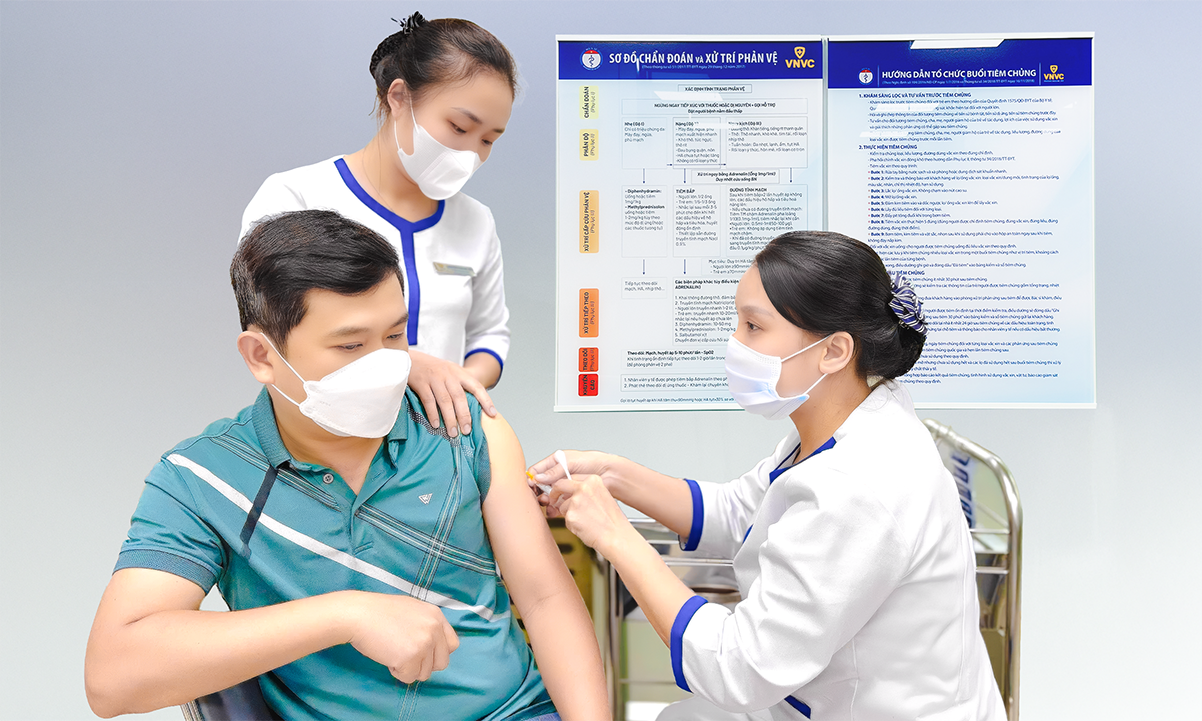 |
Adults receive dengue fever vaccine at VNVC Vaccination System. Photo: Moc Thao |
Doctor Nguyet stated that the incubation period for dengue fever typically lasts 4-7 days, and can extend up to two weeks. During this phase, patients may be asymptomatic or experience only mild fatigue and transient headaches, making it easy to confuse with the flu. As the disease progresses, patients often develop high fever, eye socket pain, extreme fatigue, bleeding gums, or subcutaneous hemorrhages, with a risk of shock, circulatory failure, or multi-organ damage. If left untreated, the mortality rate can be as high as 20%.
The World Health Organization (WHO) estimates 50-100 million dengue cases annually across over 100 countries, putting nearly half of the world's population at risk. In Vietnam, by the end of October, the country had recorded 110.503 cases of dengue fever and 23 deaths.
The Dengue virus has 4 serotypes: Den-1, Den-2, Den-3, and Den-4. Individuals can contract the disease multiple times from different serotypes, with subsequent infections often carrying a higher risk of severe illness. Therefore, Doctor Nguyet advises everyone to protect themselves by minimizing mosquito bites, especially when outdoors in the late afternoon and evening. Individuals consuming alcohol should ensure they wear adequate clothing, avoid sitting near bushes or ditches, and use mosquito repellents such as lotions and sprays. If symptoms like prolonged fever, body aches, a red rash, or minor bleeding appear, seek early medical attention for timely diagnosis.
The disease can be prevented with a dengue vaccine manufactured by Takeda Pharmaceuticals (Japan), indicated for children aged 4 and older, and adults. The vaccination schedule consists of two doses administered three months apart. The vaccine reduces the risk of contracting the disease by over 80% and the risk of hospitalization by over 90%. Women should receive this vaccine three months, or at least one month, before becoming pregnant.
Binh An