Response:
In assisted reproduction, successful embryo culture depends on both gamete quality and culture technology. At age 33, a woman's egg quantity and quality begin to decline, which can impact embryo development. During the cleavage stage, embryos primarily develop using energy from the egg, while sperm contribute only a small part. Therefore, embryo quality at this stage heavily relies on the quality of the retrieved eggs.
Not all cleaving embryos produced can develop to the blastocyst stage. Long-term embryo culture serves as a selective test. Only healthy embryos with complete gene sets are capable of passing the activation stage to develop into blastocysts.
Day 3 is a critical milestone when the embryo's gene set undergoes activation. If there are gene abnormalities or insufficient energy from the egg, the embryo will stop developing. The progression from day 3 to day 5 involves a natural selection process with an average arrest rate of about 50%. Therefore, having only one day 5 grade 3 embryo from an initial 5 embryos indicates a problem with the embryo development process.
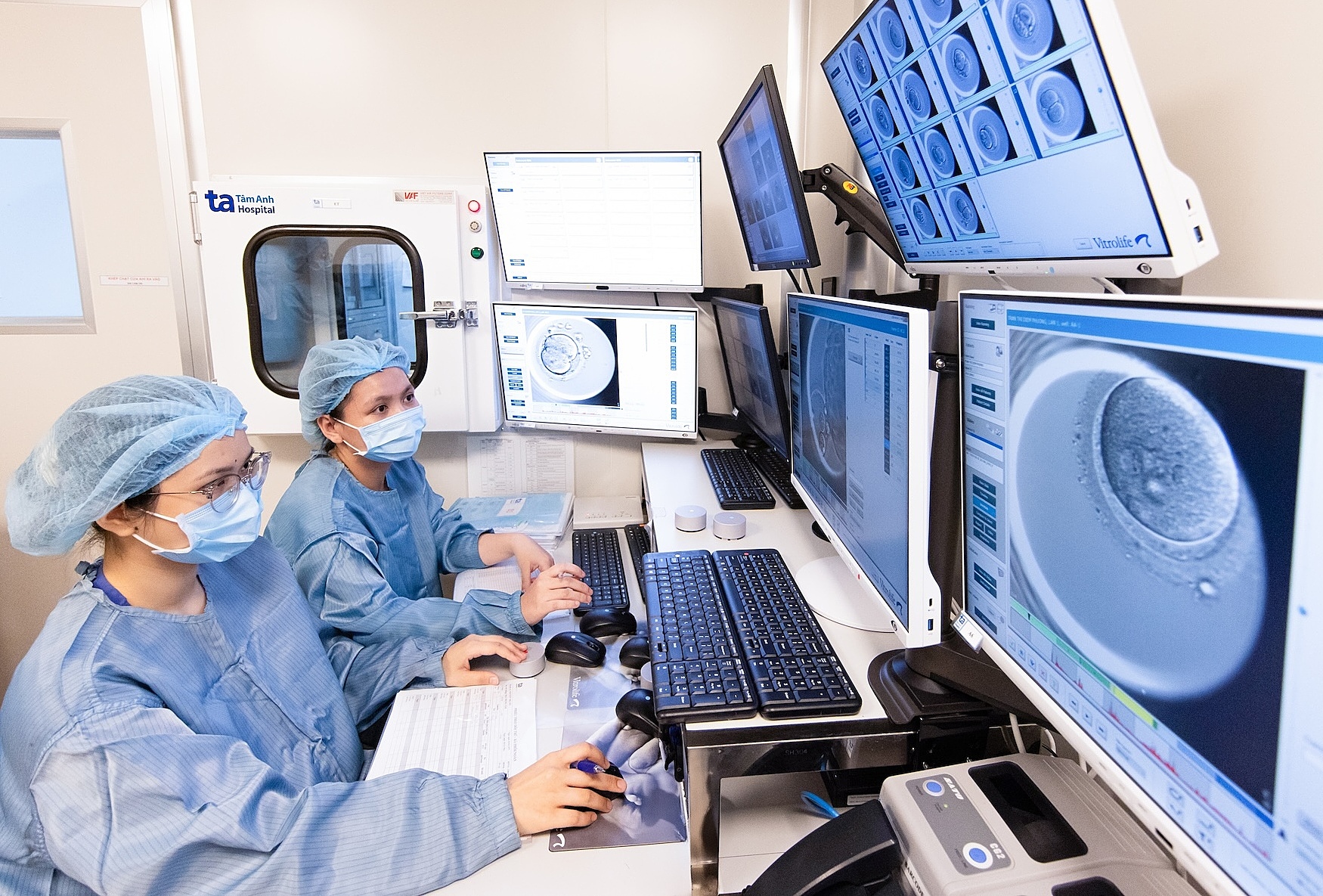 |
The Time-lapse embryo culture system, integrated with artificial intelligence (AI), allows continuous observation of embryo development without needing to remove the embryos. Photo: IVF Tam Anh
Tam Anh General Hospital Ho Chi Minh City has established a lab-in-a-lab system, featuring an ISO 5 standard embryo culture room within an ISO 6 gamete and embryo manipulation room. This specialized design separates the manipulation area from the culture area, enhancing environmental stability to promote optimal embryo and gamete development, increasing the chances of culturing high-quality embryos.
Inside the lab, a Time-lapse embryo culture system, equipped with continuous observation cameras, records embryo images throughout development, monitoring even the smallest division movements. Applying artificial intelligence (AI) supports embryo culture and prognostication, helping embryologists decide which embryos to prioritize for transfer, thereby optimizing the chances of pregnancy.
Master Le Thi Thu Thao
Deputy Lab Head, Center for Assisted Reproduction
Tam Anh General Hospital Ho Chi Minh City
| Readers can submit questions about infertility here for doctors to answer |