According to the World Health Organization (WHO), vitamin A is vital for immunity and child development. A deficiency can lead to blindness and increase the risk of death from infectious diseases. Globally, approximately 190 million preschool children, primarily in Africa and Southeast Asia, suffer from this micronutrient deficiency. In Vietnam, children aged six to 36 months receive regular high-dose vitamin A supplementation, and it is also recommended for high-risk children under five years old and postpartum women.
Influenza is an acute, highly contagious respiratory infection that can cause severe complications such as pneumonia, myocarditis, and respiratory failure. These complications are particularly dangerous for young children, the elderly, individuals with underlying health conditions, and pregnant women. Typical symptoms include high fever, sore throat, headache, runny nose, cough, and fatigue. In severe cases, the flu can lead to complications like otitis media, bronchitis, pneumonia, myocarditis, respiratory failure, or meningitis, and can even be fatal.
While vitamin A is essential for strengthening immunity and preventing influenza A, it is crucial for children to receive a comprehensive and balanced intake of all nutritional groups. This includes protein, fats, various vitamins (A, C, D, E, B group), carbohydrates, minerals, and water.
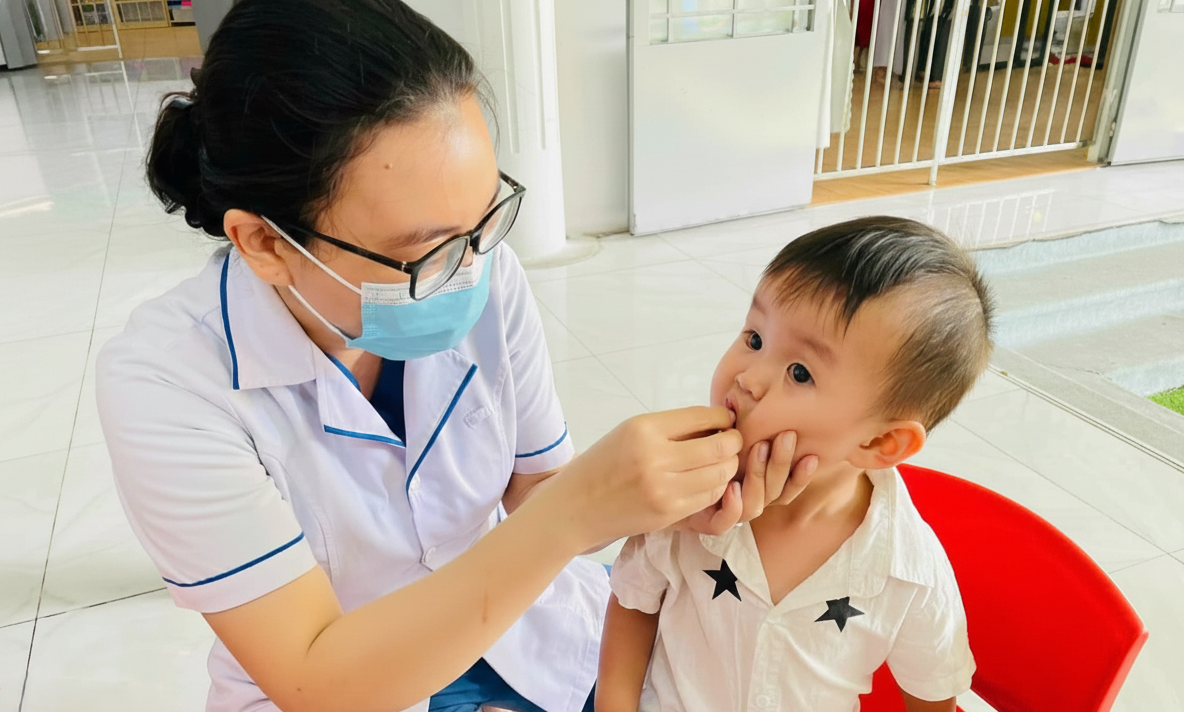 |
Children receiving vitamin A at a kindergarten in early December. Photo: Kim Ngan Nguyen
Beyond diet, children also benefit from regular physical activity, exposure to sunlight, good personal hygiene, and a clean, well-ventilated living environment. Crucially, children should receive all recommended vaccinations to boost their immunity and protect against various diseases, including influenza.
Currently, Vietnam offers several types of influenza vaccines from France, the Netherlands, South Korea, and Vietnam. These vaccines protect against influenza A strains like A/H3N2 and A/H1N1, as well as influenza B strains. The vaccine is suitable for children aged six months and older, and adults. Children between six months and under nine years old who have not previously been vaccinated against the flu require two doses administered one month apart. Individuals aged nine years and older, and adults, need one dose. Annual influenza vaccination is necessary to ensure adequate antibody levels and protection against circulating strains.
Additionally, children are susceptible to other diseases that can significantly impact their health, such as hepatitis B, tetanus, pertussis, diphtheria, polio, measles, mumps, rubella, chickenpox, meningococcal disease, Japanese encephalitis, dengue fever, cholera, and typhoid. All these diseases are preventable through vaccination. Parents are encouraged to visit their nearest vaccination center for professional medical advice.
Doctor Doan Thi Khanh Cham
Medical Manager, VNVC Vaccination System