Answer:
Myopia is a refractive error where images focus in front of the retina, either due to an elongated eyeball or an overly curved cornea or lens. Currently, medicine offers no eye drops, oral medications, or topical treatments that can cure myopia. Products advertised as traditional formulas, folk remedies, plant extracts, colostrum, or lemon juice lack scientific evidence or research to prove their effectiveness and safety. Furthermore, the ingredients in these products are often unknown, posing potential risks of harm to the eyes.
Parents should not allow their children to use products with unknown ingredients or origins. This avoids dangerous complications such as irritation, infection, burns, or damage to corneal epithelial cells. Severe damage can lead to sequelae like vision loss, increased myopia, glaucoma, cataracts, or even blindness.
 |
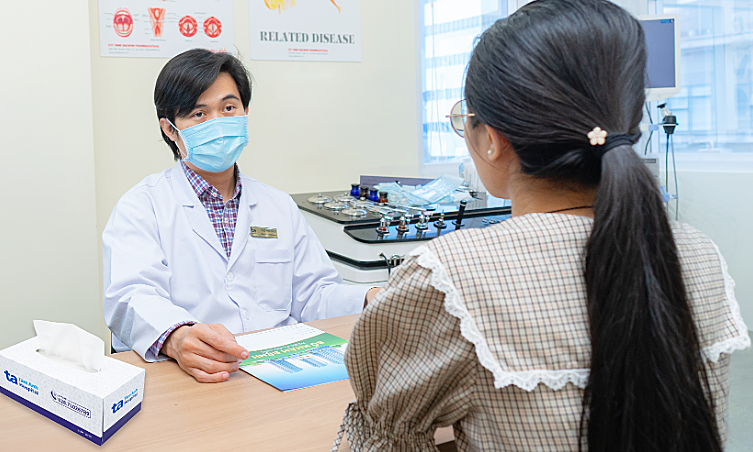
Doctor Huy examines a boy's eyes. Illustration: Tam Anh General Hospital |
Parents should take their child for regular check-ups at hospitals with ophthalmology departments for examination and advice on appropriate treatment methods. Doctors assess visual acuity and prescribe suitable care methods to improve the child's eye health and control myopia progression.
The most common vision correction methods for myopic individuals include wearing appropriate prescription eyeglasses or contact lenses, and using overnight orthokeratology (ortho-k) contact lenses. These help reshape the cornea and slow myopia progression in children. Once a child reaches 18 years of age, when eye structure is stable and conditions are met, myopia can be corrected through surgical methods like Femto pro, Smile Pro.
Doctor Nguyen Duc Huy
Specialist in High-Tech Ophthalmology
Tam Anh General Clinic District 7
| Readers can send questions about ophthalmic conditions here for doctors to answer |