On 29/4, the Nghe An Department of Health announced that laboratory test results from patient samples confirmed salmonella as the cause of a recent food poisoning outbreak. The incident affected 62 people who consumed banh mi from Quynh establishments. Patients, residing in Dien Ngoc, Dien Tho, Dien Bich, and Dien Hoa communes (formerly part of Dien Chau district), were admitted for treatment between 17/4 and 21/4, and have since recovered and been discharged.
Out of 7 tested food samples, 5 were positive for salmonella: pate, grilled meat, sausage, shredded pork floss, and pickled radish. Two samples, pork sausage and chili sauce, tested negative. "The source of contamination likely originated from the pate and grilled meat, subsequently leading to cross-contamination of other food items," stated a leader from the Nghe An Department of Health.
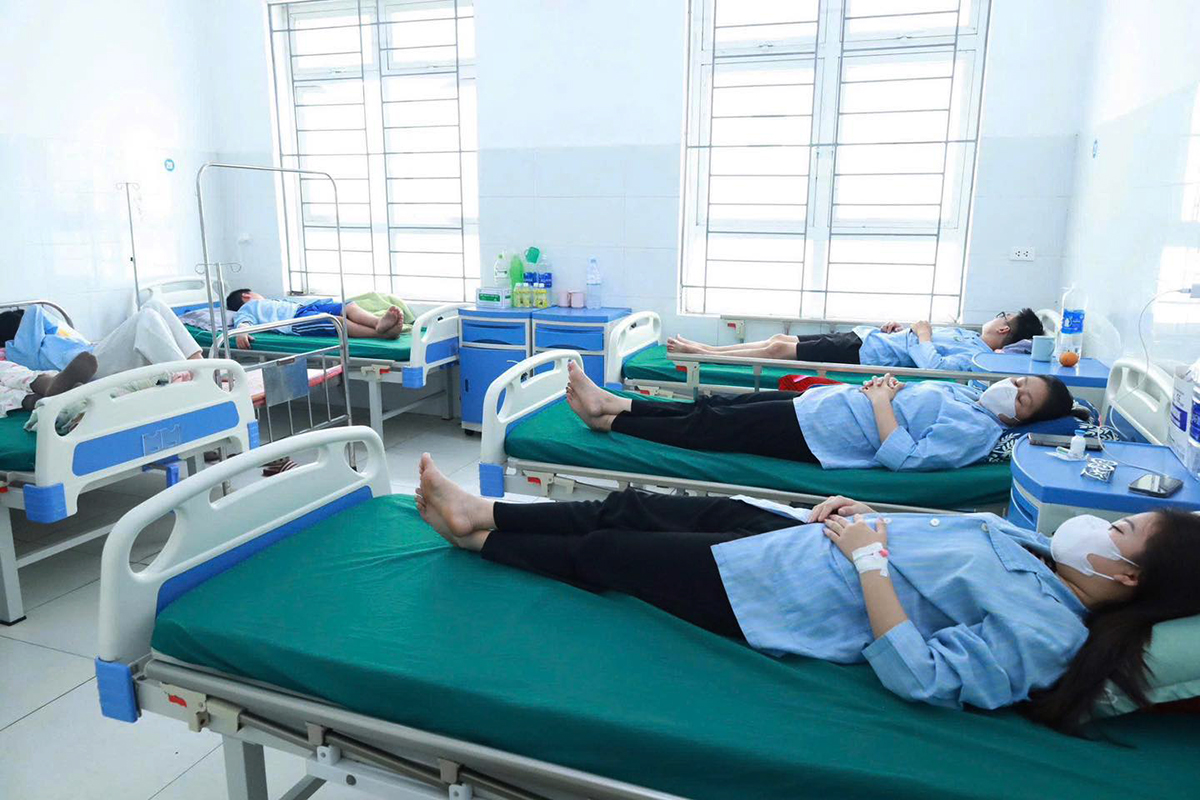 |
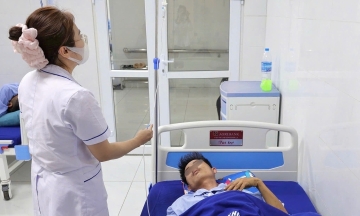
Food poisoning patients receiving treatment at Dien Chau General Hospital on 21/4. Photo: Hung Le |
Following these findings, authorities will impose administrative penalties on the owner of the violating business.
Salmonella is a common cause of gastrointestinal infections, typically appearing 16 to 48 hours after exposure. Symptoms include: diarrhea, abdominal pain, fever, nausea, and fatigue. Most individuals recover spontaneously within 4 to 7 days. However, in young children, the elderly, or those with weakened immune systems, the illness can lead to severe complications such as: sepsis, meningitis, and can be life-threatening if not treated promptly.
The bacteria commonly resides in the digestive tracts of animals and can transmit to humans through contaminated foods such as: undercooked eggs or poultry, unpasteurized milk, raw vegetables, or via cross-contamination during food preparation. Eggs and egg products are significant sources of transmission, as the bacteria can enter an egg from the hen's ovary before the shell forms.
The health sector advises people to select food from clear origins, cook thoroughly, and avoid consuming raw or unsanitarily prepared foods. During food preparation, it is crucial to: wash hands thoroughly, separate raw and cooked foods, ensure utensils are well-cleaned, and consume cooked food immediately or store and reheat it properly.
If symptoms like: abdominal pain, diarrhea, or vomiting occur after eating, individuals should rest and rehydrate with oresol solution as directed. Do not self-medicate, especially with antibiotics or anti-diarrhea drugs, without a doctor's prescription. For severe signs such as: high fever, frequent diarrhea, bloody stools, dehydration, or exhaustion, seek immediate medical attention at a healthcare facility.
Recently, southern provinces have repeatedly reported hundreds of people hospitalized after eating banh mi. On 3/3 and 4/3, 79 patients in Vung Tau ward suffered food poisoning from street banh mi on Do Chieu street. A few days prior, 22 people in TP HCM and over 70 individuals at Hong Ngoc 12 establishment in Dong Thap also experienced similar symptoms.
Duc Hung